Last Updated on November 1, 2026 by Luis Cooper
Marcus had been saving for six months.
He was not shopping for a casual watch. He was not looking for something to wear to dinner. Marcus worked on offshore survey vessels in the North Sea, and the one rule he had learned in five years at sea was simple: if your gear fails out there, you cannot just run to a store.
He needed a watch that could go where he went, survive what he survived, and keep time when everything else was uncertain.
After three weeks of research, he walked into an authorized Tissot retailer and bought the Seastar 2000 Professional. That was in 2023. As of today, that watch has been underwater more than most dive watches ever see in a lifetime. It has not missed a beat.
This review is for people like Marcus: serious buyers who want the full picture before they spend their money on a Swiss professional dive watch.
Let us get into it.
Tissot Seastar 2000 Professional Review

- PROFESSIONAL DIVE PERFORMANCE – Water-resistant up to 600 m / 2,000 ft for demanding underwater use.
- POWERMATIC 80 MOVEMENT – Swiss automatic movement with up to 80 hours of power reserve.
- CERAMIC ROTATING BEZEL – Features a durable ceramic bezel ring with an anti-clockwise rotating bezel.
- SAPPHIRE CRYSTAL – Domed scratch-resistant sapphire crystal with antireflective coating for enhanced clarity.
- BUILT FOR ADVENTURE – Stainless steel case, screw-down crown, helium valve, and durable black rubber strap.

Tissot: The Brand Behind the Watch
Before you trust a watch on a deep dive, you should know who made it.
Tissot was founded in 1853 by Charles-Félicien Tissot and his son Charles-Emile Tissot in Le Locle, a small watchmaking town in the Jura mountains of Switzerland.
The name Le Locle may not mean much to most people, but in the watch world, it is sacred ground.
Some of the most important Swiss movements in history were born in those valleys.
From the very beginning, Tissot had ambition.
The company began exporting watches to Russia and North America in its early decades, when most Swiss makers still served only local markets.
By the early 1900s, Tissot watches were being sold across Asia, South America, and throughout Europe.
In 1983, Tissot joined the Swatch Group, the world’s largest watch conglomerate.
This was a turning point.
As part of Swatch Group, Tissot gained access to shared research, movement development, and industrial resources that smaller independent brands could never afford.
The Powermatic 80 movement, which sits inside the Seastar 2000 Professional, exists partly because of those group-level investments.
Today Tissot sits in the middle tier of the Swatch Group family, above Swatch and Certina, and below the prestige of Longines and Omega.
The brand’s motto is “Innovators by Tradition,” a phrase that reflects its habit of combining proven watchmaking with genuine technical advancement.
Tissot is also one of the most active watch brands in global sports.
The company serves as the official timekeeper for MotoGP, the Tour de Suisse, the FIBA Basketball World Cup, and several other major international competitions.
This is not just marketing. Precision timekeeping in those environments requires real technical credibility.
The Seastar family has been part of Tissot’s catalog for decades.
The Seastar 2000 Professional is the top of that range, built to a standard most watches in its price category don’t attempt.
First Impressions Out of the Box

The watch arrives in a clean, understated Tissot box. Inside, secured in foam, sits the Seastar 2000 Professional on its black rubber strap.
The presentation is professional without being theatrical.
The first thing you notice is the size. At 46mm in diameter and 16.25mm thick, this is a large watch. Pick it up and you feel the weight: 135 grams.
This isn’t a watch that sneaks onto your wrist quietly. It makes its presence known.
But here is what surprises most people when they actually put it on: it wears better than the numbers suggest.
The lug-to-lug distance is relatively compact for the case diameter, and the rubber strap sits flat and close to the wrist.
Several experienced reviewers have noted that the 46mm Seastar 2000 Professional feels more manageable on the wrist than many 44mm watches from other brands.
The dial stops you immediately.
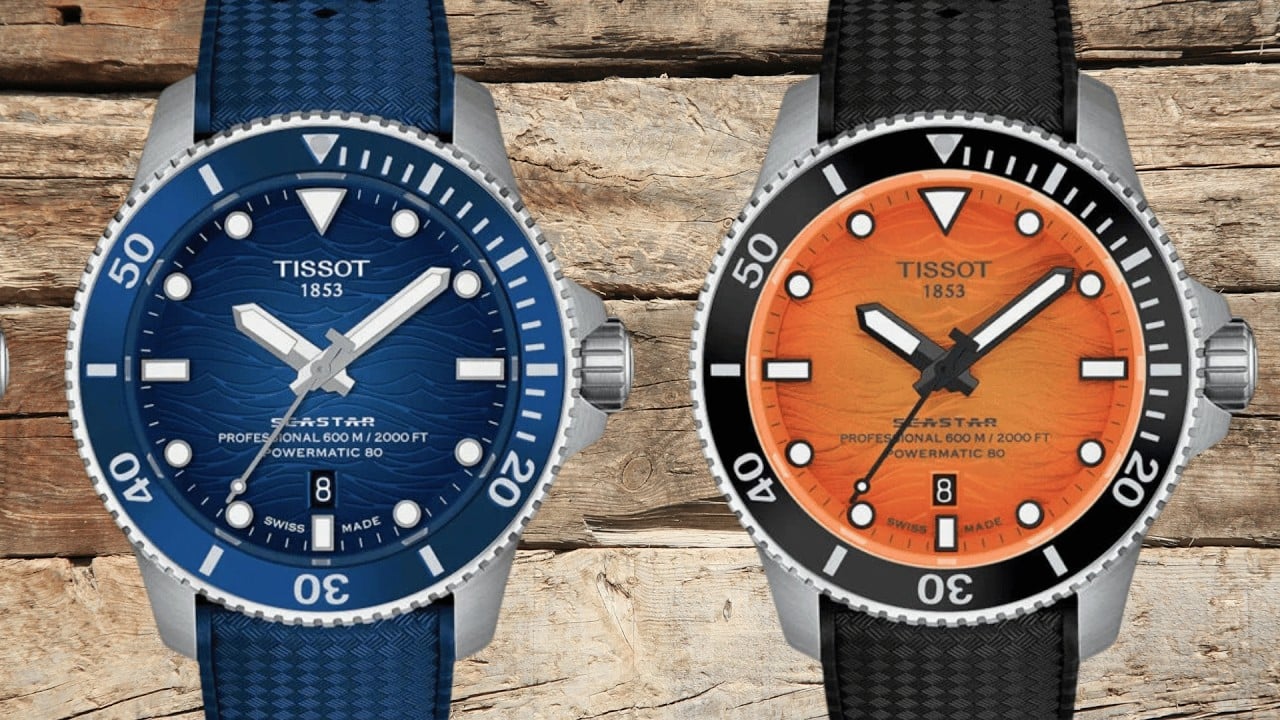
Under natural light, the black gradient surface shifts subtly from deep black at the center to a slightly warmer dark gray toward the edges. The Super-LumiNova markers and hour hands are thick, generous, and precise.
The gold-tone hands add warmth against the dark dial and create a visual contrast that aids immediate legibility.
Turn it over, and the sapphire crystal caseback reveals the movement inside, ticking away with a smooth, unhurried motion.
This watch was built to be used, not admired from a shelf.
But it is handsome enough to be admired anyway.
The Dial: Legibility First, Beauty Second

Professional dive watches have one design priority above all others: you must be able to read the time underwater, under stress, in poor visibility, without your glasses.
The Tissot Seastar 2000 Professional satisfies this requirement completely.
The dial uses large applied hour markers filled with Swiss Super-LumiNova, the same photoluminescent material found on dive watches costing three or four times as much. The markers are wide and generously sized, with no unnecessary fussiness.
The minute track around the outer edge of the dial is clear and precise.
The hour and minute hands are broad, filled with matching Super-LumiNova, and easy to distinguish at a glance.
The second hand has a distinct shape and a small lume pip at its tip. In total darkness or murky water, the watch glows with a cool blue-green light that remains readable for hours after charging in daylight.
The date window sits at 6 o’clock, which is a placement choice that divides opinion.
Some divers find a date at 3 o’clock easier to glance at, but the 6 o’clock position has the advantage of not interrupting the symmetry of the hour markers.
The white date on a black background reads clearly in all conditions.
The dial does not try to do too much.
There are no extra sub-dials, no dual time zone displays, no tachymeter scale.
Everything on this dial serves one purpose: help you read the time quickly and accurately underwater.
That discipline is the mark of a watch designed by people who understand what a professional dive tool is for.
Case and Build Quality: Built Like a Safety Device

The case of the Seastar 2000 Professional is made from 316L stainless steel, a grade of steel that offers excellent resistance to corrosion from salt water, chlorinated water, and everyday wear.
This is not marketing language. In a watch you plan to take into the ocean repeatedly, the grade of steel matters.
The finish is primarily brushed. This is a deliberate choice for a tool watch.
Brushed surfaces hide scratches far better than polished surfaces, which means a watch used in real conditions will look presentable for years rather than showing every knock and scrape.
The case sides and lugs carry this brushed treatment throughout, with only subtle finishing variations at the bezel.
The crown screws down firmly against the case.
This is a non-negotiable feature on any serious dive watch, and Tissot executes it without drama.
You unscrew the crown, make your adjustment, and screw it back down.
The action is smooth and positive.
At 9 o’clock, the helium escape valve is positioned where it belongs.
This valve allows helium molecules to escape from the case during saturation decompression, preventing the crystal from being blown off when a diver surfaces from deep commercial dives.
Most people who buy this watch will never use it. But having it there, built properly, speaks to the engineering intentions behind the design.
The caseback is a transparent sapphire crystal, letting you watch the movement at work.
It also means that both the front and back crystals are sapphire, a detail that matters for long-term durability.
Sapphire is far harder than mineral crystal and resists scratching under normal use and light impacts.
The 2026 version reduced the diameter to 44mm and brought the thickness down slightly to 15.29mm.
The movement, water resistance, and core specifications remain identical.
If you find the 46mm too large for your wrist, the newer version is worth seeking out.
The Bezel: Ceramic, Unidirectional, and Essential
The rotating bezel is one of the most important features on a dive watch.
It lets a diver track elapsed time underwater without relying on a stopwatch function.
Get this wrong, and you’re in trouble.
Tissot got this right.
The bezel insert is ceramic, not aluminum. This distinction matters more than it might seem.
Aluminum bezels can scratch or fade from prolonged sun exposure, salt water, and general rough use.
Ceramic is one of the hardest materials used in watchmaking and is virtually immune to the scratches that aluminum bezels pick up over time.
A ceramic bezel’s color and finish remain consistent for the life of the watch.
The bezel rotates counterclockwise and only counterclockwise. This is the international standard for dive bezels, and it exists for safety.
If a diver accidentally knocks the bezel during a dive, it can only rotate in a direction that reduces the displayed elapsed time, giving the diver more time than they actually have.
Rotating clockwise would extend the time, which could allow a diver to stay down longer than their air supply permits.
The bezel has 120 click positions, and the action is firm and precise, with a positive detent at each click.
The 0-60 scale is clearly marked and the lumed pip at 12 o’clock charges alongside the dial markers for use in darkness.
The Movement: Powermatic 80 and the Nivachron Advantage
Here is where the Tissot Seastar 2000 Professional becomes genuinely interesting for any buyer who cares about what happens inside the case.
The movement is the Tissot Powermatic 80, based on the ETA C07.111 caliber.
It is a Swiss automatic movement, beating at 21,600 vibrations per hour (3Hz, or 6 beats per second).
It contains 23 jewels and is decorated to a standard appropriate for display through the caseback.
The headline specification is the power reserve: 80 hours.
This is more than double the typical 38 to 42 hours you find in most Swiss automatic movements at this price level.
In practical terms, you can take the watch off Friday night and put it back on Monday morning without winding it.
For a watch meant to be used at sea on extended trips, this is a real and meaningful advantage.
But the most technically significant detail about this movement is the Nivachron balance spring.
Most watch movements use a balance spring made of steel or an alloy called Glucydur. Both materials have a weakness: they are affected by magnetic fields.
When a watch movement is exposed to a strong enough magnetic field, the steel spring can become magnetized, causing the watch to run fast or lose time until a watchmaker demagnetizes it.
Nivachron is a titanium-based alloy developed by the Swatch Group.
It is paramagnetic, meaning it does not retain magnetism.
A watch with a Nivachron spring can pass through airport security scanners, be placed near speakers or electrical equipment, and be worn near MRI machines without affecting the movement.
For a professional tool watch, this is more than a selling point.
It is a practical solution to a real-world problem that affects thousands of Swiss watches every year.
The movement also uses silicon parts in key positions, further enhancing its resistance to magnetic interference and reducing the need for lubrication over time.
Accuracy in normal use is typically within plus or minus 10 to 15 seconds per day for most examples, which is consistent with COSC standards.
Some owners report better.
The movement is not hand-decorated to the level of a high horology piece, and the rotor finishing is functional rather than elaborate.
But for a watch designed to be a trusted working instrument, what matters is that it runs reliably over years of service.
It does.
Water Resistance: 600 Meters Is Not Just a Number
The Tissot Seastar 2000 Professional is rated to 600 meters (2,000 feet).
This places it firmly in the professional dive watch category rather than recreational dive watches.
Most dive watches on the market are rated to 200m or 300m, which is more than sufficient for recreational scuba diving, which rarely exceeds 40 meters.
A 600m rating is relevant for commercial divers, saturation divers, and those working in technical or military diving environments.
More important than the raw number is the ISO 6425 certification this watch carries.
ISO 6425 is the international standard for professional dive watches and the current reference is the 2018 version.
To get this certification, a watch must survive a grueling series of tests that go far beyond just sitting in a pressure chamber at the rated depth.
ISO 6425 tests include the following: the watch must withstand static pressure at 125 percent of its rated depth.
It must survive condensation testing (the inside of the glass cannot fog when the watch is taken from cold water into warm air).
It must withstand a shock resistance test. It must pass a magnetic resistance test.
The bezel must have a minimum level of grip for use with diving gloves. The lumed markers must remain visible in darkness for a minimum period after charging.
A watch can claim any water resistance depth it likes.
ISO 6425 certification means an independent body has verified the claim against a defined standard. The Tissot Seastar 2000 Professional carries that certification, and that matters.
The Strap: Rubber, Practical, Ready for the Water
The watch ships on a black rubber strap with a standard tang buckle. The lug width is 22mm, a common size with a wide selection of aftermarket strap options.
The rubber strap is comfortable in the water and dries quickly.
It doesn’t absorb salt water the way a leather strap would, and it doesn’t trap debris the way a metal bracelet might.
For a watch meant to be used in aquatic environments, rubber is the sensible choice, and Tissot made the right call.
The tang buckle is simple and secure. Some buyers may prefer a dive extension clasp for use over a wetsuit, and the 22mm lug width makes it straightforward to find aftermarket straps with that feature.
The watch is not sold with a metal bracelet as standard, which is consistent with its professional dive orientation.
If you want to wear it as a daily driver on a bracelet, compatible options from third-party strap makers are widely available.
Who Is This Watch For?
The Tissot Seastar 2000 Professional is built for a specific kind of buyer, and it is worth being direct about who that person is.
This is the right watch for you if:
You dive, swim, or work in or around water regularly.
The 600m rating and ISO certification aren’t there for aesthetics. If your life or work involves meaningful water exposure, this watch’s engineering matters.
You want a Swiss automatic movement with a long power reserve and genuine anti-magnetic performance.
The Powermatic 80 and Nivachron spring solve problems cheaper movements don’t address.
You want a watch that can do double duty as a daily wearer.
The brushed case and ceramic bezel are genuinely durable. This watch does not need to be babied.
You value Swiss manufacturing credentials and a 170-year brand history, but you do not want to spend twice as much to get them.

Who Should NOT Buy This Watch
This watch isn’t the right choice for everyone, and being honest about that is more useful than selling you something that doesn’t fit your needs.
Do not buy this watch if you have a small wrist under 6.5 inches. The 46mm original version will look oversized and feel uncomfortable. Consider the 2026 44mm update, or look at the Tissot Seastar 1000, which runs smaller.
Do not buy this watch if you want a lightweight everyday wristwatch for office and travel. At 135 grams on a rubber strap, it isn’t oppressively heavy, but you won’t forget it’s on your wrist. For a slimmer, lighter daily wearer, Tissot’s own PRX Powermatic 80 is a better match.
Do not buy this watch if you need a dress watch for formal events. The 46mm brushed steel case and dive bezel are purpose-built for performance environments. They will look out of place at a black-tie dinner.
Do not buy this watch if your budget is already stretched to reach it. A watch of this type is meant to be used, not stored. If you cannot afford occasional professional servicing every five to seven years, factor that into your decision before you buy.
Do not buy this watch expecting exhibition-grade movement decoration. The Powermatic 80 is a well-built movement, but what you see through the caseback is a functional machine, not a display of elaborate hand-finishing.
How It Compares to the Competition
The Tissot Seastar 2000 Professional does not exist in isolation. At its price point and above, it competes with some very good alternatives.
Seiko Prospex SRPD series offers Japanese automatic movements in attractive designs, often at lower prices. The Seiko movements are reliable and well-proven over decades. Tissot wins on water-resistance depth, ISO certification, a ceramic bezel, and Nivachron anti-magnetic protection. If you are a recreational diver on a tighter budget, Seiko is an excellent option. If you need professional-level specifications, the Tissot is the more serious tool.
Oris Aquis sits close to the Tissot in price and shares the serious diver positioning. The Aquis uses a modified ETA movement with good reliability and offers an impressive depth rating on selected models. Between the two, the choice often comes down to aesthetics and brand preference. The Tissot edges ahead on power reserve with the Powermatic 80.
Longines HydroConquest also comes from within the Swatch Group and shares some engineering heritage with the Tissot. It is a refined, attractive watch that emphasizes the dress side of sport more than the professional tool side. If you want something that transitions more comfortably from poolside to office, the HydroConquest is worth a look.
Citizen Promaster (Fugu) offers a genuinely compelling proposition with Citizen’s own in-house movement and strong water resistance. Japanese watchmaking at its most practical, with a lower price point. The Tissot offers Swiss credentials, ISO 6425, and ceramic bezel at a higher price. Neither is wrong; the choice depends on what matters most to you.
Full Specifications
| Feature | Specification |
|---|---|
| Reference | T120.607.17.441.01 |
| Movement | Tissot Powermatic 80 (ETA C07.111 base) |
| Movement Type | Swiss automatic, self-winding |
| Jewels | 23 |
| Frequency | 21,600 vph / 3Hz |
| Power Reserve | 80 hours |
| Balance Spring | Nivachron (anti-magnetic) |
| Functions | Hours, minutes, seconds, date |
| Case Material | 316L stainless steel |
| Case Diameter | 46mm (2026 update: 44mm) |
| Case Thickness | 16.25mm (2026 update: 15.29mm) |
| Lug Width | 22mm |
| Bezel | Unidirectional rotating, ceramic insert, 0-60 scale |
| Crystal | Domed sapphire, anti-reflective coating |
| Caseback | Transparent sapphire display back |
| Crown | Screw-down |
| Helium Escape Valve | Yes, at 9 o’clock |
| Dial | Black/grey gradient, Super-LumiNova markers and hands |
| Strap | Black rubber, standard tang buckle |
| Water Resistance | 600 meters / 2,000 feet |
| Certification | ISO 6425 (2018) |
| Weight | 135g |
| Origin | Swiss Made |
| Year Released | 2022 |
Final Verdict
The Tissot Seastar 2000 Professional is not trying to look like a dive watch. It is a dive watch. Every design decision, from the ceramic bezel to the Nivachron balance spring to the ISO 6425 certification, serves a real purpose.
What makes it remarkable is how much genuine engineering sits underneath a price tag that most serious watch buyers can reach without selling other possessions. The 80-hour power reserve, ceramic bezel, dual sapphire crystals, 600m rating, and anti-magnetic movement together make a spec list other brands charge significantly more to match.
There are things it does not do. It will not disappear on your wrist. It will not win any awards for subtle elegance at a formal dinner. The movement, while excellent, does not have the finishing of a movement at twice the price.
But for what it is designed to do, which is to serve as a reliable, certified, professional-grade Swiss diving instrument, the Tissot Seastar 2000 Professional is very difficult to beat.
Whether you are a working diver who needs a watch that takes its job seriously, or someone who wants a Swiss automatic built to a professional standard without the professional price, this watch won’t let you down.
Marcus would agree with that.
Frequently Asked Questions
Is the Tissot Seastar 2000 Professional good for everyday wear? Yes, with one caveat: the 46mm case makes it a large watch for daily use. The brushed case, ceramic bezel, and rubber strap are all durable enough for daily wear in any environment, including office work, outdoor activities, and water sports. If the size feels manageable on your wrist, it is an excellent all-day companion.
What is the difference between the Tissot Seastar 1000 and the Seastar 2000 Professional? The Seastar 1000 is rated to 300m and does not carry ISO 6425 certification. The Seastar 2000 Professional is rated to 600m, carries full ISO 6425 professional dive certification, has a helium escape valve, and uses a ceramic bezel insert. The 2000 Professional is the purpose-built serious diver; the 1000 is the more accessible sport watch.
Does the Powermatic 80 need frequent servicing? Tissot recommends a full service every five to seven years under normal use conditions. The silicon components and Nivachron spring reduce wear and the need for re-lubrication compared to traditional movements, which means the service intervals are longer than on most comparable automatic movements.
What does ISO 6425 certification actually mean? It means the watch has passed a standardized battery of tests for professional dive use, including pressure resistance at 125 percent of the rated depth, condensation resistance, shock resistance, magnetic resistance, bezel grip, and luminescence duration. It is a third-party verified standard, not a manufacturer’s claim.
Can I wear this watch in the shower or pool? Yes. At 600m water resistance with a screw-down crown, this watch is designed for far more demanding water exposure than a shower or swimming pool. Just ensure the crown is fully screwed down before any water contact.
Is the 2026 44mm version worth choosing over the 46mm? If wrist size is a concern, yes. The 2026 model reduces the diameter to 44mm and the thickness to 15.29mm, making it notably easier to wear on medium-sized wrists. The movement, water resistance, and all other specifications remain identical. The 46mm version may be slightly more available on the secondary market.
How does the lume perform in low-light conditions? The Swiss Super-LumiNova on the markers and hands charges quickly in daylight or artificial light and provides several hours of readable blue-green glow in darkness. For professional dive use, the luminescence is bright enough for clear visibility in typical underwater conditions. For most divers, it is more than sufficient.
Related Articles:
- Garmin Forerunner 170 Review
- Best Fossil Smartwatches Under $250
- Best Smartwatches for the Visually Impaired
- Best Smartwatches for Android Under $100
- Best Garmin Watches Under $500
- Best Womens Watches Under $300
Luis Cooper

Hi, I'm Luis, the guy behind this site. I love wearing watches, especially ones that look great on small wrists (mine are about 6.3" around). The Watches Geek is dedicated to helping you learn about and buy watches that you will love wearing. I want this website to be the last destination for people to pick the best watches to fit their needs. You can find our unbiased reviews here on Thewatchesgeek.