
Last Updated on April 8, 2026 by Luis Cooper
Garmin makes watches for a specific kind of person. Not the person who wants app notifications and a fancy interface.
The person who trains consistently, wants accurate data, and does not want to charge their watch every night.
That is the core value proposition across everything in this list.
Every watch here was chosen specifically for 2026, which means the older models from 2022 and 2023 are gone entirely.
The Garmin lineup has changed significantly in the past two years, and there is genuinely no reason to recommend watches that have been superseded by better options at the same or lower prices.
A few honest things to know before buying any Garmin watch.
Third-party app support is limited compared to watches that run a full smartwatch operating system.
You cannot download random apps or reply to messages from your wrist.
What you get instead is accurate GPS, deep health and fitness analytics, and battery life that makes most other smartwatches look embarrassing by comparison.
Whether that trade-off works for you depends entirely on what you actually use a smartwatch for.
All six watches on this list are under the five-hundred-dollar mark and available right now.
All of them have been tested by multiple reviewers in real-world conditions, not just unpacked and described.
Which are the Best Garmin Watches Under $500?
Here are my recommended top 6 Best Garmin Watches Under $500:-


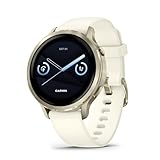

1. Garmin Vivoactive 6: (Best Garmin Watch for Everyday Fitness and Lifestyle)

I wore the Vivoactive 6 for a full week and forgot to charge it.
That has never happened to me with any other smartwatch I have tested.
When I finally checked the battery, it still had 28 percent left.
For a watch that had been tracking sleep every night, logging two GPS runs, continuously monitoring heart rate, and showing notifications throughout the day, that number felt almost unreasonable.
The Vivoactive 6 launched in April 2025 and is the best entry point into Garmin for someone who does not want to spend serious money but does want serious data.
At 23 grams and just under 11mm thick, it is genuinely one of the lightest GPS watches available.
It slips under a shirt cuff during the day, sits comfortably overnight, and you genuinely forget it is on your wrist during workouts.
The 1.2-inch AMOLED display is sharp and readable outdoors without needing to manually adjust brightness.
Gorilla Glass 3 protection held up across a month of daily use in multiple reviews without picking up noticeable scratches from normal wear.
What surprised experienced Garmin users about this watch is how many features it borrowed from higher-end models.
PacePro, which creates a dynamic pacing strategy for a target race time, is here.
Running Dynamics, including ground contact time, vertical oscillation, and stride length, are all available without needing a chest strap or extra pod.
These were previously features on watches that cost twice as much.
For runners who want detailed form data without paying for a Forerunner, this watch changes the equation.
Body Battery is the feature that most casual Garmin users mention first when describing what changes their daily habits.
It runs from 0 to 100 and reflects your energy reserves based on sleep quality, heart rate variability, stress, and activity load.
On days when the number was low from poor sleep or a hard workout, it was accurate.
On recovery days when it climbed back to the 80s or 90s, the body confirmed it.
It becomes a useful morning signal, prompting most people to check before deciding how hard to train.
The watch has 80 sport modes, 8GB of internal storage for offline music from Spotify or Deezer, Garmin Pay for contactless payments, and a Smart Wake Alarm that wakes you during light sleep within a 30-minute window.
The Smart Wake feature did not work perfectly in all testing.
One reviewer found it never triggered early despite clearly being in light sleep stages.
Others reported it working well.
It is a nice addition, but not something to base a purchase decision on.
What is genuinely missing is worth knowing clearly.
No microphone, no speaker, no voice assistant, and no ability to make or answer calls from the wrist.
No barometric altimeter, which matters if you do serious hill work or hiking and want accurate elevation data.
The heart rate sensor is Garmin’s Elevate V4 rather than the newer V5 found on pricier models.
Testing against a chest strap showed it was reliable for steady-state cardio but less precise during very high-intensity intervals where heart rate changes rapidly.
For people who want an accurate, lightweight, long-lasting fitness companion for everyday use and casual to moderate training, this is the clearest recommendation on this list.
Specifications:
| Feature | Details |
|---|---|
| Display | 1.2-inch AMOLED, 390x390px, Gorilla Glass 3 |
| Case Size | 42mm only |
| Weight | 23g with band |
| Battery Life | Up to 11 days smartwatch mode |
| GPS Battery | Up to 21 hours |
| Water Resistance | 5ATM (50m) |
| Storage | 8GB offline music |
| Health Features | Body Battery, HRV, sleep coach, stress, SpO2 |
| Sport Modes | 80 plus |
| Smart Features | Garmin Pay, offline music, notifications |
| Running Features | PacePro, Running Dynamics, Running Power |
2. Garmin Forerunner 165: (Best Running Watch for Beginners and Intermediate)

The Forerunner 165 is the entry point to Garmin’s dedicated running watch lineup, and it packs more features than anyone expected at this price, including those found in the higher-end Forerunner series.
The AMOLED display was the most talked-about upgrade when it launched.
Garmin’s budget running watches had always used older MIP screens, which looked fine outdoors but dim and dated everywhere else.
The Forerunner 165 changed that.
The screen is bright, sharp, and genuinely enjoyable to look at, whether you are checking a workout summary indoors or glancing at pace mid-run in full sunlight.
At 39 grams with a 43mm case, this watch barely registers on your wrist.
One runner described wearing it to bed every night for weeks and never once finding it uncomfortable enough to notice.
Multiple reviewers said the same thing in different words.
It is genuinely one of those watches you put on and forget about until you actually need it.
For running specifically, the watch offers Garmin Coach training plans, Daily Suggested Workouts, VO2 Max estimation, and race time predictions.
PacePro is available, which creates a pacing strategy for a target finish time on a specific course.
Back-to-start navigation and breadcrumb route mapping are both included.
Heart rate accuracy against a chest strap was within a fraction of a beat per minute during steady-state testing, and GPS distance error was measured at under 0.03 miles on a known course.
For an entry-level running watch, those are impressive numbers.
Battery life with three runs per week and sleep tracking active landed consistently at nine to ten days for most users before charging was needed.
One runner who used it as part of a return-to-fitness program went a full week and a half between charges while running every other day.
Charging from 10% to full takes around 90 minutes.
The Music edition adds offline music storage and Garmin Pay alongside a wider choice of colours.
Whether that version is worth choosing depends entirely on whether you run without your phone.
Where the Forerunner 165 falls short matters to certain types of buyers.
There is no Training Readiness score, the feature that indicates whether you are ready for a hard session or need recovery time.
Training Status and Training Load are also absent.
These are the analytics tools that serious or competitive runners use to manage their training over weeks and months.
If those features are important to you, they live on the next model up in the Forerunner range.
The GPS is single-frequency rather than dual-frequency, which means in dense urban canyons with tall buildings on both sides, the track can drift slightly.
For most routes and conditions, it performs well, but in challenging city environments, it differs from pricier options.
For someone running three to five days a week, building fitness, training for a first half-marathon or a personal best, and wanting a watch that gives real data without charging every other day, the Forerunner 165 hits every mark.
It is the watch that makes someone who has never considered a Garmin think seriously about switching.
For more on how Garmin watches handle running-specific tracking across different models, the full comparison at best-smart-watches-for-runners covers which watch suits which type of runner.
Specifications:
| Feature | Details |
|---|---|
| Display | 1.2-inch AMOLED touchscreen |
| Case Size | 43mm only |
| Weight | 39g with band |
| Battery Life | Up to 11 days smartwatch mode |
| GPS Battery | Up to 19 hours |
| Water Resistance | 5ATM (50m) |
| GPS | Multi-GNSS, single frequency |
| Health Features | Heart rate, sleep, stress, SpO2, VO2 Max, Body Battery |
| Running Features | PacePro, Garmin Coach, race predictor, running dynamics |
| Music Edition | Offline music plus Garmin Pay available |
3. Garmin Instinct 3 Solar: (Best Garmin Watch for Outdoor and Rugged Use)

The Instinct 3 Solar is a fundamentally different watch from the Vivoactive 6 and Forerunner 165.
Those are fitness smartwatches designed for everyday athletes who want data and comfort.
The Instinct 3 Solar is built for people who go to places where charging a watch is inconvenient or impossible, and who need something that will keep working regardless of the conditions.
Solar charging in this generation is five times more efficient than in the previous Instinct model.
In real-world testing during a seven-hour bike ride in mostly sunny conditions, the watch arrived home with two more days of battery life than it had at the start of the ride.
A month of daily wear, including GPS-tracked activities without touching a charger, is genuinely achievable if you get reasonable daylight hours.
In smartwatch mode with regular sun exposure, the battery can last indefinitely without charging.
The build meets military standard testing for thermal shock, vibration, water resistance to 100 metres, and impact resistance.
The metal-reinforced bezel protects the display from direct hits.
A welder who accidentally had an arc spark hit the lens reported that it burned into the lens without cracking the screen, and the watch continued to charge normally via solar power.
That is not a typical test scenario, but it illustrates what this watch is made of.
Multi-band GPS with dual-frequency positioning locks on quickly and holds its track accurately in forests, canyons, and challenging terrain.
In a twelve-hour, sixty-kilometer mountain trek in mixed conditions, including darkness, the GPS performed reliably throughout.
An altimeter and barometer are built in, so elevation data is accurate in a way the Vivoactive 6 cannot match.
The built-in flashlight across both the 45mm and 50mm models is a feature that sounds minor until you use it regularly.
Finishing a trail run at dusk, finding gear inside a dark tent, navigating a campsite at night without needing a head torch in your hand.
It becomes one of those features you reference without thinking after a few weeks.
The watch comes in two versions.
The Solar model uses a monochrome MIP display, which draws very little power and contributes directly to the solar battery performance.
The AMOLED version has a bright colour screen but shorter battery life.
Both are under the five-hundred-dollar mark.
There are two limitations worth being direct about.
There are no onboard topographic maps. For a watch positioned as an outdoor adventure tool, that is a meaningful gap in 2026.
Competitors offer full colour maps at similar prices.
The Instinct 3 Solar gives you breadcrumb navigation and route-following, but not proper maps, which in complex trail junctions or unfamiliar terrain require more trial and error than a visual map would.
The other limitation is no music storage, so outdoor runs and workouts require your phone if you want audio.
Specifications:
| Feature | Details |
|---|---|
| Display | Monochrome MIP (Solar) or AMOLED (AMOLED version) |
| Case Sizes | 45mm and 50mm |
| Battery Life | Up to 40 days without sun, unlimited with regular solar |
| GPS Battery | Up to 260 hours with solar |
| Water Resistance | 100m |
| Durability | MIL-STD-810 military grade |
| GPS | Multi-band, dual-frequency |
| Altitude | Built-in barometric altimeter |
| Flashlight | Built-in LED, white and red modes |
| Sport Modes | Hundreds including triathlon, skiing, water sports |
4. Garmin Forerunner 265: (Best Garmin Watch for Serious Runners)

I spoke to a runner who had trained for three marathons on the Forerunner 265.
She had not switched watches once during that time.
She knew where she was in her training cycle on any given morning before she even put her shoes on, because the Training Readiness score told her.
On days it was low, she ran easily.
On days it was high, she pushed hard.
Her injury rate dropped, and her times improved.
She said the watch did not make her faster.
It stopped her from making the decisions that made her slower.
That is exactly what the Forerunner 265 does well.
This is Garmin’s most balanced running watch.
It sits above the Forerunner 165 in analytical depth and below the Fenix line in bulk and cost, occupying a space where most serious runners end up when they want data that actually shapes training decisions without paying flagship prices.
Training Readiness is the feature that separates the 265 from the Forerunner 165.
Every morning, the watch produces a score from 0 to 100 built from your sleep quality, HRV status, recovery time from recent workouts, and cumulative training load. It is not just a recovery metric.
It tells you specifically whether today is a day to push or a day to ease off.
Over weeks and months of training, consistently following those signals prevents the overtraining and underfuelling cycles that hold recreational athletes back.
There is no subscription required.
The Daily Suggested Workout feature builds on this.
Based on your current fitness level and how recovered you are, the watch recommends a specific workout for the day.
For runners training without a coach, this structured guidance throughout a full training block is genuinely valuable and requires no manual planning on your part.
Multi-band GPS with dual-frequency positioning is included here and absent on the Forerunner 165.
In open spaces, the difference is hard to notice. In dense city environments, near tall buildings, under tree canopy, or in valleys, the dual-frequency track holds its line noticeably better.
For runners who do most of their miles on urban roads, this matters for route accuracy and distance reliability.
The AMOLED display on a 47-gram watch is genuinely comfortable across a full marathon.
Real training with seven hours of GPS use across a typical week brought the battery down to roughly 65 percent, meaning a full charge lasted around ten days.
That is enough for a week of hard training with sleep tracking every night and a comfortable margin before the next charge.
Two sizes are available, 46mm and 42mm, which are meaningfully different from the single-size options on other Forerunner models.
Runners with smaller wrists will appreciate the 42mm option, which at 42 grams becomes even less noticeable during long efforts.
Music storage handles offline playlists from Spotify, Deezer, and Amazon Music, so the phone stays at home on runs.
A dedicated Run button on the side face starts workout tracking without navigating menus.
Specifications:
| Feature | Details |
|---|---|
| Display | AMOLED touchscreen, Gorilla Glass 3 |
| Case Sizes | 46mm and 42mm (265S) |
| Weight | 47g (46mm), 42g (42mm) |
| Battery Life | Up to 13 days smartwatch mode |
| GPS Battery | Up to 20 hours |
| Water Resistance | 5ATM (50m) |
| GPS | Multi-band, dual-frequency |
| Storage | Offline music, Spotify and others |
| Training Features | Training Readiness, Training Load, Training Status, HRV, Daily Suggested Workouts |
| Running Metrics | PacePro, race predictor, running dynamics |
| Sizes | 46mm and 42mm options |
5. Garmin Venu 4: (Best Watch for Everyday Lifestyle and Deep Health Tracking Under $600)

A reviewer who switched from an Apple Watch to the Venu 4 said the morning reports became one of her favourite features within the first week.
Not the GPS, not the music, not the flashlight.
The morning report.
A quick summary every day when she woke up, showing sleep quality, recovery score, HRV status, and a readiness indicator for the day ahead.
She said it felt like having a personal health assistant that actually understood her body rather than just counting her steps.
That reaction keeps coming up across different reviewers.
The Venu 4 does something most lifestyle watches fail at.
It packages deep health analytics into a watch that looks good enough to wear at the office, out for dinner, and at the gym without switching devices.
Launched in September 2025, this is the most significant Venu upgrade in years.
The full metal case replaces the plastic housing of previous generations, and the difference in how it feels on the wrist is immediate.
It is heavier than the Vivoactive 6, but it carries that weight with a premium feel that justifies the extra cost for buyers who care about aesthetics alongside data.
Two sizes are available.
The 41mm suits smaller wrists and lasts 10 days on a single charge in standard mode.
The 45mm lands in twelve days.
Both have an always-on display for around 4 days, which is competitive with most smartwatches that drop dramatically in AOD mode.
GPS on the Venu 4 is multi-band dual-frequency, the same system found on the Fenix 8.
DC Rainmaker noted in testing that the positional accuracy between the two watches was virtually indistinguishable.
That is a meaningful statement for a lifestyle watch priced well below Fenix.
Whether you are running through city streets with tall buildings blocking the signal or on a trail with tree cover, the GPS holds its track reliably.
The Elevate V5 heart rate sensor is also new to this generation, upgraded from V4 on the Vivoactive 6 and Forerunner 165.
It measures skin temperature overnight, feeding into HRV tracking and sleep quality analysis with greater granularity than the older sensor.
The lifestyle logging feature is worth knowing about before you buy.
It lets you manually record caffeine intake, alcohol consumption, meal heaviness, and stress events directly on the watch.
Over time, the Garmin Connect app correlates these entries against your sleep quality, HRV, and stress scores so you can actually see how your habits are affecting recovery.
One reviewer tracked her morning coffee and occasional evening glass of wine for six weeks, and the pattern between caffeine timing and sleep quality became obvious from the data in a way she had never noticed before.
A built-in speaker and microphone mean calls can be taken directly from the wrist when the phone is nearby.
Voice assistant access works through a button press rather than a wake word, which feels a step behind what you might expect from a full smartwatch operating system.
Smart notifications are handled well, and there is offline music storage for Spotify, Deezer, and Amazon Music alongside Garmin Pay.
What the Venu 4 lacks are topographic maps, LTE connectivity, and the app ecosystem of watches running a full smartwatch OS.
If those things matter to you, this watch will not satisfy them.
The proprietary charging cable continues to frustrate reviewers who have moved on to USB-C everywhere else.
At the time of writing, the Venu 4 pushes right up to the ceiling of this article’s price range.
For sleep tracking options across different Garmin models and how the Venu 4 fits within them, the comparison at best-smartwatches-for-sleep-tracking covers which features matter for overnight health monitoring.
Specifications:
| Feature | Details |
|---|---|
| Display | AMOLED, Gorilla Glass |
| Case Sizes | 41mm and 45mm |
| Weight | 46g (41mm), 56g (45mm) |
| Battery Life | 10 days (41mm), 12 days (45mm) smartwatch mode |
| GPS Battery | 13 hours (41mm), 19 hours (45mm) |
| Water Resistance | 5ATM (50m) |
| GPS | Multi-band, dual-frequency |
| Heart Rate Sensor | Elevate V5 with skin temperature |
| Speaker and Mic | Yes, Bluetooth calling |
| Storage | 8GB offline music |
| Health Features | Training Readiness, Body Battery, HRV, lifestyle logging, sleep coach, Morning Reports |
6. Garmin Forerunner 570: (Best Watch for Multisport Athletes and Triathletes Under $580)

A running coach who trains athletes across swimming, cycling, and running described the Forerunner 570 as the first Garmin running watch she felt comfortable recommending to triathletes without sending them to a more expensive model.
Not because it does everything a premium watch does.
It handles multisport transitions, triathlon coaching, and race-day logistics better than anything else in the mid-range.
It is Garmin’s successor to the Forerunner 265, launched in May 2025.
For road runners who want a cleaner upgrade from an older watch, with a brighter screen and a few new features, the Forerunner 265, at its current discounted price, often makes more financial sense.
But for anyone training across multiple disciplines, the 570 brings tools that make a meaningful difference.
The most talked-about hardware addition is the built-in speaker and microphone.
This is the first time a mid-range Forerunner has supported wrist-based calling.
A running coach tested it by calling her husband mid-run. He picked up. She could hear him clearly in calm conditions.
In windy conditions, the audio quality degraded noticeably, as you would expect from a small speaker on your wrist in outdoor conditions.
One triathlete who bought the watch with his own money admitted he had not used the microphone once in two months of daily training.
It exists, it works in a pinch, but it does not replace your phone for actual conversations.
Where it earns its keep is voice commands and quick interactions when your hands are otherwise occupied during a bike session or transition.
The Elevate V5 heart rate sensor replaces the V4 found on the Forerunner 265.
It adds skin temperature monitoring overnight, which feeds directly into recovery analytics and gives the morning readiness data more to work with.
In half-marathon testing, GPS and heart rate accuracy between the 570 and its predecessor were extremely close.
The 570 screen is noticeably brighter and larger, though, at 1.4 inches on the 47mm model, which made pace and heart rate easier to read mid-race in direct sunlight and while wearing sunglasses.
Triathlon-specific features are deeper here than on the 265. Garmin Triathlon Coach adds structured brick sessions and race calendar integration that adapts suggested workouts around your event date. Multisport profiles are now pre-built rather than requiring manual creation.
Pool triathlon, swimrun, duathlon, and brick training are all available without setup.
For anyone doing structured triathlon preparation, these are not trivial additions.
Battery life is where the 570 offers something over its predecessor.
Standard smartwatch mode lasts around 11 days, compared to 13 on the 265.
That narrowing happened because the brighter display draws more power.
For most training weeks, it remains entirely practical.
What actually improved is GPS with music, which now runs for 8 hours versus 6 on the 265.
During an actual race or long training session with music playing and high-accuracy GPS active, the battery lasts longer on the newer watch.
Specifications:
| Feature | Details |
|---|---|
| Display | AMOLED, 1.3-inch (42mm), 1.4-inch (47mm) |
| Case Sizes | 42mm and 47mm |
| Weight | 42g (42mm), 50g (47mm) |
| Battery Life | Up to 11 days smartwatch mode |
| GPS Battery | Up to 20 hours, 8 hours with music |
| Water Resistance | 5ATM (50m) |
| GPS | Multi-band, dual-frequency |
| Heart Rate Sensor | Elevate V5 with skin temperature |
| Speaker and Mic | Yes, Bluetooth calling and voice commands |
| Training Features | Training Readiness, Training Load, HRV, Daily Suggested Workouts, Triathlon Coach, Evening Report |
| Multisport | Triathlon, duathlon, swimrun, brick, multisport custom |
How to Choose the Right Garmin Watch Under $500
Garmin’s lineup can feel overwhelming when you are looking at it from the outside. Multiple series, similar names, overlapping price points. The easiest way to cut through it is to be honest about one question before anything else: what do you actually use a watch for every single day?
If the answer is general fitness, step tracking, sleep monitoring, and the occasional run or gym session, you do not need a running watch. The Vivoactive 6 was built for exactly this kind of person. It is light, looks good enough for everyday wear, and gives you accurate data without requiring you to understand what Training Load means.
If running is your primary activity and you are building toward a race, the Forerunner series is where Garmin’s real depth lives. The split between the Forerunner 165 and 265 comes down to one question: do you follow a structured training plan and want the watch to manage your recovery between sessions? If no, the 165 covers everything you need. If yes, the 265 adds Training Readiness and Training Load, which are the features that make the difference when you are training consistently week after week.
For people who spend serious time outdoors and need a watch that survives the environment rather than just tracks activity in it, the Instinct 3 Solar is a different category entirely. Battery life that runs for weeks and a build that genuinely handles punishment are the reasons to choose it. The trade-off is a simpler interface and no colour display on the Solar version.
The Venu 4 sits in an interesting position. It is Garmin’s best-looking watch and its most thorough health tracker below the premium price tier. If you want something that performs well at the office, at dinner, and during a workout without switching devices, and if you want the deepest health data Garmin offers at this price, this is the watch. Just go in knowing it is a health and lifestyle device first, a sports watch second.
The Forerunner 570 is worth considering specifically if you train across swimming, cycling, and running, or plan to do a triathlon. The multisport tools and triathlon coaching features are genuinely better here than on other watches in this price range. For road runners only, the 265 still makes more financial sense at its current discounted price.
One practical note before buying any Garmin watch. The proprietary charging cable is a consistent frustration. None of the watches on this list charge via standard USB-C. Budget for a spare cable and keep one at the office or in your kit bag. Losing the only cable that came in the box has derailed more than one person’s training week.
Frequently Asked Questions:
Which Garmin watch is best for someone who has never used a Garmin before?
The Vivoactive 6 is the easiest starting point. Garmin redesigned the interface with this model and it is noticeably more approachable than older watches in the lineup. The menu structure makes sense, the touchscreen is responsive, and you are not immediately confronted with Training Load graphs and VO2 Max estimates unless you go looking for them. New users who later want more depth can explore those features gradually. People switching from other smartwatch brands often mention the Vivoactive 6 specifically because it does not feel like switching to a completely different kind of device.
Does a Garmin watch work with an iPhone?
Yes, all watches on this list work with both iPhone and Android through the Garmin Connect app. You get full notification mirroring, music control, and health data sync on both platforms. The experience is consistent regardless of which phone you use, which is one of the practical advantages Garmin has over watches that are optimised specifically for one operating system. The one thing iPhone users lose is the ability to reply to messages directly from the watch, as this feature requires Android. You can read notifications but not respond to them.
Is the monthly cost worth it for Garmin Connect Plus?
Garmin Connect Plus is an optional paid subscription that adds AI-based insights, a live heart rate view during workouts, and some additional coaching tools. It is not required to use any of the core health and training features on these watches. Everything covered in this article, including Body Battery, Training Readiness, sleep tracking, GPS, and Daily Suggested Workouts, is available without paying anything beyond the watch itself. Several reviewers who tested Connect Plus during the trial period chose not to continue paying for it after the trial ended. For most people, the free feature set is more than enough.
For an independent deep-dive into how Garmin’s GPS accuracy compares across models in real-world conditions, DC Rainmaker’s testing at dcrainmaker.com remains the most thorough resource available.
Related Articles:
Best Amazfit Watches (2026): For Women, iPhone Users & Long Battery Life
Best Watches with Vibrating Alarms
Best Smartwatches for Android Under $300
Luis Cooper

Hi, I'm Luis, the guy behind this site. I love wearing watches, especially ones that look great on small wrists (mine are about 6.3" around). The Watches Geek is dedicated to helping you learn about and buy watches that you will love wearing. I want this website to be the last destination for people to pick the best watches to fit their needs. You can find our unbiased reviews here on Thewatchesgeek.