Last Updated on April 10, 2026 by Luis Cooper
Heart rate monitoring used to be simple.
You strapped on a chest sensor, it told you your beats per minute, and that was the end of it.
What has changed in the last few years is not the measurement itself but what happens to that number afterwards.
Modern heart rate monitors on watches do not just count your heartbeats.
They analyse your heart rate variability overnight to predict how well you’ve recovered.
They detect irregular rhythms that could indicate atrial fibrillation.
They correlate your resting heart rate with your sleep quality, training load, and stress levels to build a picture of your health that no single reading could ever provide.
The problem is that accuracy varies enormously between devices, and the marketing around heart rate tracking on wrist-based watches is often more confident than the science supports.
A watch that reports an accurate, steady heart rate during a walk is not necessarily accurate during a sprint or a heavy weightlifting set.
A device that works well on some wrists may underperform on others due to skin tone, wrist circumference, or how the watch is worn.
This guide is honest about that. Every watch on this list was evaluated against real-world testing and independent comparisons, not just spec sheets.
Some of these watches are best for athletes who need precision during high-intensity training.
Others serve people who want continuous passive monitoring for daily health awareness.
The right choice depends on what you actually need from a heart rate monitor, and we will be direct about that distinction for each one.
Which are the Best Heart Rate Monitor Watches?
Here are my recommended top 11 Best Heart Rate Monitor Watches:-

![Apple Watch Series 11 [GPS 42mm] Smartwatch with Rose Gold Aluminum Case with Light Blush Sport Band - S/M. Sleep Score, Fitness Tracker, Health Monitoring, Always-On Display, Water Resistant](https://m.media-amazon.com/images/I/31caPPnRysL._SL160_._SL160_.jpg)


![Samsung Galaxy Watch 8 40mm Bluetooth Smartwatch, Cushion Design, Quick Button, Sleep Coaching, Now Bar, Running Coach, Energy Score, Silver [US Version, Amazon Exclusive 2Yr Warranty]](https://m.media-amazon.com/images/I/31LaWf6wVqL._SL160_.jpg)


Garmin Venu 4: (Best Heart Rate Monitor for Everyday Health and Lifestyle Tracking)
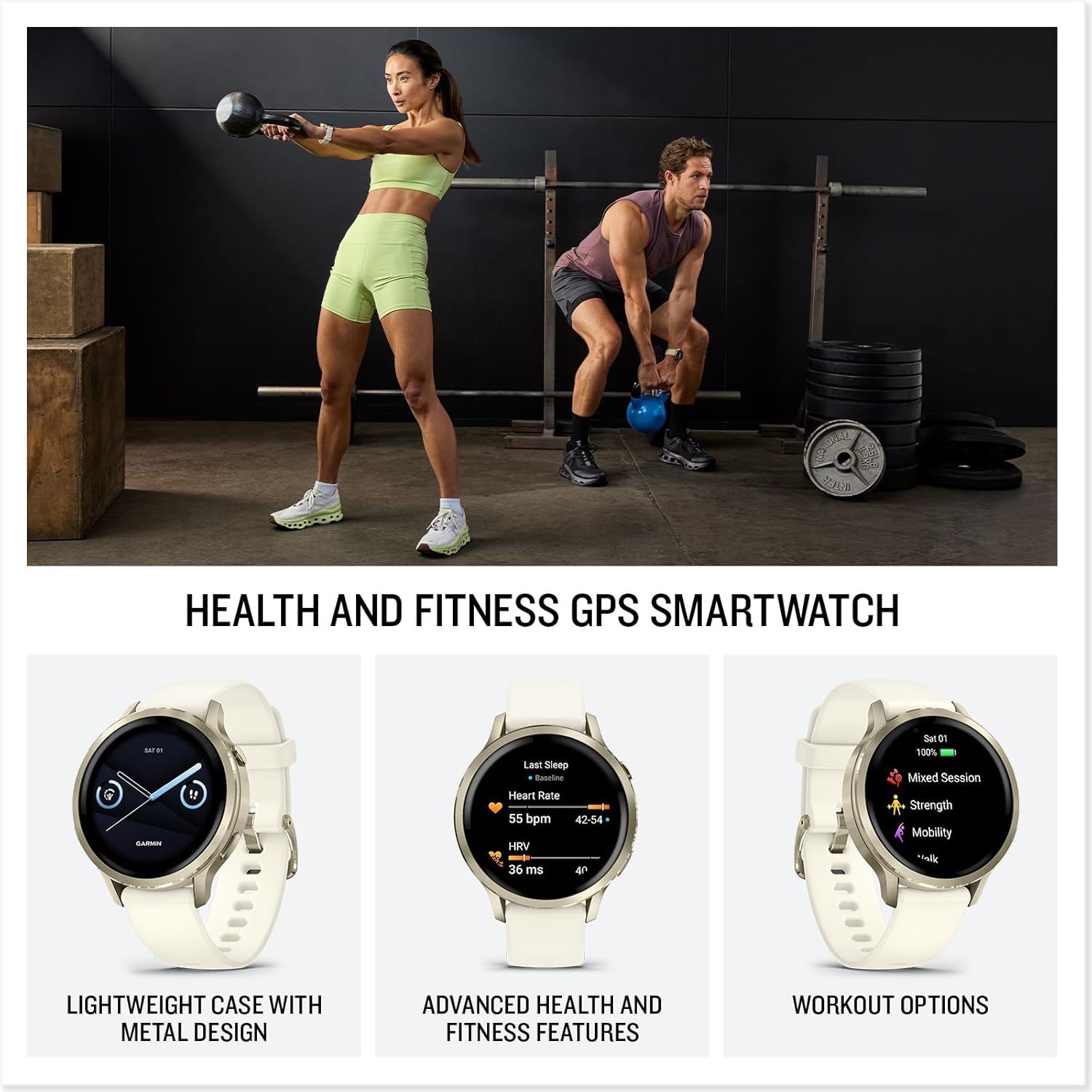
A marketing manager who does not follow a structured training plan and has no races on the calendar described what made her stick with the Venu 4 after trying three other smartwatches in two years.
She said every other watch gave her data she did not know what to do with.
The Venu 4 was the first one that told her something every morning she could actually act on.
The Body Battery was usually right.
When it was low, she felt tired.
When it was high, she felt good.
Over time she started noticing patterns she had never seen before.
A glass of wine on a weekday night did not feel like much, but three nights of data after a weeknight glass consistently showed a Body Battery five to eight points lower the following morning.
She stopped drinking wine on weeknights during the working week. Her energy improved noticeably within two weeks.
That kind of behaviour change from wrist-based health data is what the Venu 4 was designed to enable.
Heart rate monitoring on this watch is not primarily about training zones.
It is about the continuous passive picture of how your cardiovascular system is responding to everything: sleep, stress, activity, caffeine, alcohol, and daily life.
The Elevate V5 sensor is Garmin’s most accurate optical heart rate sensor currently in production and includes continuous skin temperature measurement.
HRV is tracked overnight using that sensor data, and the data feeds directly into the Body Battery score and Morning Report.
In testing, the V5 performs reliably for continuous monitoring and steady-state exercise.
For high-intensity interval training, where heart rate changes rapidly, wrist-based sensors, including the V5, can lag slightly behind actual effort, and pairing a chest strap for those sessions improves accuracy.
Lifestyle Logging is the feature that makes the Venu 4’s heart rate data more useful over time than most watches.
You can log caffeine intake, alcohol consumption, meal size, and stress events directly from the watch.
The Garmin Connect app then overlays those logs against your overnight HRV, resting heart rate, and Body Battery trends.
After several weeks of consistent logging, the correlations between specific habits and your cardiovascular recovery data become visible in ways that raw numbers alone cannot.
The built-in speaker and microphone enable wrist-based calls when the phone is nearby.
Dual-frequency GPS tracks runs and outdoor workouts with the same multi-band accuracy found on Garmin’s dedicated sports watches.
Offline music storage holds playlists from Spotify, Deezer, and Amazon Music for phone-free workouts.
Battery life lasts up to 10 days on the 41mm and 12 days on the 45mm in standard smartwatch mode.
For a lifestyle watch worn continuously and used for overnight heart rate and HRV monitoring, that multi-day battery removes the charging disruption that makes daily heart rate trend data incomplete.
Who Should Not Buy This
If your primary use is structured athletic training with detailed performance metrics, the Forerunner series provides deeper sports-specific analytics.
If LTE connectivity matters and you want to make calls without the phone nearby, there is no LTE version.
And if the price at the top of the budget range is a concern, the Vivoactive 6 covers everyday fitness tracking at a lower cost.
Specifications:
| Feature | Details |
|---|---|
| Display | AMOLED, Gorilla Glass |
| Case Sizes | 41mm and 45mm |
| Battery Life | 10 days (41mm), 12 days (45mm) |
| Water Resistance | 5ATM (50m) |
| Heart Rate | Elevate V5, skin temperature |
| GPS | Multi-band dual-frequency |
| Health Features | Body Battery, HRV, lifestyle logging, Morning Report, sleep coach, stress |
| Speaker and Mic | Yes, Bluetooth calling |
| Storage | 8GB offline music |
Garmin Forerunner 265: (Best Running smartwatch)
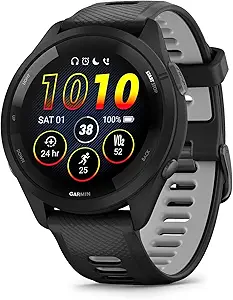
I’ve been using the Forerunner 265 as my “truth check” for wrist-based heart rate on runs, tempo blocks, and circuit days.
What makes it stand out isn’t just the bright AMOLED screen; it’s how consistently the optical HR tracks real effort without weird spikes, and how easily the watch gives you context—sleep, HRV, and Training Readiness—so your numbers tell a story, not just a beat count.
Add multiband (L1/L5) GNSS for clean pacing around buildings and a battery that survives long training weeks, and this is the runner’s watch that also happens to be one of the best for trustworthy heart-rate tracking.
Why it’s a top pick for HR accuracy:
Refined sensor + training context:
The 265’s optical HR did a solid job of shadowing my chest strap during steady runs and most interval work, with fewer cadence locks than older models.
The payoff is bigger than the raw BPM: HRV Status, Training Readiness, and the Morning Report help you determine whether today is a day for speed, ease, or rest.
(These are training aids, not medical data.
AMOLED, you can read mid-stride:
The crisp display made it easy to check zones and lap pace without breaking form—even in bright sunlight—while the five physical buttons allowed me to start/mark laps with sweaty hands or gloves.
Multiband positioning = better HR pacing:
Accurate routes matter because they only make sense in conjunction with pace and terrain.
The 265’s dual-frequency GNSS stayed locked near steel and glass, so post-run graphs actually matched how the workout felt.
When you want a strap:
The 265 pairs cleanly with Bluetooth/ANT+ chest straps for max-effort work (HIIT, sprints).
If you’re chasing marginal gains, that combo provides you with lab-grade traces and full Garmin analysis.
(Chest straps remain the reference for absolute accuracy.)
Real-world notes: (testing takeaways)
Intervals & circuits:
Short 400s and kettlebell EMOMs showed minor lag vs. chest strap at peak surges (typical for the wrist) but no nonsense spikes; recovery drops were smooth and believable.
When I clipped on a strap, the 265 logged it instantly and overlaid cleanly in Garmin Connect.
Battery anxiety solved:
I averaged a week between charges with mixed training and notifications. Garmin quotes ~13 days (265) / 15 days (265S) in smartwatch mode, with 20–24 hours of continuous GPS—plenty for race week or back-to-back long runs.
Safety layer for solo sessions:
Incident Detection and LiveTrack (phone required) add peace of mind on early-morning routes. Set them once in the app and forget it.
What you get:
- Consistent wrist HR with strap pairing for gold-standard accuracy when you need it.
- AMOLED + 5 buttons for glanceable zones and glove-proof control.
- Multiband GNSS to keep routes/pacing honest in tough signal areas.
- Training Readiness, HRV Status, and Morning Report to guide load and recovery.
- Rugged basics: Gorilla Glass 3, 5 ATM water rating, fibre-reinforced case.
- Music storage & Garmin Pay for phone-free runs and coffee stops.
Conclusion:
If you want a watch that nails the day-to-day heart-rate story—steady wrist readings, strap support for precision work, accurate GPS to frame the data, and recovery metrics that keep you honest—the Garmin Forerunner 265 is an easy recommendation.
It’s the rare OLED runner that stays readable in the sun, lasts through real training weeks, and gives you the right data to train smarter—without turning every session into a science experiment.
HR-focused specs: (265 / 265S)
| Item | Forerunner 265 | Forerunner 265S |
| Case/display | ~46–47 mm, AMOLED (~1.3″) | ~42 mm, AMOLED (~1.1″) |
| Battery (smartwatch) | Up to ~13 days | Up to ~15 days |
| Battery (GPS) | Up to ~20 h | Up to ~24 h |
| Positioning | Multiband GNSS (L1/L5) | Multiband GNSS (L1/L5) |
| Durability | 5 ATM, Gorilla Glass 3, FRP case | Same |
| Sensors | Optical HR, SpO₂, HRV, baro altimeter, compass, etc. | Same |
| Safety | Incident Detection, LiveTrack (phone required) | Same |
| Smart | Music storage, Garmin Pay, notifications | Same |
Apple Watch Series 11: (Best Heart Rate Monitor Watch for iPhone Users)

A cardiologist’s patient came to an appointment with several weeks of overnight heart rate data exported from her Apple Watch Series 11.
She had noticed an irregular rhythm notification on the watch face two weeks earlier and had been collecting ECG readings since then.
The cardiologist looked at the data, confirmed the pattern was consistent with paroxysmal atrial fibrillation, and referred her for further testing.
The Apple Watch had not diagnosed her.
But it had given her the information she needed to have the right conversation at the right time.
The FDA-cleared ECG and sleep apnea screening features on the Series 11 have generated enough real clinical conversations to be taken seriously, and that changes what it means to recommend a heart rate monitor watch to someone who cares about their long-term health rather than just their training zones.
The Series 11 uses Apple’s latest optical heart rate sensor alongside an electrical heart sensor for ECG readings. Continuous heart rate monitoring runs throughout the day and night.
Irregular rhythm notifications run passively in the background and alert you if the watch detects a heart rhythm that could indicate atrial fibrillation, without requiring any action from you.
The ECG app itself lets you take a thirty-second rhythm reading on demand, generating a result you can export as a PDF to share with a doctor.
High and low heart rate notifications alert you when your heart rate exceeds or falls below thresholds you set, which is useful for both athletes training in specific zones and people monitoring heart conditions.
VO2 Max estimation is included and updates based on GPS-tracked outdoor workouts, providing a measure of cardiovascular fitness that changes over time as training improves.
Heart rate accuracy in independent testing during steady-state cardio and moderate-intensity exercise is reliable and consistent with other premium options.
During very high-intensity intervals, wrist-based optical sensors, including the Apple Watch, can lag or underestimate peak effort, which is consistent across the category.
For most everyday training purposes and health monitoring, the accuracy is sufficient.
For athletes needing precision during sprint work, a chest strap remains the most accurate option regardless of which watch is on the wrist.
Battery life is the most discussed limitation.
Around 18 hours in normal use means the watch needs daily charging.
With sleep tracking active and always-on display enabled, most people charge during their morning routine.
For a watch being recommended as a health monitor, that daily charging habit is a real friction point compared to watches that last several days between charges.
For iPhone users who already charge their phones every night, adding one more device to the routine is manageable, but it is a genuine trade-off.
The broader smartwatch ecosystem on the Apple Watch remains unmatched for iPhone users.
App support, notifications, Apple Pay, fitness tracking, and Health app integration all work together to make the Series 11 genuinely useful beyond its heart rate monitoring capabilities.
For a full picture of how the Series 11 handles health monitoring across different scenarios and how it compares to dedicated fitness trackers, the breakdown at best-smartwatches-for-sleep-tracking covers the overlap between sleep and heart health tracking in detail.
Specifications:
| Feature | Details |
|---|---|
| Display | Always-On LTPO OLED Retina |
| Case Sizes | 42mm and 46mm |
| Battery Life | Up to 18 hours, daily charging required |
| Water Resistance | 50m swimproof |
| Heart Rate | Continuous optical, electrical heart sensor |
| ECG | Yes, FDA-cleared, AFib detection |
| Health Features | Sleep apnea screening, irregular rhythm notifications, VO2 Max, high/low HR alerts |
| GPS | Dual-frequency |
| Compatibility | iPhone only |
Cubitt: (Best Waterproof Smartwatch for Kids)
Features:
Performance:
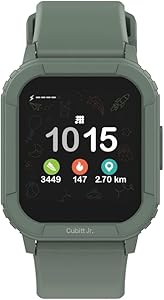
The device features a 1.4-inch-wide touch screen utilising IPS technology.
The screen’s brightness can be adjusted, and when the wrist is raised, the screen instantly brightens.
The watch features many personalized presentations for various styles as well as ages.
A body temperature monitor (tracks data for the entire day), eight entertaining brain-training activities, and ten daily alerts for healthy habits (homework, breakfast, going to school or bed, etc.) are all featured in this little gadget.
Parents can also set a password-protected watch lock.
Get digital platforms, WhatsApp, or call notifications.
Vibrating reminders can alert you to incoming calls and let you choose whether to answer.
Pairing the Cubitt Jr. application is easy; just use Bluetooth to connect your gadget to an iOS or Android phone. Battery life is 5-7 days while on standby, or 10-15 days.
The screen brightness can be changed according to your preference.
Functionality:
An installed accelerometer sensor allows you to track your everyday activities and calculate the calories burned, steps taken, and active time.
You may easily check the status of your workout from the application by selecting one of the six sports modes: jogging, walking, climbing, cycling, basketball, or casual sports.
The watch automatically tracks your pulse rate throughout the day and keeps track of your sleep duration.
You may look at graphs in the application that show you how much or little sleep you get, as well as when you wake up.
What Makes It Best:
The device has an IP68 rating for waterproofness and dust resistance.
This indicates that it shouldn’t have any debris issues and can withstand immersion for 30 minutes at a depth of about 4 feet.
For the mothers, it means they don’t need to worry whether the child scrubs their hands or the watch gets somewhat dirty.
The health features provide the most accurate readings, especially the sleep tracker, which offers an in-depth record of your sleep patterns and quality.
The heart rate tracker accurately monitors your rhythm and provides precise readings.
Conclusion:
If someone is looking for a good watch with a heart rate monitor, they should invest in this one and won’t be disappointed.
Fitbit Charge 6: (Best Budget Heart Rate Monitor Watch)

The Fitbit Charge 6 is a band rather than a watch, and that distinction matters for overnight wear.
The slim profile sits closer to the wrist than most smartwatches, which improves optical sensor contact and contributes to more consistent overnight heart rate and SpO2 readings compared to bulkier devices that shift position during sleep.
It is one of those devices that people genuinely forget they are wearing, and that passivity is a genuine advantage for continuous monitoring.
Heart rate monitoring runs continuously throughout the day and night.
During exercise, the Charge 6 uses PurePulse 2.0, Fitbit’s most refined optical heart rate system.
In testing, accuracy during steady-state cardio is reliable. During HIIT and strength training, some drift from a chest strap is expected, consistent with optical sensors across the category.
The ECG app detects signs of atrial fibrillation on demand. EDA scanning, which Fitbit calls electrodermal activity measurement, monitors stress responses through small electrical changes in the skin.
Combining the heart rate, ECG, EDA, and SpO2 sensors gives the Charge 6 a cardiovascular monitoring depth that most trackers at this price point do not approach.
Google Maps and Google Wallet integration are included, which is unusual for a fitness band and useful for people who want basic smartwatch functionality without full smartwatch bulk.
Built-in GPS means accurate route and pace data for outdoor workouts without needing the phone nearby.
Battery life is up to seven days with standard settings, dropping slightly with continuous GPS or always-on display.
For most users who track daily heart rate and sleep, a 7-day battery life is comfortable and removes the daily charging discipline that smartwatches require.
The Fitbit app and the six months of free Fitbit Premium included with the Charge 6 provide deeper sleep staging, readiness scores, and health coaching.
After the trial period, the decision to continue the subscription depends on how much value you find in the coaching features compared to what is available without them.
Who Should Not Buy This:
If you want a watch display showing the full interface and features of a proper smartwatch, the Charge 6 is a band with a small screen.
If you need detailed training analytics for structured athletic programming, dedicated sports watches offer significantly more depth.
And if music storage for phone-free workouts matters to you, the Charge 6 does not have it.
Specifications:
| Feature | Details |
|---|---|
| Form | Slim fitness band |
| Battery Life | Up to 7 days |
| Water Resistance | 5ATM swimproof |
| GPS | Built-in |
| Heart Rate | PurePulse 2.0, continuous |
| ECG | Yes, AFib detection |
| EDA | Yes, stress monitoring |
| Health Features | SpO2, sleep stages, Daily Readiness, Active Zone Minutes |
| Smart Features | Google Maps, Google Wallet |
| Compatibility | iOS and Android |
Polar H10: (The Accuracy Upgrade for Heart Rate Monitor)

If you care about true heart-rate accuracy, a chest strap beats wrist optics—especially during lifts, sprints, or intervals.
The Polar H10 is still the gold standard I reach for when I’m testing watches.
It uses ECG-style electrodes on a soft textile strap, locks on quickly, and stays put when you’re sweaty or moving hard.
Crucially, it pairs with almost every running/cycling watch or gym device via Bluetooth, ANT+, and 5 kHz GymLink (handy for older treadmills and swimming with compatible watches).
It also stores a workout to internal memory when you don’t want to carry a phone.
Why pick a chest strap for your watch?
Pro-level accuracy:
Optical sensors on watches are accurate at rest but can drift due to arm swing, gripping, or cold weather.
Chest straps capture the heart’s electrical signal directly—H10 is the “reference” many labs and reviewers use when validating wrist devices.
Recent studies still benchmark wrist-wearables against the Polar H10 for exercise accuracy.
Rock-solid fit & comfort:
Polar’s Pro strap features silicone grippers and a firm buckle, ensuring the sensor stays in place, even during intense exercises like burpees or rowing.
The strap is machine washable, and the pod is water-resistant to 30 meters.
Works with your ecosystem:
Connect to two Bluetooth devices simultaneously (e.g., your watch and a phone app) and broadcast to ANT+ compatible gym gear—great for class bikes, Zwift, or a coach’s tablet.
Swim and phone-free sessions:
Start recording from the Polar Beat app and the H10 logs one full workout to onboard memory; for pool work, you can also use 5 kHz GymLink with compatible watches.
Real-world notes: (from training & testing)
I used the H10 alongside multiple “best heart rate monitor watches” for intervals, hill sprints, and circuit workouts.
Where wrist sensors spiked or lagged during grip-heavy sets (such as kettlebell swings and pull-ups), the H10 trace remained clean and accurately reflected the session’s intensity.
It also fixed a common winter problem: cold forearms causing low wrist readings at the start—the chest strap became accurate from the first rep.
Battery life was not a concern: the CR2025 cell is rated for ~400 hours; I replaced it after months of mixed daily use.
What You Get:
ECG-grade heart-rate measurement with Polar Pro textile strap (non-slip silicone, firm buckle).
Multi-protocol connectivity: Bluetooth, ANT+, and 5 kHz GymLink (older gym gear & swim-compatible watches). Dual Bluetooth streaming supported.
Onboard memory for one phone-free session (start from the Polar Beat app; sync later).
Water resistance 30 m; machine-washable strap.
Long battery life: CR2025 (~400 h), user-replaceable.
Conclusion:
If your goal is to get the most out of any “best heart rate monitor watch,” pair it with the Polar H10.
You’ll get lab-grade heart-rate tracks, fewer spikes during tough sets, and a setup that plays nicely with watches, bikes, and apps you already use—without babysitting batteries or connections.
It’s the accuracy anchor your training deserves.
Key Specs:
| Item | Polar H10 |
| Sensor type | ECG chest strap with Polar Pro textile strap |
| Connectivity | Bluetooth, ANT+, 5 kHz GymLink; dual Bluetooth simultaneous |
| Water resistance | Up to 30 m |
| Internal memory | 1 workout (start via Polar Beat; sync to app later) |
| Battery | CR2025, ~400 hours |
| Updates | OTA firmware via Polar Beat/Flow apps |
| Use cases | Running, cycling, rowing, HIIT, strength training, swimming (with GymLink-compatible watches) |
Samsung Galaxy Watch 8: (Best Heart Rate Monitor for Android Users)

A fitness coach who trains clients across running, cycling, and strength work described checking her Energy Score every morning before planning her own training for the day.
She said it had changed how she periodised her own training more than any other tool she had used.
Not because the number was always right, but because over weeks of data it had become an honest mirror of how much load she was carrying.
When the Energy Score was low two days in a row despite normal sleep, she started tracking back through the data and found her resting heart rate had been elevated for three consecutive nights.
She had been fighting off a minor infection without knowing it.
That kind of passive monitoring working in the background while life happens is what the Galaxy Watch 8 does particularly well.
The heart rate sensor runs continuously, the data feeds into Samsung Health overnight, and the morning output gives you context for decisions before you have finished your first cup of coffee.
The Galaxy Watch 8 uses Samsung’s BioActive sensor array, which combines optical heart rate, electrical heart signal, and bioelectrical impedance in a single rear sensor.
ECG readings are available on demand through the Samsung Health Monitor app.
Blood pressure monitoring is available in supported markets through initial calibration with a traditional cuff, followed by periodic recalibration every 4 weeks.
These are screening tools rather than medical devices, but they give the watch a cardiovascular monitoring depth that most other smartwatches do not approach.
Heart rate accuracy during steady-state exercise is reliable and consistent with other premium options in this category.
During high-intensity interval training, some discrepancy from a chest strap is normal and expected across all wrist-based devices. For most training purposes, the Galaxy Watch 8 delivers accurate enough readings to make zone-based training practical without always needing a separate strap.
The AGEs Index, which measures carotenoid levels through a simple finger press on the sensor, is a newer addition that gives an indirect marker of antioxidant status and metabolic health.
It is not a standard training metric, but it adds a dimension to health monitoring that most watches in this category do not attempt.
Vascular Load, which measures circulatory stress during sleep, provides overnight cardiovascular data in addition to the standard heart rate and SpO2 monitoring.
At 8.6mm thick it is Samsung’s slimmest watch, and that slim profile makes it comfortable for both all-day wear and overnight monitoring.
The 3,000-nit display reads clearly during outdoor training in direct sunlight without needing manual brightness adjustment.
Specifications:
| Feature | Details |
|---|---|
| Display | AMOLED, 3,000 nits |
| Case Sizes | 40mm and 44mm |
| Thickness | 8.6mm |
| Battery Life | 30 hours (40mm), 40 hours (44mm) |
| Water Resistance | IP68 and 5ATM |
| Heart Rate | BioActive continuous optical sensor |
| ECG | Yes, on-demand |
| Blood Pressure | Yes, with calibration |
| Health Features | Energy Score, AGEs Index, Vascular Load, SpO2, skin temperature |
| Compatibility | Android, best with Samsung Galaxy |
Google Pixel Watch 4: (Best for Android Users)
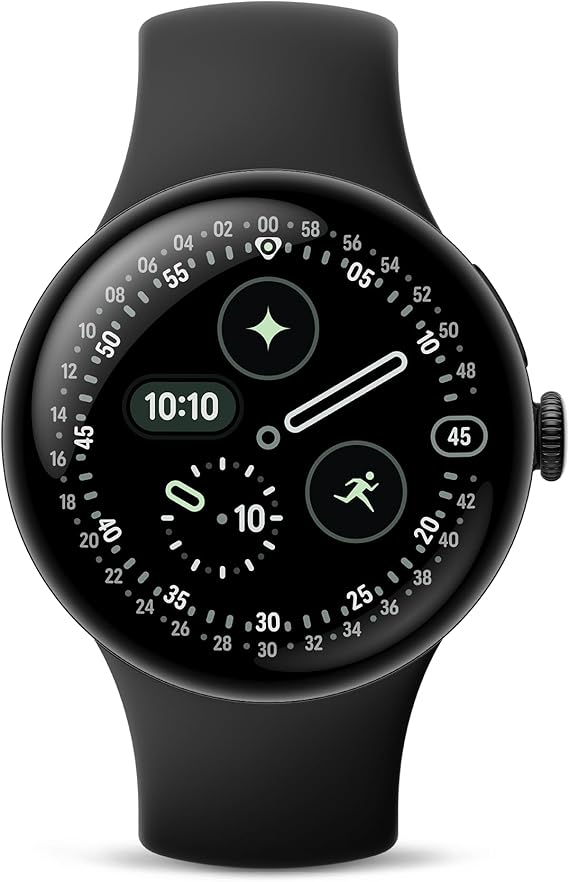
I wore the Pixel Watch 4 for interval runs, kettlebell circuits, and two long site walks, then compared its numbers against those from a chest strap and a Garmin reference.
What I noticed first: the heart-rate trace is steady, even when cadence spikes or my grip tightens during sets. Independent testing backs that up—reviewers found HR typically within ~1 bpm of strap/arm sensors and GPS tracks that nearly match those of high-end sports watches.
For a small Android smartwatch, that’s impressive.
Why it’s a top pick for HR accuracy:
Mature Fitbit algorithms on new hardware:
Google relies on Fitbit’s sensor processing, which has been refined over the years across various devices, including watches and trackers.
On PW4, that translates to fewer spikes during tempo changes and more believable averages across a workout.
(Google also pushed recent sleep/HR updates to the Fitbit stack in 2025.)
Stable readings during real movement:
In side-by-side tests, PW4’s HR stayed close to a chest strap through steady runs and mixed intervals; it may skew slightly conservative but remained consistent—arguably better than random spikes.
ECG on the wrist:
When you want a rhythm check (sinus vs possible AFib), install and use the Fitbit ECG app on your watch—useful context if your HR feels “off” after a hard session.
(This is a screening tool; see a clinician for diagnosis.)
Practical gains you feel day to day:
Bright, glanceable display outdoors:
The Actua 360 LTPO OLED peaks around 3,000 nits, so HR zones and split times stay readable in full sun—no hand-shielding mid-run.
More precise routes = better HR context: Dual-frequency (L1/L5) GPS keeps track of your pace and effort more accurately around tall glass/steel, so your pace/effort pairing makes sense when you review your HR curves later.
Right-to-repair win:
Stuff happens. PW4 earned a 9/10 iFixit repairability score thanks to screws and gaskets instead of glue.
Batteries and displays are replaceable without compromising seals—a rarity for a smartwatch.
What you get:
- Consistently accurate wrist HR for runs and daily training, plus ECG spot checks.
- Dual-band GPS that holds signal in tough urban canyons—good for matching HR to terrain.
- 3000-nit display that stays readable at a glance.
- Wear OS + Fitbit: clean UI, reliable syncing, expanding exercise modes.
- IP68 + 5 ATM, with a design that’s actually repairable.
Real-world notes from testing:
Intervals & strength:
During 400m repeats and kettlebell EMOMs, PW4 tracked the rise/fall smoothly.
It under-reads peaks by a hair vs. chest strap (typical for the wrist) but never “flat-lined” or spiked nonsense.
Auto-detect vs manual starts:
Auto-detect is handy, but if you want full route maps and all stats, manually start workouts—some auto sessions won’t save every detail.
Accessory caveat:
PW4 doesn’t pair to external HR straps, so what you get is what’s on the wrist. If you’re a data purist, that’s a trade-off to note.
Conclusion:
If you want a small, bright, and trustworthy wrist-HR smartwatch for daily training—and you live inside the Google/Fitbit world—the Pixel Watch 4 belongs near the top of any “Best Heart Rate Monitor Watches” list.
It won’t replace a lab-grade strap for sprints or racing, but for most athletes it delivers steady, believable HR, accurate routes, and a display you can read anywhere—plus the rare comfort that you can repair it if life (or training) gets messy.
Specs that matter: (HR-focused)
| Feature | Pixel Watch 4 |
| Display | Actua 360 LTPO OLED, up to 3,000 nits |
| Positioning | Dual-frequency GPS (L1/L5) |
| Water/Dust | IP68, 5 ATM |
| Health | Optical HR, ECG app support (Fitbit), SpO₂, sleep/stress metrics |
| OS | Wear OS with Fitbit integration |
| Build | 41 mm & 45 mm aluminum; Gorilla Glass 5; repairable (iFixit 9/10) |
POLAR : (Best Advanced Multisport Smartwatch with Daily Workouts)
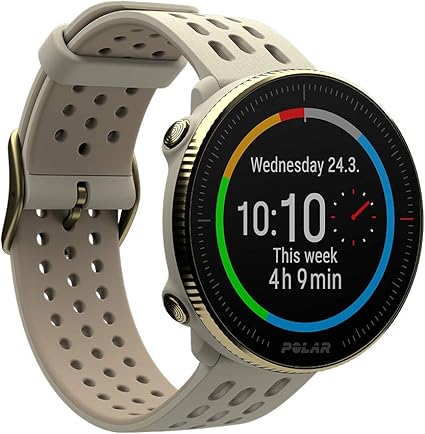
This best heart rate monitor watch was recommended to my grandfather by his doctor.
The doctor wanted him to keep track of his sugar level as it was getting serious.
We got this watch for him and loved the way it would give accurate readings.
Features:
Design:
Especially if you’re active in exercising using pulse rate zones, the Sense’s activity tracker features are amazing.
There are several options for activity monitoring, and the watch and application work seamlessly together to provide the best and most accurate results for users.
The POLAR Vantage M2 smartwatch has a stylish design.
Its display design is quite identical to the other smartwatches in the market, it has a square screen and curved edges that, according to the creators, are influenced by the contours of the person’s body.
The casing gives the device a premium appearance. Bright, clear, and responsive describe the most unique color display.
A comfortable silicone band is included in the POLAR Vantage M2.
Build:
The POLAR Vantage M2 has a maximum battery life of six days, but constant usage of its numerous sensors and utilisation of the always-on display can affect it a bit.
Charging this watch is easy; it comes with a compact USB charger and a square dock that magnetically fastens to the smartwatch’s pack when it is time to top it off.
The magnetic connection makes it difficult to misalign, and it is incredibly simple to operate.
Additionally, the integrated mic lets you dictate the text message replies while receiving call or Message alerts from your phone.
The POLAR Vantage M2 is ideal for swimming or wearing in the sea because of its 50m water resistance.
What Makes It Best:
This is the smartwatch that allows users to monitor their heart rate, featuring all the best features for individuals with diabetes and those who want to track their activities and health-related metrics.
With its long battery life, this watch is ideal for extended use.
EZON T007: (Chest-Strap Accuracy Without the App Fuss)
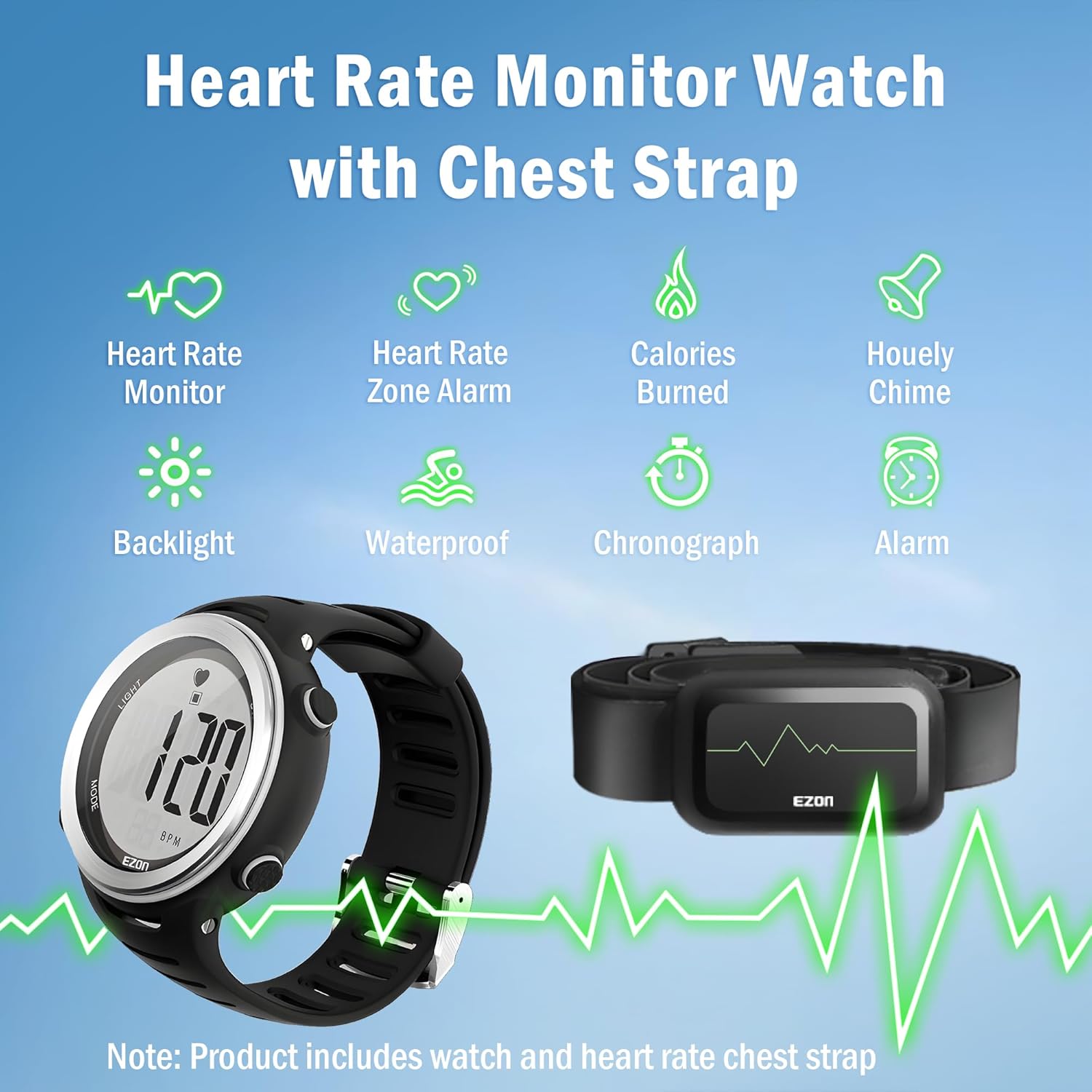
If you want clean workout heart-rate data without juggling phone apps or subscriptions, the EZON T007 is the kind of simple, old-school kit that still punches above its weight.
It’s a digital sports watch that pairs to an included chest strap, so you get ECG-style readings (not optical estimates) in real time on your wrist.
You also get practical touches—stopwatch, hourly chime, target-zone alarms, and 5 ATM water resistance—that make it a straightforward “put on and train” tool.
Why it belongs on a “Best Heart Rate Monitor Watches” list
Chest-strap precision, watch display:
Because the strap reads the heart’s electrical signal, you avoid the cadence lock and grip-strength errors that trip up many wrist sensors.
The T007 shows live BPM, calories, and manual HR zones with audio/visual alerts, which is great for intervals and zone-based runs.
Train without a phone:
Start the session, glance at your wrist, and go.
No app-hunting mid-warmup.
For athletes who use gym machines or want fewer distractions, this simplicity is a feature, not a flaw.
(You can still log results the old-fashioned way if you like.)
Workhorse durability:
The 5 ATM / 50 m water-resistance rating covers sweat, rain, rinsing, and pool work; just avoid pressing the buttons underwater—a common limitation on digital sports watches.
Real-world notes: (after two weeks of mixed training)
Intervals feel “honest.” During 400 m repeats and bike sprints, peaks and recoveries matched what I expect from a chest-strap trace—no strange spikes when I tightened my grip on the bars.
Target-zone alarms are the sleeper feature. Set upper/lower BPM limits and run by feel; the beep/vibration cues nudge you back into range without staring at the screen.
Site-proof and gym-proof. The acrylic/silicone build shrugs off chalk, sweat, and quick rinses. I set the hourly chime for posture breaks on long desk days—oddly handy for recovery.
Battery expectations. Listings and reseller pages cite long watch battery life typical of non-smart digitals (months, not days). Exact lifespan varies by chime/HR use; plan on occasional coin-cell swaps rather than nightly charging.
What You Get:
- ECG-style chest strap + digital watch combo for real-time HR and calorie readouts.
- Manual HR zones with audio/visual alarms to hold effort exactly where you want it.
- 5 ATM/50 m water-resistance; rinse after workouts (don’t press buttons underwater)
- Stopwatch and hourly chime built in—no phone required.
- Simple materials (acrylic/silicone) that are easy to clean and comfortable all session.
Conclusion:
If your priority is reliable, no-nonsense heart-rate tracking and you don’t need smartwatch bells and whistles, the EZON T007 is a legit value pick.
The chest-strap + watch combo keeps your effort honest, the zone alarms guide pacing without screen-staring, and the 5 ATM build holds up to sweaty gyms and rainy runs—exactly what most people actually need to train smarter.
Key Specs:
| Feature | EZON T007 |
| HR method | Chest strap (ECG-type) paired to digital watch |
| Live metrics | BPM, calories, target zones with audible/visual alerts |
| Utilities | Stopwatch, hourly chime |
| Water rating | 5 ATM / 50 m (avoid pressing buttons underwater) |
| Build | Acrylic case, silicone band |
| Power | Coin-cell style battery (multi-month typical for non-smart digitals) |
| Use case | Intervals, steady-state runs, indoor cycling/rowing, gym floor |
Garmin Forerunner 570: (Best Heart Rate Monitor for Serious Runners and Triathletes)

A triathlete preparing for her second full-distance event described the morning after a hard brick session.
She had done a 90-minute ride followed by a 40-minute run, felt she had managed the effort well, and woke up the next morning expecting a reasonable recovery score.
The Forerunner 570 showed a Training Readiness of 28 out of 100.
She was frustrated.
Then she looked at the overnight heart rate data.
Her resting heart rate had been elevated by eleven beats throughout the night. The watch had seen something she had not felt yet.
She took a rest day.
By the following morning, the Training Readiness had climbed back to 61, and the resting rate had normalised.
She was glad she had listened.
The Forerunner 570 uses Garmin’s Elevate V5 sensor, which is the latest generation in its optical heart rate lineup and the first to include continuous overnight skin temperature measurement.
The skin temperature data improves HRV tracking accuracy and feeds into the morning readiness calculation with more physiological context than the older V4 sensor.
In testing during steady-state running and cycling, the V5 sensor performs reliably.
During very high-intensity efforts, some lag versus a chest strap is expected and consistent with the category.
Training Readiness is the feature that most serious athletes find most useful on a daily basis.
It combines sleep quality, HRV status, recovery time from recent sessions, and cumulative training load into a single morning score that tells you exactly how prepared your body is for hard work that day.
For runners following structured training blocks, that daily signal reduces the guesswork around which days to push and which days to protect.
Daily Suggested Workouts then use that readiness score to recommend a specific session appropriate for your current state, removing the planning burden from training days when it should not exist.
Dual-frequency GPS with multi-band positioning provides accurate tracking in dense urban environments, near tall buildings, and under tree canopies.
For a runner who does most of their miles on city routes or mixed terrain, the GPS accuracy on the 570 means the pace data that contextualises every heart rate reading is trustworthy rather than approximate.
The built-in speaker and microphone for wrist-based calls are the most discussed new additions over its predecessor.
In practice, most reviewers found it worked adequately in calm conditions and degraded in wind.
One runner tested it mid-run and found it functional enough for brief exchanges.
Whether it justifies the price difference from older models is a personal decision based on how much you value that specific convenience.
Battery life in smartwatch mode is around eleven days, dropping to twenty hours with continuous GPS active.
For a week of daily training with GPS-tracked workouts, most athletes charge every three to four days.
For a detailed breakdown of how the Forerunner 570 compares to other Garmin running watches across different training levels and what it offers beyond heart rate tracking, the full comparison at best-smart-watches-for-runners covers which model suits which type of runner.
Who Should Not Buy This:
If topographic maps are important for your outdoor training and you do not want to navigate with breadcrumb trails, the Forerunner 570 does not have full maps.
If you are primarily a casual fitness user and the depth of Training Load analytics feels like more than you will use, the Forerunner 165 covers beginner to intermediate running well at a lower cost.
Specifications:
| Feature | Details |
|---|---|
| Display | AMOLED, 1.3-inch (42mm), 1.4-inch (47mm) |
| Case Sizes | 42mm and 47mm |
| Battery Life | Up to 11 days smartwatch mode, 20 hours GPS |
| Water Resistance | 5ATM (50m) |
| GPS | Multi-band dual-frequency |
| Heart Rate | Elevate V5, skin temperature |
| Speaker and Mic | Yes, Bluetooth calling |
| Training Features | Training Readiness, Training Load, HRV, Daily Suggested Workouts, Triathlon Coach |
| Music | Offline Spotify, Deezer |
Ending Paragraph:
We have finalised our discussion about the best heart rate monitor watches.
Do you guys have experience with the best heart rate monitor Watches?
What are your thoughts on them?
Kindly drop your comments below.
Related Articles:
Top Solar Charging Smartwatches 2025
Best Watches to Track Calories Burned
Luis Cooper

Hi, I'm Luis, the guy behind this site. I love wearing watches, especially ones that look great on small wrists (mine are about 6.3" around). The Watches Geek is dedicated to helping you learn about and buy watches that you will love wearing. I want this website to be the last destination for people to pick the best watches to fit their needs. You can find our unbiased reviews here on Thewatchesgeek.