

Last Updated on March 31, 2026 by Luis Cooper
When it comes to nutrition systems, most people are looking for the best ways to lose weight.
If you count calories, you’ll need to track how many calories you eat and what kind of food you eat.
Best watches to Track Calories Burned can help you track calories more easily, which can help you lose weight more efficiently.
If you’re interested in losing weight, you can use this site to find the latest reviews of the best calorie-burning watches.
What are watches good for?
A watch can be a great way to track your physical activity and calories burned.
There are many types of watches that track calories burned, and this article will outline the features of each type.
There is a wide range of kinds of watches that track your physical activity and calories burned.
Some watch manufacturers have created unique watch faces that include a calorie counter.
Other watch manufacturers have included calorie-tracking functionality in their standard watches.
Which are the Best Watches to Track Calories Burned?
Here are my recommended top 13 Best Watches to Track Calories Burned:-
![Apple Watch SE 3 [GPS 40mm] Smartwatch with Starlight Aluminum Case with Starlight Sport Band - S/M. Fitness and Sleep Trackers, Heart Rate Monitor, Always-On Display, Water Resistant](https://m.media-amazon.com/images/I/31YiTby0pOL._SL160_.jpg)

![Samsung Galaxy Watch 8 40mm Bluetooth Smartwatch, Cushion Design, Quick Button, Sleep Coaching, Now Bar, Running Coach, Energy Score, Graphite [US Version, Amazon Exclusive 2Yr Warranty]](https://m.media-amazon.com/images/I/41pVUmtVzHL._SL160_.jpg)


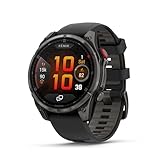
Garmin Fenix 8 Pro: (Best for Accurate Calorie Tracking)

If your main goal is to accurately track calories burned, not just see random numbers, the Garmin Fenix 8 Pro is in a completely different category.
This isn’t the kind of watch you buy just to count steps.
It’s built for people who actually train — whether that’s at the gym, on the run, or just staying consistently active.
What It Actually Feels Like to Use:
First thing — this watch doesn’t disappear on your wrist.
You feel it.
It’s solid, slightly heavy, and very clearly built like a tool.
When I used Garmin watches for workouts, the biggest difference I noticed wasn’t design… it was the data.
Calories didn’t jump around randomly like cheaper watches.
If I pushed harder, the numbers reflected it.
If I had a lighter day, it showed that too.
That kind of consistency is something you don’t really appreciate until you’ve used both types.
Also, you’re not constantly checking it.
You just wear it, do your thing, and later it gives you a proper summary that actually makes sense.
Why It Tracks Calories Better Than Most Watches:
Most smartwatches keep things simple.
They look at movement, maybe heart rate, and give you a rough estimate.
This one goes further.
It looks at:
- Your heart rate changes during activity
- The type of workout you’re doing
- How long and how intense your session was
- Your overall daily activity
So instead of just giving you a number, it builds a more realistic picture.
In simple terms, it doesn’t guess as much.
Where It Really Stands Out:
This is where the watch starts to make more sense.
Different activities are treated differently. Running doesn’t look the same as strength training, and the watch actually understands that.
- GPS tracking is consistent, especially outdoors
- Workouts feel structured, not generic
- You start seeing patterns over time
What I personally liked is that it doesn’t just track — it explains things.
You can actually understand why your calories were higher one day and lower the next.
Battery Life:
One thing that changes your experience completely is the battery.
You’re not charging this every night.
You can go days… sometimes much longer, depending on how you use it.
Even GPS sessions don’t drain it the way most smartwatches do.
That means you can track workouts continuously without thinking, which is honestly a big deal.
Build Quality:
This watch is clearly not made for desk use.
- The body feels tough
- The screen is hard to scratch
- It handles water, sweat, and outdoor use easily
You don’t feel like you need to protect it all the time, which makes you actually use it more.
Smart Features:
Yes, you still get things like notifications, music, and basic connectivity features.
But realistically, that’s not why someone buys this watch.
You buy it for tracking, not for apps.
Who This Is Actually For:
This makes sense if you:
- Train regularly
- Care about accurate calorie tracking
- Want to understand your activity, not just log it
It works especially well for people trying to manage weight or improve performance using real data.
Garmin Lily 2: (Best Stylish Women’s Smartwatch)

If your main goal is to track calories burned accurately without wearing a bulky sports watch, the Garmin Lily 2 is one of the few options that strike the right balance.
It looks like a small, stylish watch on the outside, but inside it quietly tracks your activity throughout the day in a way that feels natural, not overwhelming.
How It Feels Daily:
The first thing you notice is how light and compact it is.
If you’ve ever tried bigger fitness watches, you’ll immediately feel the difference.
It doesn’t get in the way while typing, sleeping, or even during workouts.
I’ve found smaller watches like this tend to be worn more consistently — and that matters a lot for calorie tracking.
Because the more you wear it, the more accurate your daily calorie data becomes.
The screen is hidden behind patterned glass, making it look like a normal watch until you tap it.
It’s simple, clean, and doesn’t scream “fitness device.”
How It Tracks Calories:
The Lily 2 doesn’t just count steps and guess calories.
It uses a mix of:
- Continuous heart rate tracking
- Daily activity levels (steps, movement, workouts)
- Body data (like age, weight, etc.)
- Sleep and recovery patterns
All of this combined gives you a more realistic estimate of how many calories you burn in a day.
In real use, this means:
You’re not just seeing numbers.
You’re understanding your daily energy output.
Fitness & Activity Tracking:
This watch is not built for hardcore athletes, but it covers everything most people actually do:
- Walking
- Running (basic tracking)
- Cycling
- Yoga and light workouts
The important part is consistency.
It tracks your movement throughout the day, not just during workouts, giving you a better picture of total calories burned.
Comfort & Wearability:
A lot of competitors miss this.
The Lily 2 is designed for smaller wrists, which makes it extremely comfortable for long wear.
You can wear it all day and night without feeling the need to take it off.
That’s a big advantage because:
Better wear time = better calorie tracking accuracy
Where It Beats Competitors:
Most watches that track calories well are:
- Big and bulky
- Overloaded with features
- Not comfortable for 24/7 wear
The Lily 2 takes a different approach:
It focuses on simplicity, comfort, and consistency.
And for calorie tracking, that actually works better.
Conclusion:
The Garmin Lily 2 proves that you don’t need a large, complicated smartwatch to track calories effectively.
It focuses on what actually matters — consistent tracking, comfort, and simple insights.
And for most people, that’s exactly what leads to better results over time.
If your goal is to stay aware of how many calories you burn throughout the day, this is one of the easiest watches to live with — and that makes a real difference.
Apple Watch SE 3: (Best for Calorie Tracking on iPhone)

For iPhone users who want accurate calorie tracking without spending flagship money, the Apple Watch SE 3 hits a sweet spot that’s hard to ignore.
It runs on the same S10 chip as Apple’s top-tier Series 11, which means the processing behind your health data is anything but basic — just without the premium price tag attached.
Why It Tracks Calories Well:
The SE 3 doesn’t rely on a single sensor to estimate calories.
It combines a second-generation optical heart rate sensor, a high-g accelerometer, a gyroscope, and an always-on altimeter to build a fuller picture of your activity.
When you’re doing a HIIT session, a hike, or even a casual walk, the watch factors in your heart rate, elevation changes, and movement intensity together.
The result is calorie data that’s noticeably more consistent and trustworthy than what you get from most fitness bands and budget smartwatches.
The Always-On display is a practical upgrade here too — during workouts, you can glance down and see your calorie burn in real time without lifting your wrist or tapping the screen.
Small thing, but when you’re mid-rep, it actually matters.
Everyday Fitness Features:
Beyond calorie tracking, the SE 3 covers all the basics — step counting, distance, active minutes, sleep tracking, and automatic workout detection.
The new Workout Buddy feature uses Apple Intelligence to give you real-time audio coaching during sessions, personalised to your actual workout data rather than generic motivational lines.
At 26.3 grams, the 40mm case is light enough to forget you’re wearing it, which helps if you want to track sleep overnight.
Water resistance is rated to 50 metres, so swimming and sweaty workouts aren’t a concern.
Battery life sits at 18 hours in regular use — enough for a full day and one workout.
Heavy GPS use alongside music streaming will push you toward the lower end of that range, but fast charging means 30 minutes on the cable gives you enough for the rest of the day.
Who Should Buy This:
Perfect for iPhone users stepping into their first Apple Watch, or anyone upgrading from an older SE model who wants better calorie accuracy and an always-on screen without paying for features they won’t use.
Who Should Skip It:
Android users — this won’t pair with your phone at all.
Also not the right pick if you need ECG, blood oxygen monitoring, or more than 18 hours of battery life.
Specifications:
| Feature | Details |
|---|---|
| Case Size | 40mm |
| Display | Always-On Retina LTPO OLED |
| Resolution | 324 × 394 pixels |
| Chip | Apple S10 (64-bit dual-core) |
| Storage | 64GB |
| GPS | Built-in (independent of iPhone) |
| Water Resistance | 50 meters (5ATM) |
| Battery Life | 18 hours (up to 32 hours in Low Power Mode) |
| Weight (GPS) | 26.3 grams |
| Sensors | Heart rate, accelerometer, gyroscope, altimeter, ambient light, compass |
| Connectivity | Bluetooth, Wi-Fi |
| Compatibility | iPhone 11 or later, iOS 26 or later |
| Colors | Midnight, Starlight |
Fitbit Inspire 3: (Best Cheap Health & Fitness Tracker)

Are you a busybody who’s always chasing goals yet looking to keep a close eye on your health?
Look no further.
The Fitbit Inspire 3 has covered you, offering a seamless blend of functionality and fashion.
Wrapped in a slick Midnight Zen/Black design, this versatile gadget is not just an accessory but an extension of you.
Essential Features:
- Model: It’s the Fitbit Inspire 3, of course
- Appearance: A classy Midnight Zen/Black colour
- Battery Life: Goes on for days, literally
- Health Tracking: Stress Management, Sleep Tracking, 24/7 Heart Rate, and more
- Connectivity: Bluetooth ready for all your devices
- Size: One size with S & L bands included so no fretting about fit
Battery That Keeps Going and Going:
Let’s tackle the elephant in the room: battery life.
Charging devices daily is tiresome, and Fitbit seems to have understood this gripe.
Their Inspire 3 model promises days of uninterrupted usage.
It stood true to the claim when tested, liberating me from the never-ending cycle of plugging and unplugging.
A Health Coach on Your Wrist:
This is an all-in-one health monitoring system, from tracking sleep patterns and heart rate to guiding you through stress management.
Accurate and reliable data at your fingertips or wrist is a game-changer.
It helps keep you aware and accountable, which is half the battle when striving for a healthier lifestyle.
Design and Comfort:
The Midnight Zen/Black colour adds a touch of sophistication, while the changeable bands offer flexibility to match your attire.
But it’s not just about the looks; the device is comfortable for long-term wear, which is crucial for 24/7 tracking.
International Model:
Although it’s a marvel in many aspects, it has limitations.
GPS tracking is notably absent, so you’ll need your phone nearby to map your runs.
And yes, the price might make you think twice, but remember, good things don’t come cheap.
Why This Should Be Your Next Purchase:
If you’re in the market for a holistic health-tracking system that looks as good as it functions, the Fitbit Inspire 3 is your go-to gadget.
It combines style, practicality, and various features to keep you at the top of your health game.
Conclusion:
In a nutshell, the Fitbit Inspire 3 excels in what it sets out to do.
While it isn’t the ultimate health tracker, considering some missing premium features, it offers more than enough for the average user.
It’s a solid investment for anyone committed to maintaining a healthy lifestyle without sacrificing style.
Garmin vívoactive 6: (Best for Serious Calorie and Fitness Tracking)

If you’ve been around fitness trackers for a while, you know that Garmin watches tend to attract a certain kind of person — someone who actually wants to understand their body, not just collect data for the sake of it.
The vívoactive 6 is the most accessible way to get into that world without buying a full-blown running watch.
How It Tracks Calories:
The Elevate V4 optical heart rate sensor runs continuously throughout the day, feeding calorie burn data that’s calculated using your heart rate zones, activity level, and personal profile together.
It’s not just counting steps — it’s actually reading your body’s effort. During workouts across 80+ sports modes, the calorie estimates are consistent and hold up well against chest strap comparisons for casual to moderate training.
What makes the vívoactive 6 genuinely useful for calorie tracking is the Body Battery feature.
Instead of just showing you how many calories you’ve burned, it also tells you how much energy you actually have left — factoring in your sleep quality, stress levels, and workout intensity together.
It’s the difference between knowing you burned 600 calories and knowing whether your body is actually ready to do anything about it.
For anyone tracking nutrition alongside calories burned, the Garmin Connect app also supports daily calorie and macronutrient logging, though full nutrition tracking requires a Garmin Connect+ subscription.
11 Days Battery — Actually Achievable:
Real-world use consistently delivers around 7-8 days with daily workouts and a gesture-activated display.
Push it to always-on mode, and that drops, but for most people, the 11-day claim isn’t far off normal use.
For calorie and health tracking specifically, this means you can wear it 24/7 — including overnight sleep tracking — without constantly thinking about charging.
At 36 grams with the band and just 10.9mm thick, it genuinely disappears on your wrist.
Comfortable enough to wear through workouts, sleep, and full work days without it bothering you.
Worth Knowing:
The vívoactive 6 uses an older sensor generation than Garmin’s premium lineup — no ECG, no body temperature sensor.
For serious athletes who want elite-level accuracy, that matters. For everyone else tracking daily calorie burn and general fitness, it’s plenty capable.
Who Should Buy This:
Android or iPhone users who want reliable calorie tracking, strong GPS, and Garmin’s full health ecosystem without stepping into high-end watch territory.
Who Should Skip It:
Anyone needing ECG, body temp tracking, or the most precise heart rate data for competitive training.
Specifications:
| Feature | Details |
|---|---|
| Display | 1.2″ AMOLED, Gorilla Glass 3 |
| Case Size | 42.2mm |
| Weight | 36g (with band) |
| Thickness | 10.9mm |
| Battery Life | Up to 11 days |
| Water Resistance | 5ATM (50m) |
| GPS | Multi-GNSS (GPS, GLONASS, Galileo, Beidou, QZSS) |
| Heart Rate Sensor | Garmin Elevate V4, 24/7 |
| Sports Modes | 80+ built-in |
| Storage | 8GB |
| Health Features | Body Battery, HRV, Sleep Coach, Stress, SpO2 |
| Smart Features | Garmin Pay, Spotify/Amazon Music/Deezer offline |
| Compatibility | Android & iPhone |
| Colors | Slate, Lunar Gold, Jasper Green, Pink Dawn |
| Band Width | 20mm quick-release |
Apple Series 8: (Best Budget GPS Smart Watch to Track Your Health)
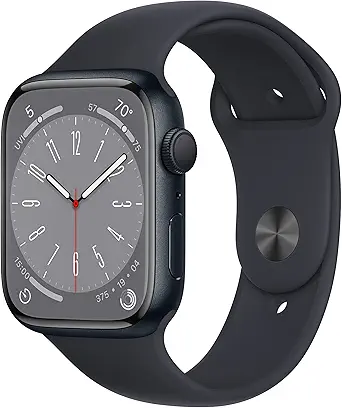
Crafted to meet your every need, the Apple Watch Series 8 with its Midnight Aluminum Case and Midnight Sport Band is not just a watch but a fitness coach, health monitor, and lifestyle guide all wrapped into one.
Key Highlights:
- Model: Apple Watch Series 8 [GPS 41mm]
- Case & Band: Midnight Aluminum Case & Midnight Sport Band – M/L
- Display: Always-On Retina Display, brighter and crisper
- Battery Life: Solid but variable
- Health and Fitness: Blood Oxygen & ECG Apps, Fitness Tracker
- Connectivity: GPS and Bluetooth for effortless pairing
- Water Resistance: Built for both workouts and swims
Battery That Keeps Up With You:
No one likes being tied to a charger.
With the Series 8, frequent charging is a thing of the past.
It’s your on-the-go companion that doesn’t demand regular pit stops at the power outlet.
Your Health Suite:
Packed with health-centric features like ECG and blood oxygen apps, the Series 8 is like having a miniature health clinic on your wrist.
Real-time monitoring and alerts keep you informed, fit, and safe.
Always-On Retina Display:
The Always-On Retina display is genuinely dazzling.
Whether you’re reading texts, checking your fitness stats, or just glancing at the time, clarity and vividness are a given.
Take a Dive, Worry-Free:
Yes, this watch loves water as much as you do! Feel free to hit the pool or sweat it out during workouts; the Series 8 has got you covered with its water-resistant design.
The Look:
The Midnight Aluminum Case and matching Sport Band offer a seamless blend of sophistication and practicality.
This watch fits right in at the gym or a business meeting.
Anything Missing?
Well, perfection is a tough act.
While it offers many features, it may miss some premium options in higher-end models.
And, of course, quality comes at a price.
Why the Apple Watch Series 8?
The Apple Watch Series 8 is your perfect match if you value style and substance.
It functions as your day planner, fitness trainer, and health monitor, all comfortably strapped to your wrist.
Conclusion:
The Apple Watch Series 8 offers a balanced mix of elegant design and practical functionalities.
Though it might lack a few luxury features, what it does offer makes it an invaluable asset for any modern lifestyle.
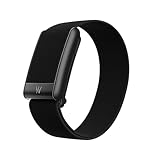
WHOOP 5.0/MG: (Best Screenless Calorie and Recovery Tracker)

Most fitness trackers show you numbers.
WHOOP asks you what you’re going to do about them.
That’s the difference, and it’s a meaningful one once you actually use it.
The WHOOP 5.0 has no screen, no buttons, no step counter, and no notifications.
What it does have is a relentless focus on three things: how hard you pushed your body (Strain), how well you recovered, and how well you slept.
Calorie tracking sits inside that Strain score — and the way it calculates it is genuinely different from anything else on this list.
How Calorie Tracking Actually Works Here:
Instead of relying on movement alone, WHOOP uses five continuous data streams — heart rate, heart rate variability, respiratory rate, skin temperature, and accelerometer data — to build a personalised calorie estimate.
It even spends the first seven days learning your body before the numbers fully calibrate.
In real-world testing, though, it’s worth being straight with you: WHOOP tends to overestimate calories during high-intensity workouts and slightly underestimate during long, slow endurance sessions.
The calorie numbers are better used as a weekly trend indicator rather than a precise daily target. Where it genuinely shines is context — it tells you not just how many calories you burned, but whether your body is actually recovered enough to burn more tomorrow.
14+ Days Battery — Charge It and Forget It:
The battery pack charges over the strap while you’re wearing it, meaning you never have to take it off — not even to charge.
Combined with 14+ days of battery life, it’s the closest thing to a 24/7 body sensor that actually works with your life rather than interrupting it.
The Membership Side — Know Before You Buy:
WHOOP works on a subscription model.
The hardware itself includes a 12-month membership, but ongoing access to your data requires renewing the subscription.
No subscription, no data.
This is the biggest thing to understand before buying — it’s not a one-time purchase.
Who Should Buy This:
Serious fitness enthusiasts, athletes, or anyone who wants deep recovery and sleep data alongside calorie tracking and doesn’t mind a screen-free experience.
Who Should Skip It:
Casual users who just want a simple calorie counter — the subscription model and learning curve make this overkill.
Also, it’s not ideal if you rely on a real-time calorie display during workouts.
Specifications:
| Feature | Details |
|---|---|
| Display | None (screenless) |
| Dimensions | 34.7 × 24 × 10.6mm |
| Weight | 26.5g |
| Battery Life | 14+ days |
| Water Resistance | Up to 10m |
| Sensors | Heart rate, HRV, SpO2, skin temperature, respiratory rate, accelerometer |
| Health Features | Strain, Recovery, Sleep, Healthspan, Stress, Women’s Hormonal Insights |
| GPS | Via smartphone |
| Compatibility | iOS and Android |
| Charging | Wireless battery pack (worn during charging) |
| Membership | Required — 12 months included |
WHOOP 4.0: (Best Wearable Health, Fitness & Activity Tracker)

You get a 12-month subscription when you buy the WHOOP 4.0 with 12 12-month subscription – Wearable Health, Fitness & Activity Tracker, a game-changer for those serious about their health.
It’s not just a fitness tracker; it’s a full-on health system on your wrist.
Features:
- Model: WHOOP 4.0 with 12-Month Subscription
- What It Does: Monitors your health, fitness, and overall wellness
- Heart Rate: Yep, it tracks that too
- Other Features: Performance Optimization, Sleep and strain Monitoring, and more
Long-lasting Battery: No Daily Charging
The WHOOP 4.0 doesn’t need to be charged every day.
For folks who are always on the move, this is huge.
Your Health Buddy:
From tracking your heart rate to helping you optimize your performance, WHOOP 4.0 is like having a health coach strapped to your wrist.
It’s got your back, or rather, your wrist.
Rest and Recover:
Sleep tracking and recovery metrics help you know when to push hard and when to take a break.
A well-rested you is a healthier you.
Ready for a Swim?
Go ahead and dive in! The WHOOP 4.0 is water-resistant, so don’t be afraid to get it wet.
Fashion Meets Function:
This isn’t just a tech gadget; it’s a sleek and stylish wearable tech that fits right into your lifestyle.
So, any drawbacks?
It’s an investment, for sure. But if you’re committed to optimising your health, it’s money well spent.
Why WHOOP 4.0?
For the health-conscious looking for a full-service wellness tool, the WHOOP 4.0 is a must-have.
It’s more than a fitness tracker; it’s a life optimiser.
Conclusion:
The WHOOP 4.0’s 12-month subscription Wearable Health, Fitness & Activity Tracker is a comprehensive tool for anyone eager to take charge of their health.
While it’s pricier, the features make it worth the cost.
Samsung Galaxy Watch 8: (Best for Android Users Tracking Calories)
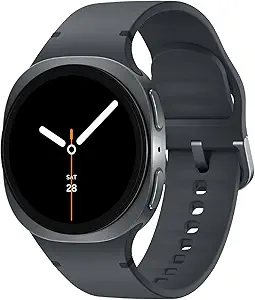
Samsung has been quietly building one of the most complete calorie tracking ecosystems in the smartwatch market, and the Galaxy Watch 8 is where that work really shows.
It’s thinner, lighter, and smarter than its predecessor — and for Android users specifically, it’s hard to find a better all-rounder at this level.
How It Handles Calorie Tracking:
The Watch 8 tracks active calories automatically throughout the day — no manual logging, no starting a workout session required.
It measures steps, calorie burn, and active time continuously, feeding everything into Samsung Health in real time.
During workouts, it pulls heart rate zone data alongside pace, cadence, VO2 max, and advanced running metrics to calculate burn more accurately than basic step-counting watches.
What’s genuinely useful here is the Food Tracker built right into the watch.
You can log meals directly from your wrist, which means you’re looking at both calories burned and calories consumed in the same app — without jumping between three different platforms.
For anyone serious about a calorie deficit or surplus, that combination in one place is more practical than it sounds day-to-day.
The Energy Score feature pulls everything together — sleep quality, activity, and recovery — and gives you a single daily number that tells you how much your body actually has to give.
It won’t replace a nutritionist, but it gives you honest daily context that most watches simply don’t offer.
Body Composition — A Unique Touch:
Place your middle and ring fingers on the side buttons, and the Watch 8 measures your body composition — skeletal muscle mass, fat mass, and body water.
It’s not medical-grade, but it’s a useful addition for anyone trying to track fitness progress beyond just calorie numbers.
Design and Wearability:
At just 8.6mm thick with the new cushion design, the 40mm case sits flush and comfortably on smaller wrists.
The 3000-nit AMOLED display stays readable outdoors during runs, and IP68 plus MIL-STD-810H means it handles sweat, rain, and the occasional knock without complaint.
One Limitation Worth Knowing:
Several AI features — including Running Coach and Bedtime Guidance — require a compatible Samsung Galaxy phone to work fully.
If you’re using a non-Samsung Android device, some features will be limited.
iPhone users can’t pair with this watch at all.
Who Should Buy This:
Android users who want an accurate, well-rounded calorie-tracking experience with the added benefits of body composition measurement and on-wrist food logging.
Who Should Skip It:
iPhone users, and anyone who wants full AI features without owning a Samsung Galaxy phone.
Specifications:
| Feature | Details |
|---|---|
| Display | 1.34″ AMOLED, 3000 nits |
| Case Size | 40mm |
| Thickness | 8.6mm |
| Chipset | Exynos W1000 (3nm) |
| RAM / Storage | 2GB / 32GB |
| Battery | 325mAh |
| Water Resistance | IP68 + MIL-STD-810H |
| GPS | Built-in multi-band |
| OS | Wear OS 6 |
| Health Features | Calorie tracking, body composition, ECG, heart rate, sleep coaching, Energy Score, Food Tracker |
| Compatibility | Android 11.0+ (full features need Samsung Galaxy phone) |
| Colors | Graphite, Silver |
Fitbit Charge 6: (Best Slim Fitness Band for Calorie Tracking)

If you want accurate calorie tracking in a form factor that doesn’t feel like you’re wearing a smartwatch, the Fitbit Charge 6 is the most complete fitness band you can buy right now.
It’s slim, light, and packed with sensors that most full-sized watches don’t even carry — but it does have some real-world quirks that are worth knowing about before you buy.
How It Handles Calorie Tracking:
The improved heart rate sensor — which Fitbit claims is up to 60% more accurate during vigorous activities compared to previous models — is the foundation of everything here.
Better heart rate means better calorie calculations, and in gym settings, walks, yoga, and moderate workouts, the numbers are genuinely reliable.
The Active Zone Minutes feature adds context to raw calorie data by showing how much time you spent in each heart rate zone, so you understand whether those 400 calories came from a brisk walk or an intense sprint session.
That distinction matters when you’re managing fitness goals.
One genuinely useful trick: the Charge 6 can broadcast your live heart rate directly to compatible gym equipment, such as Peloton and NordicTrack bikes, so your calorie data on the machine stays accurate rather than relying on generic estimates.
Where It Gets Honest:
GPS accuracy is the Charge 6’s weak spot, and it’s worth being straight about it.
Multiple reviewers — and real users — have found that wearing the band snugly enough for accurate heart rate readings causes GPS signal interference. For outdoor runners tracking calorie burn on routes, this is a real issue.
For gym workouts, indoor training, or daily activity tracking, it doesn’t matter at all.
If outdoor running is your main use case, a dedicated GPS sports watch will serve you better.
Google Integration — More Useful Than Expected:
Since Google acquired Fitbit, the Charge 6 gets Google Maps turn-by-turn directions on your wrist, Google Wallet for contactless payments, and YouTube Music support.
These aren’t gimmicks — having Google Wallet on a slim fitness band is genuinely handy for quick errands during a run or gym session.
Battery and Subscription Reality:
Seven days of battery life in regular use, dropping to roughly a day with always-on display enabled — keep that setting off.
One thing to factor in: features like Daily Readiness Score and advanced sleep analysis require a Fitbit Premium subscription after the 6-month membership included in the box expires.
Who Should Buy This:
Anyone who wants reliable all-day calorie tracking in a slim, comfortable band with solid Google integration — especially gym-focused users.
Who Should Skip It:
Serious outdoor runners who need precise GPS calorie data, or anyone unwilling to pay an ongoing subscription for advanced features.
Specifications:
| Feature | Details |
|---|---|
| Display | 26mm color AMOLED touchscreen |
| Battery Life | Up to 7 days |
| Water Resistance | 5ATM (50m) |
| GPS | Built-in + phone GPS option |
| Heart Rate | Continuous 24/7 optical sensor |
| Health Features | Calorie burn, Active Zone Minutes, ECG, SpO2, EDA stress, sleep tracking, Daily Readiness Score |
| Sports Modes | 41 exercise modes |
| Smart Features | Google Wallet, Google Maps, YouTube Music, NFC |
| Compatibility | iOS and Android |
| Membership Included | 6 months Fitbit Premium |
Amazfit Balance 2: (Best for Calorie Tracking Without a Subscription)

Most watches that take calorie tracking seriously also come with a subscription fee attached to their best features.
The Amazfit Balance 2 doesn’t.
Everything — calorie data, daily health insights, sleep analysis, and the AI food blogging — is free. No paywall, no monthly fee, no expiry date on your data.
For a watch competing against names like Garmin and Samsung, that alone makes it worth paying attention to.
How It Tracks Calories:
The BioTracker 6.0 sensor uses a 5-diode, 2-LED setup to read heart rate more accurately through the skin than previous generations.
During steady-state cardio like running, cycling, or gym sessions, the heart rate data — and therefore the calorie calculations — are genuinely reliable.
The honest caveat: like almost every wrist-based sensor, there’s a 3-5 second lag during explosive HIIT intervals where your heart rate spikes suddenly.
Not unique to Amazfit, but worth knowing if intense interval training is your main focus.
Where the Balance 2 pulls ahead is the AI food logging inside the Zepp app.
Take a photo of your meal or describe it by voice, and the app estimates the calories and macros.
It’s not perfect, but it’s fast, free, and removes the friction of manual logging that causes most people to give up on calorie tracking within a week.
21-Day Battery — Genuinely Useful for Tracking:
Calorie tracking only works if you’re wearing the watch consistently.
With 21 days of battery life in standard use — and real-world testing landing between 14-18 days with daily workouts — the Balance 2 stays on your wrist long enough to give you actual trends rather than patchy data.
Two weeks of continuous wear without charging is something very few watches at any price point can deliver.
Built for More Than Just the Gym:
170+ sport modes, offline maps, dual-band GPS, HYROX support, and 10ATM water resistance covering actual diving up to 45 meters.
The sapphire glass has survived granite countertops in real testing without a scratch.
At 43 grams, it’s comfortable for all-day wear despite the 47mm case size.
One Real Limitation:
No LTE — calls require your phone to be nearby.
The Zepp OS also doesn’t support third-party apps like Spotify offline or Google Maps.
If those matter to you, look at Wear OS alternatives.
Who Should Buy This:
Android and iPhone users who want serious calorie tracking with AI food logging, exceptional battery life, and no ongoing subscription costs.
Who Should Skip It:
Anyone who needs third-party app support, offline music streaming, or built-in LTE connectivity.
Specifications:
| Feature | Details |
|---|---|
| Display | 1.5″ AMOLED, 480×480px, 2000 nits |
| Glass | Sapphire crystal |
| Case Size | 47mm |
| Weight | 43g |
| Battery Life | Up to 21 days |
| Water Resistance | 10ATM (100m depth, dive-rated) |
| GPS | Dual-band GNSS |
| Heart Rate Sensor | BioTracker 6.0 (5-diode, 2-LED) |
| Sports Modes | 170+ including HYROX and Golf |
| Health Features | Calorie tracking, AI food logging, SpO2, sleep, stress, HRV |
| Smart Features | Zepp Flow AI, Bluetooth calls, offline maps |
| Compatibility | Android and iPhone |
| Subscription Required | No — all features free |
| Band Width | 22mm quick-release |
Withings ScanWatch 2: (Best Hybrid Watch for Calorie Tracking Without Looking Like a Smartwatch)

Most people who buy a smartwatch end up with something that looks like a mini-computer strapped to their wrist.
The ScanWatch 2 takes the opposite approach — it looks exactly like a classic analog watch, the kind you’d wear to a work meeting or a dinner, but beneath that traditional face sits a health-tracking system that genuinely competes with full-featured smartwatches.
How It Tracks Calories:
The ScanWatch 2 uses a 16-channel multi-wavelength PPG sensor alongside a high dynamic range accelerometer and altimeter to track calorie burn throughout the day.
Automatic workout detection handles common activities like walking, running, and cycling without you needing to start anything manually.
For tracked workouts, it shows real-time calorie burn, heart rate zones, pace, and distance directly on the watch face.
One thing worth knowing upfront: the calorie data shows clearly on the watch itself, but the Withings app doesn’t surface workout calorie totals as prominently as competing apps.
You’ll find the data, but it takes a few more taps than you’d expect.
For passive all-day calorie tracking, it works smoothly — for detailed post-workout calorie breakdowns, the app experience needs improvement.
30-Day Battery — The Real Game Changer:
Here’s where the ScanWatch 2 pulls ahead of almost everything on this list.
Thirty days of battery life means you wear it continuously — through workouts, sleep, and everything in between — without the charging interruptions that cause gaps in your calorie and health data.
Real-world use lasts between 25 and 35 days, depending on GPS usage.
For calorie tracking specifically, consistent wear is everything, and this watch removes that barrier entirely.
Health Features That Go Beyond Fitness:
FDA-cleared ECG, SpO2 monitoring, 24/7 skin temperature tracking via TempTech, respiratory rate, HRV, menstrual cycle insights, and sleep stage analysis are all built in.
The Vitality Indicator synthesises all of this into a daily wellness score. It’s one of the few watches eligible for FSA/HSA reimbursement in the US, which is a practical financial benefit worth factoring in.
The Honest Limitations:
No built-in GPS — outdoor calorie tracking relies on your phone’s GPS.
No speaker or microphone, so no call handling from the wrist.
The wrist-raise screen activation can be inconsistent.
And Withings+ subscription adds deeper analytics, but isn’t required for core features.
Who Should Buy This:
Anyone who wants serious calorie and health tracking in a watch that doesn’t look like a fitness tracker — professionals, light-to-moderate exercisers, and anyone prioritising long battery life.
Who Should Skip It:
Serious runners or cyclists who need precise GPS calorie data without carrying their phone.
Specifications:
| Feature | Details |
|---|---|
| Display | Small OLED + analog dial |
| Case Sizes | 38mm / 42mm |
| Glass | Sapphire crystal |
| Battery Life | Up to 30 days |
| Water Resistance | 5ATM (50m) |
| GPS | Via smartphone |
| Heart Rate Sensor | Multi-wavelength PPG, 16 channels |
| Health Features | ECG (FDA-cleared), SpO2, temperature, HRV, sleep, calorie tracking, cycle tracking |
| Sports Modes | 40+ activities |
| Compatibility | iOS and Android |
| FSA/HSA Eligible | Yes |
| Subscription | Optional — Withings+ ($9.95/month or $99.5/year) |
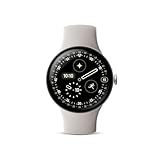
Google Pixel Watch 4: (Best for Calorie Tracking With Google AI Integration)

If you’re deep in the Google ecosystem — Pixel phone, Google Fit, Fitbit app — the Pixel Watch 4 slots into your life so naturally it barely feels like a new device.
Everything talks to everything else, the setup takes minutes, and you’re getting calorie data within the first hour of wearing it.
For Android users specifically, this is as smooth as smartwatch onboarding gets.
How It Handles Calorie Tracking:
The Pixel Watch 4 uses Fitbit’s health-tracking engine underneath, which remains one of the cleanest calorie-tracking experiences available on a smartwatch.
Throughout the day, it tracks active and resting calories separately, logs your heart rate zones continuously, and updates your Daily Readiness score based on how hard you’ve actually pushed your body versus how well you recovered.
Here’s the honest part, though: in real-world testing against other devices, the Pixel Watch 4 tends to run on the generous side for calorie estimates during high-intensity workouts.
Steady-state cardio — running, cycling, long walks — comes in consistently and reliably.
But during explosive HIIT sessions, the numbers can skew higher than competing devices.
For day-to-day tracking and weekly trend analysis, it’s plenty accurate.
For precise calorie counting during intense training, factor in a small margin of error.
The Actua 360 Display — Genuinely Useful Mid-Workout:
The domed 3000-nit display is the most noticeable hardware upgrade over the previous generation.
During outdoor runs or cycling sessions, your calorie burn, heart rate zone, and pace are instantly readable without squinting or shielding the screen.
The 10% larger active area also means fitness tiles show more data at a glance than earlier Pixel Watch models.
Google AI Actually Adds Something Here:
Gemini on your wrist isn’t just a party trick.
You can ask it to summarise your week’s calorie burn, check your fitness trends, or set reminders around workouts — all with a raise-to-talk gesture, no wake phrase needed.
It’s a practical tool for people who want context around their data without digging through app menus.
Battery — The 41mm’s One Real Weakness:
Thirty hours on the 41mm is the official claim, and real-world use lands around 28-36 hours depending on GPS and always-on display usage.
For calorie tracking specifically, this means a daily charging routine is unavoidable.
It charges fast — 0 to 50% in 15 minutes — but if overnight sleep tracking is important to you, you’ll need to build a charging window into your day.
Who Should Buy This:
Android users who want clean Fitbit-powered calorie tracking, Google AI integration, and a compact watch that works beautifully with their existing Google setup.
Who Should Skip It:
iPhone users, anyone wanting multi-day battery life, or serious athletes needing elite-level calorie precision during HIIT.
Specifications:
| Feature | Details |
|---|---|
| Display | 1.1″ Actua 360 AMOLED, 3000 nits, domed |
| Case Size | 41mm |
| Weight | 31g (without band) |
| Chipset | Snapdragon W5 Gen 2 + Google ML co-processor |
| RAM / Storage | 2GB / 32GB |
| Battery Life | Up to 30 hours (41mm) |
| Water Resistance | 5ATM (50m) |
| GPS | Dual-band GNSS |
| Health Features | Calorie tracking, heart rate zones, sleep, skin temperature, SpO2, stress, Daily Readiness |
| Smart Features | Gemini AI, Google Wallet, Google Maps, Loss of Pulse detection, Fall detection |
| Compatibility | Android 8.0+ only |
| Charging | 0–50% in 15 minutes |
COROS PACE 4: (Best Lightweight GPS Watch for Calorie Tracking)

Most watches that track calories accurately either cost a lot, weigh a lot, or both.
The COROS PACE 4 does neither.
At 32 grams with the nylon band — roughly the weight of a few coins — it’s one of the lightest GPS sports watches you can actually buy, and it doesn’t use that lightweight as an excuse to cut corners on the features that matter for calorie tracking.
How It Handles Calorie Tracking:
The redesigned optical heart rate sensor uses larger LEDs and a more secure fit against the wrist, which directly improves calorie calculation accuracy.
In real-world testing against chest strap monitors, the PACE 4 stayed within a few beats per minute during running and cycling — and when it did drift, it corrected itself quickly.
For steady-state cardio, the calorie numbers are reliable.
During intense interval training with sudden heart rate spikes, there’s a small lag — same limitation you’ll find on most wrist-based sensors at any price.
Where COROS genuinely pulls ahead is the EvoLab training analysis, which is available completely free — no subscription required.
It tracks your training load, recovery time, VO2 max, and fitness progression alongside your calorie data, giving you actual context for your numbers rather than just a daily total.
You also get step count, active calories, floors climbed, HRV, SpO2, and sleep trends all running passively in the background.
19 Days Battery — No Charging Anxiety:
For calorie tracking to be useful, you need consistent data, and consistent data means wearing the watch every day without worrying about the battery.
With 19 days of daily use and 41 hours in GPS mode, the PACE 4 removes that problem entirely.
Real-world testing consistently lands between 5 and 10 days with daily GPS workouts, depending on settings — still significantly ahead of most AMOLED competitors.
Voice Pins — A Genuinely Useful Training Tool:
This one is unique to COROS. Mid-run, you can record a voice note tied to your exact GPS location — your effort level, how your legs felt, what the terrain was like.
It sounds gimmicky until you’re three weeks into a training block and actually want to know why last Tuesday’s run felt harder than it should have.
For serious runners tracking calorie burn alongside training quality, this feature has real practical value.
What’s Missing:
No offline music streaming — only MP3 file storage.
No NFC payments. No full maps, only breadcrumb navigation.
Smart features are minimal compared to Wear OS alternatives.
Who Should Buy This:
Runners, cyclists, and triathletes who want accurate calorie and training data, exceptional GPS battery life, and no subscription fees — all in the lightest package possible.
Who Should Skip It:
Anyone who wants smartwatch features like Spotify offline, Google Wallet, or full navigation maps.
Specifications:
| Feature | Details |
|---|---|
| Display | 1.2″ AMOLED, 390×390px, 1500 nits |
| Case Size | 42mm |
| Thickness | 11.8mm |
| Weight | 32g (nylon) / 39g (silicone) |
| Battery Life | 19 days daily use / 41 hours GPS |
| Water Resistance | 5ATM (50m) |
| GPS | Dual-band GNSS (all major systems) |
| Chipset | Ambiq Apollo 510 |
| Health Features | Active calories, heart rate, HRV, SpO2, sleep, stress, EvoLab |
| Sports Modes | Multi-sport including running, cycling, swimming, hiking |
| Voice Features | Voice Pins + Training Log recording |
| Smart Features | Music storage (MP3 only), phone music controls, Strava sync |
| Charging | USB-C adapter |
| Compatibility | iOS and Android |
| Subscription | None — all features free |
FAQs:
Do smartwatches accurately track calories burned?
Smartwatches give you a solid estimate of calories burned, but “accurate” depends on what you’re doing. For steady-state activities like walking, running, and cycling, modern watches with continuous heart rate monitoring can come within 10-15% of actual calorie burn — which is good enough for most fitness goals. Where things get less reliable is during explosive exercises like heavy weightlifting or intense HIIT, where wrist-based heart rate sensors struggle to keep up with sudden spikes. The bottom line: treat smartwatch calorie data as a useful daily trend rather than a precise medical measurement, and you’ll get real value from it.
What is the difference between active calories and total calories on a smartwatch?
This one confuses a lot of people. Total calories (also called “resting + active” or just “calories burned”) includes everything your body burns in a day — your resting metabolic rate (the calories your body uses just to keep you alive) plus the calories from actual movement and exercise. Active calories are only the extra calories you burned through deliberate movement on top of what your body would have burned anyway just sitting still. When most people talk about “burning calories through exercise,” they mean active calories. Most nutrition and diet apps work with active calories when calculating your deficit, so it’s worth knowing which number your watch is reporting.
Which is more reliable for calorie tracking — heart rate or steps?
Heart rate, without question. Step-based calorie calculations use a basic formula that assumes every step costs roughly the same amount of energy — which doesn’t account for terrain, intensity, your fitness level, or how hard your body is actually working. Heart rate-based tracking is more personalised because it reads your body’s actual effort in real time. A slow uphill hike and a flat walk might cover the same steps, but your heart rate during the climb tells the watch you’re working significantly harder — and the calorie calculation reflects that. If accurate calorie tracking matters to you, choose a watch with a quality continuous heart rate sensor over one that relies primarily on step counting.
Can I trust my smartwatch calorie count for weight loss?
You can use it as a guide, but don’t build your entire weight loss plan around the exact number. Studies have shown that even the best consumer smartwatches can overestimate calorie burn by 20-40% depending on the activity and individual body type. The more useful approach is to track trends consistently over time — same watch, same conditions — rather than treating each daily number as gospel. If your watch says you burned 500 calories during a workout on Monday and 480 on Thursday, the comparison between those two sessions is reliable even if the absolute numbers are off. Consistency of data matters more than pinpoint accuracy when it comes to long-term weight management.
Related Articles:
Best Watches for Doctors & Medical Students
Best Smartwatches with Blood Sugar Monitor
Apple Watch Series 11 Hands-On Review: Features, Battery, and Performance
Best Talking Watches for the Blind
Luis Cooper

Hi, I'm Luis, the guy behind this site. I love wearing watches, especially ones that look great on small wrists (mine are about 6.3" around). The Watches Geek is dedicated to helping you learn about and buy watches that you will love wearing. I want this website to be the last destination for people to pick the best watches to fit their needs. You can find our unbiased reviews here on Thewatchesgeek.