

Last Updated on July 13, 2026 by Luis Cooper
Interval training is the most demanding environment you can put a sports watch through.
During an 800-metre repeat at race pace, you need accurate, real-time pace data, reliable heart rate that responds quickly to changes in intensity, and a display you can read while running hard without slowing down to squint.
Between reps, you need the recovery timer to start immediately, the resting heart rate data to indicate whether you recovered sufficiently, and an interface that does not require three button presses to start the next rep.
Most smartwatches handle easy runs adequately. Interval training is where the difference between a capable sports watch and a genuinely good one becomes obvious within the first session.
Before putting this guide together, I researched Garmin’s current Forerunner lineup specifically through the lens of interval and structured workout use.
I read The5krunner’s comprehensive 2026 Garmin Forerunner guide covering every current model in depth, NBC Select’s March 2026 review from a reviewer who wears two watches simultaneously on each wrist to compare data directly, and GarminRumors’ May 2026 lineup analysis covering Q2 2026 software updates.
What Makes a Garmin Watch Good for Interval Training Specifically:
Before looking at individual models, three Garmin platform features matter more than any single specification for interval training.
Understanding these changes helps you look for what you need when comparing models.
Training Readiness is the morning score, from 0 to 100, that synthesises overnight HRV, sleep quality, Body Battery, training load, and recovery time. For interval training specifically, this is the feature NBC Select called “the most important in Garmin’s toolkit” because it tells you before you leave the house whether today’s planned hard session is appropriate or whether pushing hard on an under-recovered body will hurt rather than help your fitness.
Training Effect is the post-session analysis that divides the workout’s physiological impact into aerobic and anaerobic effect scores. Interval sessions should produce high anaerobic Training Effect. A session that produces only an aerobic Training Effect, despite feeling hard, tells you your intervals were not fast enough. This feedback loop is something general fitness trackers from other brands do not provide.
Lactate Threshold is the watch’s estimate of the pace or heart rate at which lactic acid starts to accumulate faster than it clears — the boundary between sustainable and unsustainable effort. Garmin uses this to automatically calculate your training zones. Accurate LT means accurate zones, which means accurate interval targets. Without accurate zone data, you are guessing at appropriate rep pace and intensity rather than training to a specific stimulus.
Which are the Best Garmin Watches For Interval Training?
Here are my recommended top 7 Best Garmin Watches For Interval Training:-


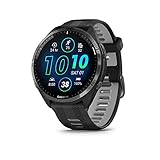


Garmin Forerunner 570: (Best New Garmin for Interval Training in 2026)

A club runner who trains four days per week, including one track session, one tempo, and two recovery runs, described the Forerunner 570 as the watch that made her Tuesday track sessions feel genuinely coached rather than self-directed.
She had owned a Forerunner 245 for three years and described the 570 as a completely different category of tool rather than an incremental upgrade.
The specific change she described was the Morning Report — a summary delivered each morning that explained what the watch recommended for the day, based on current fitness and recovery, and why.
She described following it for six weeks and setting personal bests at three distances she had been stagnant at for two years.
Elevate Gen 5 and Voice Commands — The May 2025 Upgrade:
The Garmin Forerunner 570 launched on May 21, 2025, alongside the Forerunner 970, as the first Forerunner models to carry the Elevate Gen 5 heart rate sensor.
The5krunner’s 2026 Forerunner guide confirmed Elevate 5 as an upgrade over the Gen 4 sensor in the Forerunner 265 and 965, with improvements specifically in active wear — the condition that matters most for interval training, where wrist movement during hard running creates the optical sensing challenges that have given previous sensors trouble.
The voice command feature is new to the Forerunner line with the 570.
A runner can say “start run” to begin a session without pressing a button, mark a lap verbally, and control playback of the 570’s offline music storage without touching the watch mid-session.
For runners who keep their arms in a specific position during fast reps, button presses mid-stride are disruptive — voice activation removes that interaction entirely.
The structured workout builder allows you to create custom interval sessions that the watch then guides from the wrist — five reps of 600 metres at threshold with 200-metre recovery jogs, for example, set up in advance and executed with audio and vibration cues, without any mid-session navigation.
The 1.4-inch AMOLED display at its full brightness setting reads clearly in direct sunlight on a track in summer.
Dual-frequency GPS maintains accurate distance and pace data even in urban environments where single-frequency systems drift.
Who Should Not Buy This:
If full offline topographic maps for trail running are important alongside interval training, the Forerunner 970 below is the only Forerunner with that capability.
If the budget for the 570 is tight, the Forerunner 265 remains a strong interval-training watch at a lower price, following the 570’s launch, which GadgetsAndWearables confirmed has driven down the 265’s retail price.
Specifications:
| Feature | Details |
|---|---|
| Released | May 2025 |
| Case Sizes | 42mm and 47mm |
| Sensor | Elevate Gen 5 — upgraded from FR265 |
| Display | AMOLED 1.4 inch |
| Battery | 18 hours GPS, smartwatch mode longer |
| GPS | Dual-frequency |
| Voice | Voice commands — start session, lap, music |
| Offline Music | Yes |
| Speaker/Mic | Built-in |
| Maps | No onboard maps |
| Training | Training Readiness, Daily Suggested Workouts, structured interval builder |
Garmin Forerunner 970: (Best Premium Garmin for Interval Training)

A competitive masters runner who describes training for Boston as the major project of every year described the Forerunner 970 as the watch that handled everything he wanted from a device in a single session type for the first time.
He ran a 16-mile trail long run with full topo maps for navigation, then used the same watch for a Tuesday track session with a structured interval workout plan he had built in Garmin Connect and downloaded to the watch.
He described the LED flashlight — activated during a pre-dawn session in November — as the practical addition he had not expected to find genuinely useful within forty-eight hours of unboxing.
The Only Forerunner With Full Topographic Maps:
The5krunner’s 2026 Forerunner guide described the Forerunner 970 as “the only model in the current range with full topographic maps” and positioned it as Garmin’s watch competing against the Apple Watch Ultra at the premium tier while simultaneously being “in a sporting class of its own” for runners who prioritise athletic function over lifestyle features.
The titanium case — available in Carbon Gray DLC, Soft Gold, and Whitestone configurations — provides the premium build quality that reflects the 970’s flagship positioning.
The built-in LED flashlight is new to the Forerunner line in this generation and addresses the early-morning and evening training window that most serious runners navigate through parts of the year.
For interval training specifically, the 970 offers every feature the 570 provides, plus the Race Predictor, which estimates finish times for 5K, 10K, half marathon, and marathon based on current fitness data.
This is specifically relevant for runners whose interval sessions are structured around target race paces — the 970 tells you what those paces should be based on your current training fitness rather than from a previous race result that may be months old.
GarminRumors confirmed that the Forerunner 970 was cited by Garmin management as a direct contributor to Q3 2025 earnings — a commercial validation of the market’s reception of the watch.
Who Should Not Buy This
If maps and the LED flashlight are not relevant to your training environment — you run on a track and on roads in daylight — the Forerunner 570 provides essentially the same interval-training analytics at a lower price.
The 970’s advantages are specifically for runners who also run trails and in low-light conditions, where those additional hardware features earn their premium.
Specifications:
| Feature | Details |
|---|---|
| Released | May 2025 |
| Case | Titanium |
| Display | AMOLED |
| Battery | Up to 15 days smartwatch |
| GPS | Dual-frequency |
| Flashlight | Built-in LED |
| Maps | Full topographic — only Forerunner with maps |
| Race Predictor | Yes — updated from current fitness data |
| Voice | Voice commands |
| Training | Complete training platform including ClimbPro, PacePro, Garmin Coach |
Garmin Forerunner 965: (Best Value Premium Interval Training Watch)

A running coach who uses a Forerunner to demonstrate training concepts to athletes described recommending the 965 specifically following the launch of the 570 and 970.
She had expected to recommend the newer models universally but found that the 965’s price point, following the price reduction that GadgetsAndWearables confirmed in May 2026, made it the specific recommendation for athletes who wanted the titanium bezel and AMOLED display of the premium tier without paying the 970’s full price for maps and flashlight they would not use on their local road training routes.
Titanium Bezel and Full AMOLED Without the 970’s Price:
The Forerunner 965 carries the titanium bezel and AMOLED display that give the premium Forerunner tier its distinctive feel and display quality, with the full Garmin training platform including Training Readiness, Training Load, structured interval workouts, and the daily coaching cadence that makes Garmin’s analytics useful rather than just informative.
The battery in the 965 extends further than the 570 — relevant for runners who track long runs and track sessions on the same weekly charge cycle.
NBC Select’s review specifically described the Forerunner 265 — the generation below the 965 — as “still my go-to recommendation despite newer options” because of the way Training Readiness, Training Status, and HRV Status work together.
The 965 offers the same three features in a titanium bezel case, with a larger, more vibrant AMOLED display than the 265.
The Q2 2026 software update that GarminRumors reported — which added new health and training tools to the FR570 and FR970 — was not extended to the 965, per GarminRumors’ analysis; this is the honest trade-off of choosing a prior-generation model after the next generation has launched.
Who Should Not Buy This
GarminRumors specifically noted that Q2 2026 software updates, including new golf features and training tools, “went to current models like the Forerunner 570 and 970,” while “the Forerunner 965 was passed over despite being recent and fully capable.”
Buyers who specifically want to receive every future Garmin software update should choose the 570 or 970.
The 965 is the smarter money for buyers who want the current feature set at a reduced price after the new generation launched.
Specifications:
| Feature | Details |
|---|---|
| Case | Titanium bezel, 47mm |
| Display | AMOLED colorful |
| Battery | Longer than FR570 |
| GPS | Multi-band |
| Training | Full platform — Training Readiness, Load, structured workouts |
| Maps | Running maps (not full topo) |
| Update Status | Q2 2026 new features not extended |
Garmin Forerunner 265: (Best Mid-Range Garmin for Interval Training)

An age-group triathlete who describes himself as racing seriously without being sponsored or professional described the Forerunner 265 as the watch that handles the complete triathlon training week — pool sessions, bike intervals on the turbo trainer, track sessions, and open-water swims — without requiring any device changes between disciplines.
He described the automatic multisport mode switching as the feature that eliminated a source of missed data that had frustrated him across three previous watches, where forgetting to manually switch modes had resulted in gap-filled training logs.
The Watch NBC Select Still Recommends Despite Newer Options:
NBC Select’s March 2026 review described the Forerunner 265 as “still my go-to recommendation” specifically because of the Training Readiness, Training Status, and HRV Status combination, and the advanced running metrics — running power, cadence, stride length, and ground contact time — that inform interval form alongside pace and heart rate data.
The reviewer specifically cited the Forerunner 265’s ability to answer “whether today is a rest day, an easy day, or a day to push myself” as the feature that distinguishes Garmin from competitors.
Following the Forerunner 570’s May 2025 launch, GadgetsAndWearables confirmed the 265’s retail price dropped — making it even more attractive as a capable mid-range alternative now that the 570 sits above it in the lineup.
The Elevate Gen 4 sensor in the 265 is the generation below the Gen 5 in the 570 and 970, which matters most for wrist-worn heart rate accuracy during active movement in interval running, when optical sensors are most challenged.
The 5krunner’s guide notes this honestly: “for interval training and racing, a chest strap provides more reliable data across all models,” which partially mitigates the sensor-generation difference for runners who pair a chest strap for hard sessions.
For a closer look at how the Forerunner 265 performs across running and training analytics for active female athletes specifically, the full comparison at best-smart-watches-for-runners covers the Garmin running watch platform in detail.
Who Should Not Buy This
Buyers who specifically want the newest Garmin features and guaranteed forward software updates should choose the Forerunner 570 above.
The Q2 2026 update did not extend to the Forerunner 265 per GarminRumors.
Given the current feature set and lower price, the 265 remains strong.
For future feature parity with the newest models, the 570 is the choice.
Specifications:
| Feature | Details |
|---|---|
| Display | AMOLED colorful |
| Sensor | Elevate Gen 4 |
| GPS | Multi-band dual-frequency |
| Training | Training Readiness, Training Status, HRV Status, structured workouts |
| Running Metrics | Power, cadence, stride length, ground contact time |
| Price Direction | Moved lower after FR570 launch |
Garmin Forerunner 55: (Best Budget Garmin for Getting Started With Intervals)
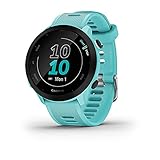
- Easy-to-use running watch monitors heart rate (this is not a medical device) at the wrist and uses GPS to track how far, how fast and where you’ve run
- Battery life: up to 2 weeks in smartwatch mode; up to 20 hours in GPS mode
- Plan your race day strategy with the PacePro feature (not compatible with on-device courses), which offers GPS-based pace guidance for a selected course or distance
- Run your best with helpful training tools, including race time predictions and finish time estimates
- Track all the ways you move with built-in activity profiles for running, cycling, track run, virtual run, pool swim, Pilates, HIIT, breathwork and more

A first-time 5K runner who discovered interval training through a running group described the Forerunner 55 as the watch that taught her what structured training actually meant, rather than just time and distance.
She had been running by time for eight months and improving slowly.
A club coach suggested she try a track session with specific rep targets.
The Forerunner 55’s Daily Suggested Workouts had been recommending exactly this type of session for two weeks before she attended the club.
She described looking at the watch’s recommendation the morning after her first track session and finding it had suggested an easy recovery run at exactly the effort she felt she needed.
She described that moment as the point she started trusting the data.
Entry-Level Garmin That Still Has the Core Interval Features:
Despite its entry-level positioning, the 55 carries the core Garmin interval-training features that matter at the start of a structured training journey — structured workout support, Daily Suggested Workouts, interval timer, pace alerts, and the basic Training Status assessment that evaluates recent training load.
What the 55 lacks is Training Readiness (which requires HRV Status data from overnight monitoring that the 55 collects but processes differently), advanced running metrics like running power and ground contact time, or the AMOLED display of the mid-range models.
For a runner who is beginning to incorporate structured interval work and wants to understand Garmin’s training guidance platform before committing to a larger investment, the 55 provides a foundation for that learning at the lowest entry price in Garmin’s current lineup.
Who Should Not Buy This:
Runners who are already doing structured interval training regularly and want the full Training Readiness and advanced running metrics platform should step up to the Forerunner 265 or 570, which include those features.
The 55 is the correct starting point for structured training, not the endpoint.
Specifications:
| Feature | Details |
|---|---|
| Position | Entry-level Garmin runner |
| GPS | Built-in multi-GNSS |
| Training | Daily Suggested Workouts, structured intervals, Training Status |
| Battery | 2 weeks smartwatch, 20 hours GPS |
| Display | MIP touchscreen |
| Running Metrics | Basic — pace, heart rate, cadence |
Garmin Venu X1: (Best Non-Forerunner Garmin for Interval Training)

An indoor fitness coach who teaches HIIT classes three times a week and runs twice a week outside described the Venu X1 as the watch she chose specifically because it did not look like a running watch on her wrist during the yoga, Pilates, and flexibility classes that bookend her HIIT teaching week.
She had worn Forerunners for years and described the rectangular Venu X1’s thinner profile and larger square screen as the first Garmin that suited her professional appearance on the studio floor while providing the same training analytics platform she had relied on for her outdoor running.
The Square Screen Garmin With the Full Training Platform:
NBC Select described the Venu X1 as “Garmin’s most Apple-like watch” with a large bright square screen in an 8mm thin case — “for people who love everything about their Apple Watch but want to try Garmin.”
The review confirmed it carries “most of the same features as other pricey Garmins, meaning runners, racers, hikers and bikers won’t feel like they are missing out.”
For interval and HIIT training specifically, the Venu X1 carries the same Training Readiness, structured workout builder, Training Effect feedback, and Lactate Threshold estimation as the Forerunner models.
The square AMOLED display provides more on-screen space for workout data during intervals than the round or rectangular alternatives.
The HIIT workout mode with on-screen exercise animations is specifically designed for non-running interval training — relevant for gym-based HIIT, cycling intervals, and cross-training sessions that the Forerunner line covers less expressively.
GarminRumors confirmed the Venu X1 is among the current models receiving Q2 2026 software updates, meaning it maintains feature parity with the newest Forerunner releases rather than being left on an older feature set.
For a closer look at how Garmin’s Venu X1 compares to the Apple Watch Series 11 for everyday health monitoring and training, the full comparison at garmin-vs-apple-watch covers both platforms in detail.
Who Should Not Buy This
NBC Select noted the Venu X1 battery life — “up to eight days in gesture mode and only two in always-on mode” — is shorter than most other Garmin watches.
Runners who prioritise long GPS battery life for extended long-run tracking alongside interval training sessions will find that Forerunner models offer longer GPS endurance.
The Venu X1 is specifically the right choice for buyers who want the Garmin training platform in a non-running-watch aesthetic.
Specifications:
| Feature | Details |
|---|---|
| Screen | Large square AMOLED |
| Thickness | 8mm — thinnest Garmin |
| Training | Full platform — Training Readiness, structured workouts, HIIT mode |
| HIIT | Dedicated mode with on-screen exercise animations |
| Battery | 8 days gesture mode, 2 days always-on |
| Updates | Confirmed for Q2 2026 feature updates |
Garmin Venu® Sq 2: (Best Budget Smartwatch with AMOLED Display)

Features:
Style:
During testing, the watch never felt heavy, making it a fantastic choice for those who want to use Garmin’s high-quality fitness-tracking capabilities without sacrificing comfort.
The input system is the same as the Garmin Venu, with dual push buttons on the right-hand side and a touch display.
The Venu 2 Sq stands out from other fitness trackers with less appealing screens thanks to its resurrected OLED technology, which remains beautiful to look at despite a smaller panel.
Watch faces pop out on display, and the UI’s colours are lively and captivating.
The Venu 2 Sq’s big attraction is its slim design, which weighs only 38.2g and has a 1.10-inch touchscreen.
Performance:
The option to download Spotify tracks and play them straight from a smartwatch when offline is among my favorite aspects of the Garmin ecosystem.
As soon as you open the application, you can see all of your important statistics, such as your latest workout, present pulse rate, existing step count, and much more.
The Garmin Venu 2 Sq formula includes two major fitness-tracking features, Health Snapshot and Fitness Age, to make the situation even more straightforward.
Health Snapshot would allow you to quickly view your ongoing stress, blood oxygen, respiratory rate, and heart rate—all of which are crucial.
This is especially true if you’re engaging in prolonged, intense exercise and want to learn more about the limits of your body.
What Makes It Best:
The Garmin Venu 2 boasts a subtle appearance that doesn’t shout “sports watch” and delivers a remarkable variety of standard smartwatch capabilities, as well as a vast array of cutting-edge fitness and workout monitoring tools.
Thanks to the Venu 2’s great screen, you can dive down into incredibly fine detail without the need for a smartphone.
On the wrist, you have excellent representations of graphs, charts, and maps.
Garmin is most recognized for its prowess in running and cycling, but the Venu 2 also serves as a great watch for the gymnasium.
It has accurate data for all the most popular training modalities, namely weightlifting, spin, HIIT, treadmill running, and resistant machines.
Conclusion:
This is the best watch to get your hands on if you’re looking for an efficient, unique, and highly functional smartwatch to enhance your performance.
Quick Comparison
| Watch | Best For | Key Advantage |
|---|---|---|
| Forerunner 570 | Dedicated runners, new purchase | Elevate Gen 5, voice commands, latest features |
| Forerunner 970 | Trail runner who also intervals | Only FR with topo maps + flashlight |
| Forerunner 965 | Value after 570 launch | Titanium + AMOLED at lower price |
| Forerunner 265 | Established mid-range choice | NBC Select’s go-to despite newer options |
| Forerunner 55 | First structured training watch | Core features at lowest price |
| Venu X1 | HIIT and gym-based intervals | Square screen, non-running aesthetic |
FAQs:
What is the difference between the Garmin Forerunner 570 and Forerunner 265 for interval training?
Both watches run the same core Garmin training platform and both support structured interval workouts. The meaningful differences for interval training specifically are the Elevate Gen 5 heart rate sensor in the 570 versus Gen 4 in the 265, and the voice command feature that allows the 570 to start sessions and mark laps verbally without button presses mid-run. The5krunner’s 2026 Forerunner guide confirmed Elevate 5 as an improved sensor over Gen 4 specifically in active running conditions — the scenario where interval training operates. For runners who pair a chest strap for hard sessions, as The5krunner recommends for maximum accuracy during intervals, the sensor generation difference diminishes because the chest strap bypasses the optical sensor entirely for heart rate data. The 570 also adds voice commands, built-in speaker and microphone, skin temperature tracking, and heat and altitude acclimation. GarminRumors confirmed the Q2 2026 software update extended to the 570 but not the 265. The price gap following the 570’s launch makes the 265 specifically compelling for runners who do not need the Gen 5 sensor and voice command upgrades.
Does Garmin’s wrist-based heart rate work well during interval training?
Honestly, with a caveat. For steady-state running and passive health monitoring, Garmin’s optical heart rate sensors across all current models perform well. During interval training at high intensity — specifically short, fast repetitions where wrist movement increases and heart rate changes rapidly between effort and recovery — optical sensors on any brand struggle compared to a chest strap. The5krunner’s 2026 Forerunner guide was direct about this: “for interval training and racing, a chest strap provides more reliable data across all models.” The Elevate Gen 5 in the Forerunner 570 and 970 represents genuine improvement over previous generations, but the physical limitation of optical sensing on a moving wrist at high effort is not eliminated by any current generation sensor from any manufacturer. Garmin’s HRM-Pro Plus chest strap, paired with any watch on this list via ANT+, provides the most accurate heart rate data during interval training and simultaneously captures running dynamics including running power, ground contact time, and vertical oscillation.
Is Training Readiness actually useful for interval training or just a gimmick?
It is genuinely the most useful Garmin feature for anyone doing structured interval training regularly. The problem interval training creates for a training plan is cumulative fatigue — intervals are the sessions that produce the most physiological stress, and scheduling them without accounting for whether the body has recovered from previous stress is the most common cause of stagnation, injury, and overtraining among self-coached athletes. NBC Select’s reviewer specifically described using Training Readiness daily to “decide whether today is a rest day, an easy day, or a day to push myself” — the exact decision that interval training athletes face most frequently. The score synthesises overnight HRV data, sleep quality, Body Battery, training load from recent sessions, and recovery time to produce a single morning number. A Training Readiness score in the red or yellow range the morning of a planned track session provides specific, data-backed justification to either delay the session by twenty-four hours or replace it with an easy run — a decision that many self-coached runners struggle to make on feel alone but accept more readily when a number supports it. The American College of Sports Medicine provides research-based guidance on integrating heart rate and training load monitoring into interval training programs at acsm.org.
Related Articles:
Luis Cooper

Hi, I'm Luis, the guy behind this site. I love wearing watches, especially ones that look great on small wrists (mine are about 6.3" around). The Watches Geek is dedicated to helping you learn about and buy watches that you will love wearing. I want this website to be the last destination for people to pick the best watches to fit their needs. You can find our unbiased reviews here on Thewatchesgeek.