
Last Updated on September 22, 2026 by Luis Cooper
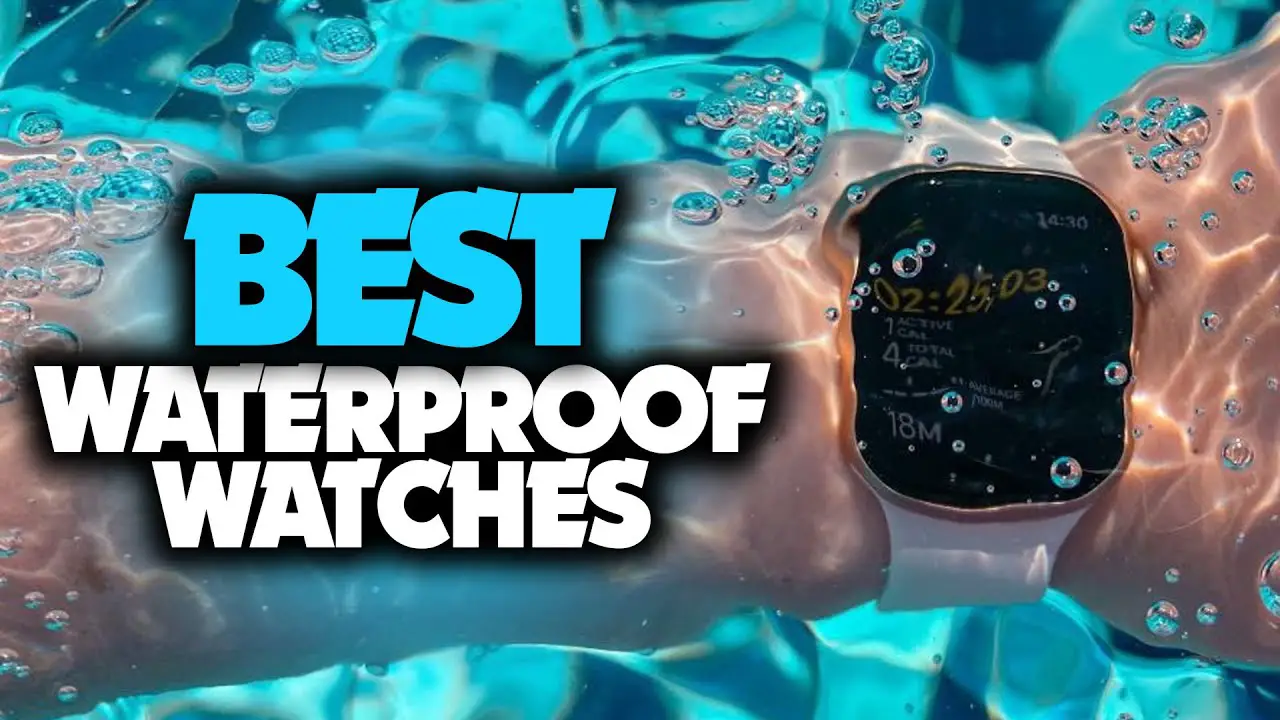
When it comes to choosing a smartwatch that can withstand water, durability and functionality are paramount.
Whether you’re an avid swimmer, a water sports enthusiast, or simply want a wearable device that can handle the elements, investing in a waterproof smartwatch is essential.
In this guide, we’ll explore some of the best waterproof smartwatches available on the market, considering factors like water resistance rating, activity tracking features, battery life, design, and compatibility.
From swim-proof designs to advanced fitness-tracking capabilities, these smartwatches offer the perfect blend of performance and durability for all your water-related activities.
Join us as we dive into the world of waterproof smartwatches and discover the ideal companion for your active lifestyle.
Which are the Best Waterproof Smartwatches to Buy?
Here are my top 10 recommended waterproof smartwatches:-

![Samsung Galaxy Watch Ultra2, Titanium Gray, 47mm LTE Smartwatch | Rugged Design, AI Assistant, Advanced Sleep and Running Coach, Dive-Rated, Heart Rate Tracking [US Version, 2 Yr Warranty]](https://m.media-amazon.com/images/I/41poqoqkViL._SL160_._SL160_.jpg)


1. Garmin Forerunner 165: (Best Budget Waterproof Watch for Swimmers and Runners)

There is a specific type of person who needs this watch more than anyone else on this list.
They swim three mornings a week. They run four evenings a week. They do not need a dive computer. They do not need 100-metre water resistance. They need one watch that tracks their laps accurately in the pool on Tuesday morning, records their 10-kilometre run on Thursday evening, and does not make their wrist sore from the weight of carrying it through both.
The Garmin Forerunner 165 is built for that person, and it does all three things remarkably well for a watch that weighs just 39 grams.
What 5 ATM Actually Means for Swimmers
The Forerunner 165 is rated to 5 ATM, which on paper means 50 metres of water resistance. The honest explanation is slightly different from that marketing number, and understanding it helps you use the watch correctly.
Water resistance ratings are measured in still water at a specific depth. When you are actually swimming, you move through the water at speed, and that movement creates additional pressure against the watch that the static rating does not account for.
This means the Forerunner 165 is confidently suitable for pool swimming, open water swimming, snorkelling, showering, and any water activity that a normal active person encounters. It is not suitable for scuba diving or freediving below the surface, where sustained pressure at depth would exceed what the seals are designed for.
For swimmers who train in pools and open water, this is all the water resistance they will ever need, and real-world extended testing confirms the watch handles both without any moisture issues after months of consistent use.
Two Separate Modes for Two Different Kinds of Swimming
Most people do not realise that pool swimming and open water swimming are genuinely different activities that require different tracking approaches, and the Forerunner 165 addresses both with dedicated modes.
In pool swim mode, you enter the pool length once when setting up the mode, and the watch uses that information to count laps precisely.
It detects your stroke type automatically — freestyle, backstroke, breaststroke, or butterfly — and records each one throughout your session without any button pressing.
At the end of the session you have lap count, total distance, pace, stroke count, stroke type distribution, and calories burned, which is more swimming data than most dedicated fitness trackers provide.
In open water swim mode, the GPS takes over from the pool length calculation and records your actual route through the water. Your pace, distance, and heart rate are tracked continuously, and the map of your swim is available in the Garmin Connect app after you finish.
For open water swimmers who want to see where they actually swam and analyse how their pace varied across different sections of the course, this mode provides that data clearly.
The Weight Advantage Nobody Talks About
At 39 grams, the Forerunner 165 is significantly lighter than most watches on this list. This matters more for swimmers and triathletes than it does for any other type of watch wearer.
During swimming, extra weight on the wrist affects your stroke mechanics, particularly in freestyle and backstroke where the position of your arm through the water matters for efficiency. A heavier watch creates drag and pulls the arm slightly off its natural path.
At 39 grams, the Forerunner 165 is light enough that most swimmers report forgetting it is there during training sessions.
For triathletes specifically, the ability to wear the same watch through the swim leg, transition, bike leg, and run leg without it feeling heavy or intrusive during any of them is genuinely practical rather than just comfortable.
Running Intelligence on the Same Watch
After the pool session or open water swim, the Forerunner 165 applies the same analytical depth to running that it brings to swimming.
Training Readiness checks your overnight recovery data and tells you each morning whether today is appropriate for a hard session or whether your body is signalling it needs something easier. Daily Suggested Workouts recommends a specific session based on your current fitness and recovery status.
The 19-hour GPS battery covers any combination of swim and run training without concern about running out of charge partway through a session.
The 11-day battery in standard smartwatch mode means most swimmers only charge the watch once across two full weeks of daily training.
For a closer look at how the Forerunner 165 performs across running, interval training, and fitness tracking beyond the pool, the full guide at best-garmin-watches-for-interval-training covers the Garmin running platform in detail.
Who this is not for: Swimmers who specifically need dive computer functionality or high-pressure water resistance above 50 metres should look at the Garmin Descent G1 below. The Forerunner 165 is the right choice for pool and open water swimmers who also run and want one capable watch for both activities at a budget-friendly price.
Specifications:
| Feature | Details |
|---|---|
| Water Resistance | 5 ATM, 50 metres |
| Swim Modes | Pool Swim and Open Water Swim |
| Stroke Detection | Freestyle, backstroke, breaststroke, butterfly |
| Weight | 39g — lightest watch on this list |
| Display | AMOLED, 1.2 inch |
| Battery GPS | 19 hours |
| Battery Smartwatch | 11 days |
| Running | Training Readiness, Daily Suggested Workouts |
| Compatibility | iOS and Android |
2. Garmin Forerunner® 965: (Best Waterproof Smartwatch for Running)

This waterproof watch offers exceptional durability and reliability, making it the perfect companion for outdoor runs, rain or shine.
The standout feature of the Garmin Forerunner 965 is its waterproof design, which allows me to track my runs even in wet conditions without worrying about damaging the watch.
Whether I’m running in the rain or sweating profusely, the watch remains unaffected and continues to provide accurate tracking data.
The intuitive interface and user-friendly controls make it easy to navigate through the watch’s various features and settings.
I particularly enjoy the customizable data screens, which allow me to view the metrics that matter most to me during my runs.
Its waterproof design, comprehensive tracking features, user-friendly interface, and long battery life make it an essential tool for any serious runner.
Whether you’re a seasoned athlete or just starting your running journey, this watch for its reliability, durability, and performance.
WHAT DO WE GET FROM THESE?
Brilliant Display:
Introducing the groundbreaking smartwatch, featuring a vibrant AMOLED touchscreen display paired with traditional button controls and a durable yet lightweight titanium bezel for unmatched durability and sophistication.
Enjoy extended battery life, lasting up to 23 days in smartwatch mode and an impressive 31 hours in GPS mode, ensuring you’re powered up for all your adventures.
Navigate confidently with full-color built-in maps and multi-band GPS, making it easy to tackle any route with precision.
Elevate your training with our innovative training readiness score, which analyzes factors like sleep quality, recovery, training load, and HRV status to gauge your readiness for optimal performance.
Wake up to a comprehensive morning report offering insights into your sleep, recovery, training outlook, HRV status, training readiness, and weather forecast, setting the stage for a productive day ahead.
Experience unmatched accuracy in challenging environments with multi-band GNSS featuring SatIQ technology, optimizing both accuracy and battery life for an exceptional user experience.
Suggested Workouts:
Enhance your race preparation with personalized daily workout recommendations tailored to your race and course, seamlessly integrated through the Garmin Connect app.
Access these customized workouts using the race widget on your watch, which adjusts dynamically based on your performance and recovery after each run.
Easily transition between sports with a simple button press, thanks to built-in profiles for triathlons, duathlons, brick workouts, and swim runs.
Alternatively, create your own multisport profiles to align with your specific training requirements.
Monitor your overall effort level with training status, utilizing indicators like HRV status, recent exercise history, and performance to assess whether you’re training productively, peaking, or facing strain.
Benefit from comprehensive wrist-based running dynamics, including cadence, stride length, ground contact time, and more.
Additionally, leverage wrist-based running power for continuous measurement of the energy exerted on the road, enabling enhanced performance analysis and optimization.
Conclusion:
Garmin Forerunner is an excellent device that is simple to use and has unique functions.
With the most recent customizable watch faces technology, this system can help you enjoy different watch faces on your own.
It gives you a vibrant and clear display for clarity in low light.
3. Apple Watch Ultra 4: (Best Premium Waterproof Smartwatch for iPhone Users)

Think about the last time you went swimming and left your watch on the shore because you were not sure it could handle the water.
The Apple Watch Ultra 4 is the watch that ends that habit completely.
It is waterproof to 100 metres. You can swim with it in the pool every morning. You can surf with it at the beach. You can snorkel in the ocean. You can wear it in heavy rain for hours. The water simply does not matter to this watch.
Apple built the Ultra 4 specifically for people who live an active life and refuse to take their watch off for any of it.
Built As It Means It
The case is made from Grade 5 titanium. This is the same type of titanium used in aerospace and medical equipment — one of the strongest and lightest metals available. The watch does not bend, scratch easily, or feel fragile over time, as cheaper materials do.
The display glass is sapphire crystal. Sapphire is one of the hardest materials on earth, sitting just below diamond.
A stone on a rocky beach or concrete at a pool edge does not scratch sapphire the way it scratches regular glass. After months of active daily wearing, the display looks the same as it did on day one.
Every button on the watch is sealed. Every opening where water could potentially enter is protected. Apple designed each part of the Ultra 4 specifically for people who use it in water regularly, not people who might occasionally get it damp.
What It Actually Tracks in the Water
In the pool, the Ultra 4 continuously tracks your lap count, distance swum, stroke type, and heart rate. You do not need to press any button to start tracking a swim. Put on the watch, get in the pool, and start swimming. The watch recognises what you are doing and begins tracking automatically.
In open water, the GPS records your exact route using dual-frequency satellite positioning.
This means the watch tracks where you actually swam rather than drawing a rough approximate line on the map. For open water swimmers who want to analyze their routes afterward, this level of GPS accuracy makes a real difference.
The Oceanic Plus app turns the Ultra 4 into a recreational diving companion.
It tracks your depth, dive time, water temperature, and ascent rate during recreational dives to 40 metres. For casual divers who want one device that covers both their swimming training and occasional dives, the Ultra 4 handles both.
The New Health Features That Work All Day
The Ultra 4 launched today, September 18, 2026, with a new Health Sensing System that checks your heart rate every five seconds throughout the day.
This is 60 times more often than before. All of that data powers the new Readiness Score, which tells you each morning how recovered your body is and whether today is a day to train hard or take it easy.
For swimmers who train consistently, knowing whether your body has recovered from yesterday’s session before you jump in the pool is genuinely useful information that changes how you approach training.
The 50-hour battery in standard mode means two full days of wearing before you need to charge. For active daily users who wear the watch during swims, during the day, and overnight for sleep tracking, this comfortably covers most people for two days.
Simple Care After Swimming
After every ocean or pool swim, rinse the watch under fresh running water for a few seconds. This removes chlorine or salt before it builds up around the buttons. Then dry it with a cloth before placing it on the charger.
That is the complete care routine. The watch is built to handle the water. The rinse just keeps it clean.
One Honest Limitation
The Apple Watch Ultra 4 only works with iPhones. If you use an Android phone, this watch will not pair with it. Android users should consider the Samsung Galaxy Watch Ultra 2 or the Google Pixel Watch 5, covered later in this guide.
For a complete look at everything the Apple Watch Ultra 4 offers beyond just waterproofing, including the new Readiness Score and Health Sensing System, the full review at apple-watch-ultra-4-review covers every feature in detail.
Specifications:
| Feature | Details |
|---|---|
| Water Resistance | 100 metres |
| Material | Grade 5 Titanium |
| Glass | Sapphire crystal |
| Battery | 50 hours standard, 84 hours low power |
| Swim Tracking | Laps, distance, stroke type, heart rate |
| GPS | Dual-frequency, open water route tracking |
| Diving | Oceanic+ app, recreational diving to 40m |
| Military Testing | MIL-STD-810H |
| Launched | September 18, 2026 |
| Compatibility | iPhone only |
4. Samsung Galaxy Watch Ultra 2: (Best Waterproof Smartwatch for Samsung Users)

Samsung built the Galaxy Watch Ultra 2 for people who use their watch hard and expect it to handle everything they throw at it without complaint, hesitation, or damage.
The water resistance on the Ultra 2 goes beyond what most waterproof smartwatches offer.
It carries 10 ATM water resistance, which means it handles sustained water pressure at significant depth, and it also carries IP69K certification, which covers high-pressure water jets at close range.
This second rating is not something most people think about when buying a swim watch, but it means the Ultra 2 can handle pressure washing, high-powered showers, and the kind of forceful water exposure that damages watches rated only for still-water immersion.
For swimmers, surfers, and anyone who works around water in any professional or active context, having both ratings together means there is no water situation in daily life that gives this watch any trouble.
The First Galaxy Watch Certified as a Dive Computer
The biggest addition to the Ultra 2 compared to its predecessor is the EN13319 certification, which is the international standard for recreational dive instruments.
This certification does not just mean the watch can go underwater — it means the watch has been tested and verified to function accurately as a timing and monitoring device during recreational dives to 40 metres.
The Mares Dive app, developed by one of the most established names in professional dive equipment, runs on the Ultra 2 and provides a full recreational diving computer directly on the wrist.
It tracks dive depth, dive time, ascent rate, water temperature, and no-decompression limits during each dive.
For anyone who currently carries a separate dive computer alongside a smartwatch, the Ultra 2 removes the need for both by combining them into one device for the first time in Galaxy Watch history.
A Display You Can Actually Read Underwater
The Ultra 2 display reaches 5,000 nits of peak brightness, which is the brightest display on any smartwatch currently available.
At the surface after a swim, stepping into direct afternoon sunlight and checking your pace or heart rate is effortless because the display responds by getting brighter rather than washing out.
Underwater visibility is similarly clear, and the physical buttons around the case operate reliably with wet hands and gloves, which matters during water sports and cold-weather swimming where touchscreens become unreliable.
Trail Running Alongside Water Sports
The Ultra 2 is not only a water sports watch. Samsung added a dedicated Trail Running mode with grade-adjusted pace, which accounts for elevation changes during hilly runs and gives you a pace figure that reflects your actual effort rather than just your flat-ground speed.
For people who swim and run as part of the same active lifestyle, having a watch that handles both with specific dedicated modes is genuinely more useful than a general-purpose sports watch that approximates both.
The Samsung Ecosystem Advantage
The Ultra 2 delivers its deepest functionality to Samsung Galaxy phone users. ECG, blood pressure monitoring, sleep apnea detection, and the full Samsung Health platform — including Vitals, Daily Cardio Load, and the Antioxidant Index — all work at their best with a Samsung phone.
Non-Samsung Android users still get the GPS, heart rate, swim tracking, and most health monitoring features, but the medical-grade features are tied to Samsung’s own phone platform.
For a complete look at every feature the Samsung Galaxy Watch Ultra 2 offers including the new health platform and fast charging, the full review at samsung-galaxy-watch-ultra-2 review covers everything in detail.
Who this is not for: iPhone users cannot pair the Galaxy Watch Ultra 2 and should choose the Apple Watch Ultra 4 above.
Specifications:
| Feature | Details |
|---|---|
| Water Resistance | 10 ATM, IP69K |
| Dive Certification | EN13319, recreational diving to 40m |
| Dive App | Mares Dive — full dive computer |
| Display | 5,000 nits — brightest in category |
| Case | Grade 4 Titanium, 47mm |
| Battery | 800mAh, up to 60 hours |
| Fast Charging | 40% in 30 minutes |
| Trail Running | Grade-adjusted pace |
| Health | Vitals, Cardio Load, Antioxidant Index |
| Launched | August 7, 2026 |
| Compatibility | Android, best with Samsung Galaxy |
5. Fitbit Charge 6: (Best affordable fitness tracker)

Looking for something you can swim with daily without the bulk of a full smartwatch?
The Fitbit Charge 6 is a slim band that’s properly rated for water and still gives you modern smarts (Maps, Wallet, HR broadcast) and health tools you’ll actually use.
It’s water-resistant to 50 meters (5 ATM) under ISO 22810:2010, which means pool laps and ocean dips are fair game; remember that “water-resistant” isn’t “waterproof,” and resistance can decline with wear and tear.
Why We Picked It for Water Use:
Real rating, clear guidance:
Charge 6 is designed for 5 ATM use and everyday swimming.
Fitbit’s own docs note it’s meant for shallow-water activities and not for high-velocity water or hot water (hot showers/saunas can damage seals).
Rinse and dry after salt or chlorine.
Pool swim tracking that’s easy to set up:
Choose Swim (Pool), enter pool length, and let the band count laps, distance, time, and calories.
(Open-water swims aren’t fully tracked for distance on Charge 6; that’s normal for many bands.)
Water Lock:
A dedicated Water Lock prevents accidental touches in the water, and you can double-tap to unlock when you’re done.
Real-World Notes:
In 25m pool sessions, setting the pool length once meant the lap counts lined up well for steady freestyle.
I switch on Water Lock before pushing off; post-swim, a quick fresh-water rinse keeps the button and sensor free of chlorine film.
Optical heart rate in water is fine for effort zones but—like all wrist optics—can wobble during hard kick sets or with loose straps.
For the rest of the week, Bluetooth HR broadcast to bikes/rowers is a quiet win: the same HR shows on the machine and in Fitbit, so my cardio work stays in one history.
Every day, Smart Things Still Get:
Despite the swim focus, you’re not giving up daily convenience: Google Maps guidance on the wrist, Google Wallet for tap-to-pay (region/phone permitting), and YouTube Music controls live here—rare on a tracker this small.
And you can run a 30-second ECG and export a PDF for your doctor, with Irregular Heart Rhythm Notifications screening in the background when you’re still.
(Feature availability varies by country.)
Care Tips that Protect the Rating:
Rinse after salt/chlorine, dry completely before charging, avoid hot water and chemicals, and don’t treat any “lock” as magic—locks stop taps, not water ingress.
Water resistance naturally declines as devices age; check bands and seals periodically.
Waterproof-Relevant Specs:
-
Rating: 5 ATM per ISO 22810:2010 (swimproof; shallow-water activities).
-
Swim modes: Pool swim with pool-length entry; no open-water distance logging. Water Lock included.
-
Extras: Built-in GPS, Google Maps/Wallet, HR broadcast, ECG + IHRN with PDF export.
Conclusion:
If your priority is a truly swim-ready, lightweight tracker you won’t mind wearing 24/7, the Fitbit Charge 6 earns its place in any list of the best waterproof smartwatches.
It nails the basics—5 ATM rating, pool laps, Water Lock—and still brings everyday smarts and ECG that many bands skip.
6. Garmin Venu 4: (Best Waterproof Health Watch for Active Daily Life)
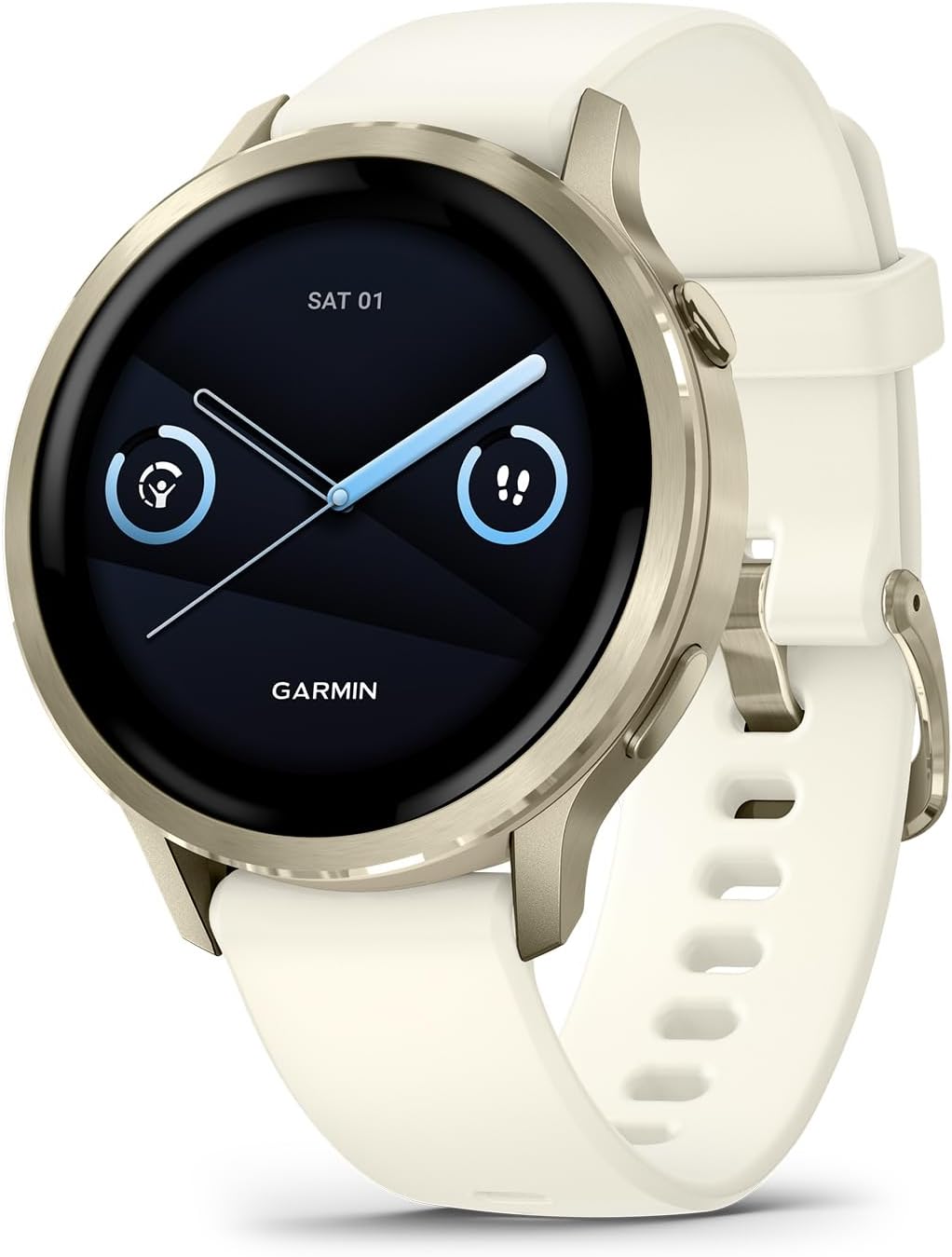
Most waterproof smartwatches are designed around sport. You buy them because you train, you swim, you push yourself, and you need a device that keeps up with all of that without complaining about the water.
The Garmin Venu 4 comes at the waterproofing question from a different direction entirely.
It is designed around your health first, your lifestyle second, and your sport third — and the 5 ATM water resistance is woven into all three rather than being the headline feature of any one of them.
This is the watch for someone who swims at the gym three times a week, wears the same watch to the office, uses it to pay for coffee on the way home, and relies on it to tell them each morning whether their body has genuinely recovered from yesterday or whether it is pretending to feel fine.
Swimming Without Switching Modes or Thinking About It
The Venu 4 handles pool sessions with dedicated pool swim tracking that records laps, distance, pace, and calories without any setup beyond starting the activity.
Heart rate monitoring continues throughout the swim using the optical sensor on the back of the watch, giving you effort data that most lifestyle watches lose the moment you get in the water.
After the swim, Garmin’s Body Battery score reflects the cardiovascular effort the session required. Body Battery is not just a post-workout summary — it updates continuously throughout the day, so you can see how your morning swim drew down your energy reserves, how those reserves recovered during a calm afternoon, and what your actual energy level looks like by evening.
For someone juggling morning swims with a full working day, this continuous picture is more useful than a single post-workout summary that stays fixed for 24 hours.
Open water swimming mode uses GPS to record your route and pace in lakes, rivers, and the sea, with the same heart rate monitoring running throughout.
The Venu 4 is not a dive computer and the 5 ATM rating is appropriate for surface swimming rather than sustained depth, but for recreational open water swimmers who want their routes and effort tracked properly, it does the job reliably.
The Display That Reads in Every Condition
After a swim, you are often stepping from a relatively dim indoor pool into bright daylight, or transitioning from the water to outdoor activity.
The Venu 4’s 1.4-inch AMOLED display is bright enough to read clearly in direct afternoon sunlight without shading the screen with your hand or squinting at the data you want to see.
This sounds straightforward but it is the detail that separates pleasant daily use from a mildly frustrating experience across a full active day.
A display that becomes hard to read the moment you step outside after your swim defeats the point of having the data available on your wrist in the first place.
Garmin Pay — Including After Swimming
The Venu 4 supports Garmin Pay contactless payment, and this remains active after swimming.
You can finish a pool session, dry your hands, and pay for a post-swim coffee or a snack at the gym café from your wrist without reaching for your phone or wallet.
This is a genuinely practical feature for people who arrive at the gym with nothing but the clothes they are wearing and their watch, which is a reasonable way to approach a swim session.
The payment terminal does not care that you were just in the pool, and neither does the watch.
Health Monitoring That Does Not Stop at the Pool Edge
Many fitness trackers effectively pause their health monitoring during swimming because the sensors cannot function reliably in water.
The Venu 4 continues tracking heart rate, effort, and stress throughout swim sessions, meaning the health picture it builds of your day includes what happened in the water rather than showing a blank gap between your pre-swim reading and your post-swim reading.
Over time this matters because the health patterns the watch identifies — recovery trends, sleep quality relationships with exercise, stress responses — are more accurate when the data is complete rather than having regular gaps carved out by water activity.
Sleep coaching on the Venu 4 analyses your patterns across weeks and provides personalised suggestions based on what it has observed about you specifically, not generic advice that applies to everyone equally.
For someone who swims in the morning, the coach can identify whether early morning sessions are affecting sleep quality the following night and suggest timing adjustments that reflect your actual pattern rather than textbook recommendations.
Who this is not for: Serious competitive swimmers who want dedicated stroke analysis, SWOLF tracking, and advanced swim metrics should look at the Garmin Forerunner 165 covered earlier in this guide.
The Venu 4 handles recreational swimming comfortably, but its strength is daily health intelligence across the full day rather than deep swim-specific analytics during sessions.
Specifications:
| Feature | Details |
|---|---|
| Water Resistance | 5 ATM, swim-proof |
| Swim Modes | Pool swim, open water swim |
| Display | AMOLED 1.4 inch, bright outdoor visibility |
| Battery Smartwatch | 16 days |
| Battery GPS | 20 hours |
| Health | Body Battery, sleep coaching, HRV, stress |
| Payment | Garmin Pay, works after swimming |
| Sport Modes | 80 plus |
| Compatibility | iOS and Android |
7. Garmin Descent G1: (Best Swim Watch for Dominating the Water)

If your “waterproof” needs go beyond pool laps, the Garmin Descent G1 is the rare smartwatch that’s also an actual dive computer.
It’s water-rated to 100 m (10 ATM), complies with EN13319 (the dive-instrument standard), and uses the Bühlmann ZHL-16C decompression model you’ll recognize from dedicated dive computers.
In plain English: it’s built for real dives, not just showers and swims.
Why Does it Stand Out in the Water:
Dive modes you’ll actually use:
Six profiles—Single-Gas, Multi-Gas, CCR, Gauge, Apnea, Apnea Hunt—cover everything from nitrox rec dives to freedive days.
Each mode walks you through pre-dive checks, in-dive data, and post-dive logs.
Depth-accurate hardware:
A dedicated depth sensor is accurate to 100 m, and the body is tested for 10 ATM pressure.
Specs are stated clearly in Garmin’s manual (not marketing fluff).
Surface GPS, entry/exit points:
GPS is disabled underwater (physics…), but the G1 marks your surface entry and exit so your log shows where you went in and came out—hugely helpful after drift dives.
Logs that help you improve:
Upload to Garmin Dive to store up to 200 dives on-device, add conditions/notes/photos, map your sites, and track service intervals—useful whether you dive monthly or every weekend.
A battery that matches long days:
With up to 25 hours in dive mode, ~21 days in smartwatch mode, and lengthy GPS runtimes, the Solar version stretches expedition use even further.
Real-World Notes: (from use)
I set pre-dive alarms (NDL, PO₂) in the boat so I’m not fiddling in chop, and I start the activity on deck to let GPS lock—my entry/exit pins line up cleanly in Garmin Dive afterward.
In a 3-mm suit, the five-button layout is easy with wet hands, and the transflective MIP display (176×176) stays readable at noon surface intervals without torching battery.
After saltwater dives, a freshwater rinse + button press cycle keeps the buttons snappy; doing this every time saved me from sticky controls on the next morning’s dive.
Where it fits vs “waterproof” rivals:
-
Apple Watch Ultra line: Great EN13319 implementation for recreational depths and a superb screen, but it’s a smartwatch that can dive. The Descent G1 is a dive computer first, with multi-gas, CCR support, and decompression logic baked in. If your calendar says “two-tank Saturday,” G1 feels purpose-built.
-
Samsung Galaxy Watch Ultra / general 10-ATM watches: Fantastic for swims/surf and bright sun, but they aren’t dive computers. The G1’s dive algorithms, alarms, logbook, and gas planning are the big differences from actual scuba. (Samsung cited for 10 ATM context.)
-
Higher-end dive wearables (Descent Mk3i, Suunto Ocean): If you need AMOLED, SubWave tank comms, or 3D dive mapping, those exist—but for a compact, rugged all-day watch that truly handles scuba, the G1 hits the sweet spot.
Care tips that protect the rating:
Rinse in fresh water after salt or chlorine, dry fully before charging, avoid hot water/saunas, and don’t press buttons underwater unless the profile supports it.
Water resistance is robust but not permanent; inspect straps/seals as part of your gear check.
Waterproof-relevant Specs:
-
Water rating: 10 ATM, designed to comply with EN13319; depth sensor accurate to 100 m.
-
Dive modes: Single-Gas, Multi-Gas, CCR, Gauge, Apnea, Apnea Hunt; decompression with Bühlmann ZHL-16C.
-
Battery: Up to 25 h in dive mode; long smartwatch/GPS runtimes; Solar variant extends further.
-
Display & build: 176×176 transflective MIP, sapphire lens, MIL-STD-810 testing.
-
Logging & app: Up to 200 dives stored; Garmin Dive app with site maps, notes, service logs.
Conclusion:
If your roundup of the best waterproof smartwatches needs a pick that’s comfortable on the wrist and credible on a boat, the Garmin Descent G1 is it.
It gives you real dive-computer depth, alarms, and logs with everyday battery and durability—precisely what most recreational divers and weekend spearos actually need.
8. Garmin Fenix 8: (Best Waterproof Watch for Adventure Athletes Who Do Everything)

Some people have a simple relationship with water. They swim three mornings a week in the same pool, and that is the extent of it.
Then there are the people the Garmin Fenix 8 was built for.
These are the people who kayak in the sea on Saturday mornings, do open water swims in lakes on Sunday afternoons, take the watch diving when they travel somewhere warm, and then come home to trail run through stream crossings and muddy terrain on weekday evenings.
They do not want a swim watch. They do not want a diving watch. They do not want a trail running watch. They want one watch that handles all of those situations without asking them to think about which activity it is designed for.
The Fenix 8 handles all of them and then keeps going.
40 Metres of Dive Rating With Dedicated Dive Modes
The Fenix 8 is dive-rated to 40 metres, which is the same depth rating as the Apple Watch Ultra 4. What separates the Fenix 8 is what it does with that depth rating.
Rather than simply resisting water pressure to 40 metres, the Fenix 8 carries dedicated dive profiles built specifically for different types of underwater activity. The pool swim mode handles your morning laps.
The open water swim mode tracks your lake and sea sessions. The apnea mode is designed for freediving, tracking your depth and time on breath-hold dives.
The scuba mode functions as a basic recreational dive computer, monitoring depth and dive time with the same core data that recreational divers use to track their sessions safely.
These are four genuinely different water contexts, each with its own specific data requirements, and the Fenix 8 approaches each one with a dedicated mode rather than trying to apply a single swimming framework across all of them.
Leakproof Buttons You Can Actually Press Underwater
This is a detail that sounds minor until you try to press a button on a standard watch while your hand is submerged and discover that water pressure makes it significantly harder to operate.
The Fenix 8’s buttons are specifically designed and sealed to be pressed underwater without difficulty.
During a dive, you can start and stop timers, move between screens, and interact with the watch data without surfacing. During an open water swim, you can mark a waypoint, pause the session, or switch between data screens while your wrist is still in the water.
The military standard testing the Fenix 8 carries — MIL-STD-810 — covers not just water immersion but temperature extremes, shock, vibration, humidity, and altitude.
This is not marketing language for a watch that is mostly fine in rain.
It is the testing protocol used for equipment that needs to function reliably in genuinely demanding conditions, and the Fenix 8 earns that certification through actual testing rather than claiming it.
A Flashlight That Makes Early Morning and Evening Water Activities Practical
The Fenix 8 has a built-in LED flashlight on the face of the watch. This sounds unusual on a waterproof smartwatch, but it makes immediate practical sense for anyone who swims, kayaks, or trains near water outside of daylight hours.
Dawn swims start before sunrise. Evening kayak sessions end after sunset. Cold water swimmers who train through autumn and winter are often entering and leaving the water in darkness.
Having a torch on the wrist that can illuminate the path to the water, signal to other boats or swimmers, or illuminate a changing area after a session is the kind of practical detail that outdoor water sports enthusiasts recognise immediately as useful rather than gimmicky.
GPS That Works When You Are Moving Fast Through Complex Terrain
Open water swimming, kayaking, and water sports all involve GPS tracking in environments where satellite signals can be interrupted by water surface reflections, coastal terrain, and overhead conditions.
The Fenix 8 uses dual-frequency multi-band GPS, which simultaneously receives signals on two different frequency bands and cross-references them to eliminate the errors that single-frequency GPS produces in challenging environments.
For a kayaker tracking their route along a rocky coastline, the difference between single and dual-frequency GPS is the difference between a route map that accurately follows the actual coast and one that cuts inland through solid rock.
For an open water swimmer crossing a bay, it means the recorded distance matches the distance actually swum rather than a straight-line approximation.
Triathlon Mode — The Full Picture Across All Three Sports
The Fenix 8 carries a dedicated triathlon mode that tracks all three disciplines without requiring any manual activity switching between them. You start the triathlon mode before the swim leg and the watch handles the rest, detecting your transition from water to bike, recording the transition time, then detecting your change from cycling to running.
Each discipline generates its own specific data — swim distance and stroke count, cycling power and cadence, running pace and cadence — and the Garmin Connect platform consolidates all of it into a single session analysis after you finish.
For triathletes who train in all three disciplines throughout the week and compete in events that combine them, this seamless multi-sport tracking is the feature that makes the Fenix 8 genuinely more useful than three separate sport-specific devices.
Battery Life That Outlasts the Adventure
The Fenix 8 runs for 16 days in standard smartwatch mode and 47 hours in GPS mode. For a long kayaking trip, a multi-day open water event, or a weekend of surf sessions followed by trail running, a 47-hour GPS battery means the watch runs through two full days of continuous outdoor activity before needing attention.
The Solar variants extend these figures significantly for buyers who spend consistent time outdoors and want to push the charging intervals even further.
Who this is not for: Buyers who specifically need the full dive computer functionality, including decompression modelling, no-decompression limits, and gas management for scuba diving beyond recreational depths, should look at the Garmin Descent G1 covered elsewhere in this guide. The Fenix 8’s dive modes handle recreational diving data but are not the full dive computer that the Descent G1 provides.
For a closer look at how the Fenix 8 compares against the Garmin Quatix 8 for buyers who want to add marine-specific features including chartplotter integration and regatta timing to the Fenix 8’s platform, the full guide at garmin-quatix-8-vs-fenix-8 covers the comparison in detail.
Specifications:
| Feature | Details |
|---|---|
| Water Resistance | 40 metres dive rated |
| Dive Modes | Pool swim, open water, apnea, scuba |
| Buttons | Leakproof, operable underwater |
| Military Testing | MIL-STD-810 |
| Flashlight | Built-in LED |
| Display | 1.4 inch AMOLED, sapphire crystal |
| Battery GPS | 47 hours |
| Battery Smartwatch | 16 days |
| GPS | Dual-frequency multi-band |
| Triathlon | Full multisport mode with auto-detection |
| Sizes | 43mm, 47mm, 51mm |
| Compatibility | iOS and Android |
9. Google Pixel Watch 5: (Best Waterproof Smartwatch for Android Users)

Android users often feel left out when smartwatch conversations turn to waterproof options, because the Apple Watch dominates most recommendations and simply does not work with Android phones.
The Google Pixel Watch 5 is the answer to that problem — a genuinely capable waterproof smartwatch that works with any Android phone and brings safety features that no other mainstream smartwatch currently offers.
It launched on August 20, 2026, and the water resistance is rated to 50 metres, covering daily swimming, pool laps, ocean swimming, and water sports without any concern.
After salt or chlorinated pool water, a quick rinse under fresh running water keeps the buttons clear and the seals in good condition.
The Safety Feature That Makes It Unique
The Pixel Watch 5 carries a feature called Loss of Pulse Detection that no other mainstream smartwatch in the world currently has.
The watch monitors your pulse continuously and if it detects that your pulse has stopped and you do not respond to an alert within a set period, it automatically contacts emergency services and shares your GPS location.
For swimmers, this is worth thinking about seriously. A swimmer who has a cardiac event in the water cannot press a button to call for help.
Loss of Pulse Detection acts without any input from the wearer. It is the safety feature that works exactly when the person wearing the watch is least able to help themselves.
The Pixel Watch 5 also carries fall detection and crash detection that call emergency services automatically, and satellite SOS that connects to help even when there is no mobile phone signal — useful for open water swimmers and coastal adventurers who go beyond regular network coverage.
GPS That Records Where You Actually Swam
The Pixel Watch 5 uses cloud-based GPS post-processing after your swim or outdoor activity is complete.
The raw GPS data recorded during your session is refined using Google’s 3D mapping data and atmospheric corrections, producing a route that more accurately reflects where you actually went rather than the approximate path that standard GPS tracking records.
For open water swimmers who care about their route accuracy, or trail runners and cyclists who alternate their activities with swimming, this cloud processing makes a real difference to the quality of the recorded data over time.
Health Tracking That Learns About You
Like the Apple Watch Series 12, the Pixel Watch 5 tracks heart rate very frequently and uses that data to generate a daily Readiness Score.
The score looks at your sleep quality, heart rate variability overnight, and recent training load, then tells you each morning whether your body is ready to push hard or needs an easier day.
The watch also carries the most accurate sleep tracking Google has ever built, with a new minute-by-minute blood oxygen reading throughout the night.
For swimmers who train early in the morning, understanding whether last night’s sleep was restorative before getting in the water changes the quality of the session.
Practical Swimming Notes
The pool swim mode tracks laps, distance, and heart rate during swimming sessions.
Set the pool length once and the watch counts laps accurately from that point forward.
A water lock prevents accidental screen touches when your wrist enters the water, and you can turn this on from quick settings before pushing off from the wall.
The battery runs for 30 to 40 hours in standard daily use, which for most swimmers means charging every other evening.
Fast charging gives 15 hours of use from just 15 minutes on the charger, which is the most practical fast charging ratio of any watch in this guide.
Specifications:
| Feature | Details |
|---|---|
| Water Resistance | 50 metres, swim-proof |
| GPS | Dual-frequency plus cloud post-processing |
| Loss of Pulse Detection | Yes — unique to Pixel Watch |
| Readiness Score | Yes |
| Sleep Tracking | Minute-by-minute blood oxygen |
| Battery | 30-40 hours |
| Fast Charge | 15 minutes = 15 hours |
| Satellite SOS | Yes, LTE models |
| Launched | August 20, 2026 |
| Compatibility | Android only |
10. Apple Watch Series 12: Best Waterproof Smartwatch for Everyday iPhone Users

Most people do not need the biggest, most expensive Apple Watch. They need one that handles everything they do every day — including the moments when their watch gets wet — without making them think about it.
The Apple Watch Series 12 is that watch.
It launched on September 18, 2026, alongside the Ultra 4, and it brings many of the same health improvements in a lighter, smaller, and more affordable package.
The water resistance is rated to 50 metres, which covers swimming in pools, swimming in the ocean, water sports, heavy rain, and any other water situation a normal active day produces.
Most people who wear a watch while swimming never go deeper than a few metres, and the Series 12 handles that without any concern.
The Health Update That Changes Everything
The biggest change from the previous Apple Watch is inside the watch, not visible from the outside.
The Series 12 now checks your heart rate every five seconds all day long, which is 60 times more often than the previous generation managed.
It also tracks heart rate variability every five minutes, which is 24 times more frequent than before.
All of this extra health data powers a new feature called the Readiness Score.
Every morning, the watch looks at how well you slept, how your heart rate variability recovered overnight, and how much activity you have built up over recent days, then gives you a simple score from zero to ten. A high score means your body is ready to work hard.
A low score means today calls for rest or light activity.
It updates throughout the day as your energy levels change, not just in the morning.
For swimmers who train regularly, this score is particularly useful because it tells you whether your body has recovered from your last session before you commit to another hard workout.
A Beautiful New Option Returns
The Series 12 brings back the ceramic case option that Apple discontinued six years ago.
Ceramic is harder than steel and harder than titanium, which means the case resists everyday scratches better than almost any other material on the market.
It comes in a clean white finish that looks unlike any other smartwatch currently available and adds a premium appearance that suits both gym sessions and formal occasions equally well.
For buyers who want something that looks refined and stays looking new, the ceramic Series 12 is worth serious consideration.
The standard aluminium version is still excellent and significantly more accessible, but the ceramic option exists for those who want it.
Audio Intelligence — A Feature Nobody Expected
One of the most genuinely useful new additions to the Series 12 is Audio Intelligence, which uses the watch’s microphones and the new S11 chip to listen for important sounds around you and tap your wrist when it detects them.
Fire alarms, doorbells, sirens, and traffic alerts all trigger a wrist notification.
This is especially practical for swimmers. When you are in the pool with your face in the water and earplugs in, you cannot hear anything happening around you.
If a fire alarm goes off in the building, the Series 12 will tap your wrist and show you the alert before you surface naturally. It is a small feature that could matter on exactly the day you least expect it to.
Who This Watch Is For
The Series 12 suits anyone with an iPhone who wants a capable everyday smartwatch that handles water without restriction, provides genuinely useful health data, and looks good in every situation from morning swim to evening dinner.
It comes in 42mm and 46mm sizes, with the 42mm working well on smaller wrists and the 46mm suiting larger ones.
Like the Ultra 4, it requires an iPhone to function. Android users should look further down this guide.
Specifications:
| Feature | Details |
|---|---|
| Water Resistance | 50 metres, swim-proof |
| Chip | Apple S11 |
| Heart Rate | Every 5 seconds, all day |
| HRV Tracking | Every 5 minutes |
| Readiness Score | Yes, updates throughout day |
| Audio Intelligence | Sound recognition alerts |
| Case Options | Aluminium, Titanium, Ceramic |
| Sizes | 42mm and 46mm |
| Battery | 18 hours, fast charging |
| Compatibility | iPhone only |
Buying Guide:
Water Resistance Rating:
- Look for a smartwatch with a high water resistance rating, typically indicated by ATM (atmospheres) or meters. The higher the rating, the more waterproof the watch is. Aim for a rating of at least 5 ATM (50 meters) for swimming and water sports.
Swim-Proof Design:
- Ensure that the smartwatch is specifically designed for swimming and water activities. Look for features such as sealed construction, reinforced buttons, and swim-specific tracking modes.
Activity Tracking:
- Consider the activity tracking features offered by the smartwatch, including swim tracking, step counting, distance tracking, and heart rate monitoring. Choose a smartwatch that provides comprehensive activity-tracking capabilities to monitor your workouts effectively.
Compatibility:
- Ensure that the smartwatch is compatible with your smartphone’s operating system (iOS or Android). Additionally, check if the smartwatch is compatible with your preferred fitness-tracking apps and services.
GPS:
- If you engage in outdoor water activities like kayaking or paddleboarding, consider a smartwatch with built-in GPS for accurate distance tracking and route mapping.
Display:
- Look for a smartwatch with a bright and visible display that is easy to read in various lighting conditions, including underwater. Consider factors like display size, resolution, and visibility in sunlight.
Design and Comfort:
- Choose a smartwatch with a comfortable and durable design that suits your style preferences. Look for options with adjustable straps and lightweight materials for added comfort during wear.
Related Articles:
Apple Watch Series 11 Hands-On Review
Best Smartwatch for Public Safety
Best Smartwatches for Monitoring Stress
Garmin Fenix 8 Pro vs Enduro 2
Luis Cooper

Hi, I'm Luis, the guy behind this site. I love wearing watches, especially ones that look great on small wrists (mine are about 6.3" around). The Watches Geek is dedicated to helping you learn about and buy watches that you will love wearing. I want this website to be the last destination for people to pick the best watches to fit their needs. You can find our unbiased reviews here on Thewatchesgeek.