
Last Updated on October 11, 2026 by Luis Cooper
Screens are everywhere.
The phone in your pocket.
The monitor at your desk.
The tablet on the kitchen counter.
For a growing number of people, the last thing they want is another device strapped to their wrist, demanding attention during a workout, a meeting, or a night of sleep it’s supposed to improve.
Fitness trackers without a screen solve a specific problem.
They collect the same health data as a full smartwatch, sometimes more accurately because the form factor allows better sensor contact and more consistent wearing, without ever buzzing, glowing, or pulling focus away from what you are actually doing.
Everything they measure goes to an app.
You check it when you want to, not when the device decides you should.
In 2026, this category will be split clearly into two form factors.
Smart rings sit on a finger and disappear from awareness within a day of being worn.
Screenless bands sit on the wrist but show nothing on their surfaces, passively collecting data from morning to night.
Both approaches have specific strengths, and both are represented on this list.
Before buying any smart ring, keep one practical note in mind.
Smart rings require precise sizing to sit correctly against the skin for accurate sensor readings.
Fingers swell and shrink across the day and across seasons, and a ring sized for your morning finger may feel tight by evening.
Every reputable smart ring brand sells a sizing kit before the ring itself.
The sizing kit sends you sample sizes in the ring’s exact dimensions.
Wear the appropriate sample for 24 hours before ordering.
This step is not optional for accurate health data.
Which are the Best Fitness Trackers Without A Screen?
Best Fitness Trackers Without a Screen — Our Top Picks


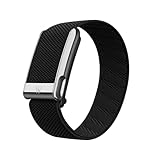

Google Fitbit Air: (Best Budget Screenless Fitness Tracker)

Meet Claire, 24. She is a college student in Chicago who walks everywhere, sleeps badly, and checks her phone too much.
She wanted something that would quietly track her health without becoming yet another screen on her wrist. Her smartwatch kept buzzing with messages during lectures. Her old fitness band felt like a brick on her wrist at night.
Then she found the Fitbit Air.
“It is just there,” she says. “I never think about it.
I just open the app in the morning and everything is already waiting for me.”
That is the whole point of this tracker.
What is the Fitbit Air, exactly?
It is a small, light band that sits on your wrist and says nothing. No screen. No buttons. No buzz every time someone likes your photo.
It is made by Google, and it looks more like a bracelet than a fitness tracker.
The pebble-shaped sensor weighs just 5.2 grams without the band — lighter than a stack of five coins.
Google calls it its smallest tracker ever, and the design shows.
The band wraps comfortably around your wrist and stays out of the way whether you are typing, sleeping, washing dishes, or lifting at the gym.
Three band options
This is one of the things that makes the Fitbit Air stand out.
You do not have to live with one look forever.
The Performance Loop is made from soft recycled materials and breathes well during warm weather.
The Active Band is slippery silicone that wipes clean after sweaty workouts.
The Elevated Modern Band looks like a plain bracelet — something you could wear to a job interview or a wedding and no one would know it was a fitness tracker.
You can swap them in seconds.
Claire wears the braided band to class and switches to silicone at the gym.
What it tracks
Every minute of every day, the Fitbit Air is measuring your heart rate, blood oxygen level, skin temperature, steps, and movement.
At night, it tracks your sleep stages — how long you spent in deep sleep, REM, light sleep, and how many times you woke up.
It also detects Afib, a common heart rhythm issue most people don’t know they have.
This is a feature you usually only find on trackers that cost three times as much.
When you work out, you can manually start a session from your phone or let the tracker detect it automatically after 15 minutes of activity.
It recognizes 41 different workout types.
It uses your phone’s GPS to map outdoor routes since there is no GPS built into the band itself.
Sleep tracking is where it earns its spot
Because the band is so thin and light, most people forget it is on their wrist at night.
That matters more than you might think.
Big, heavy smartwatches often get taken off at bedtime, which means all that sleep data is lost. The Fitbit Air stays on.
The sleep reports in the Google Health app are detailed and easy to read.
You see a breakdown of each sleep stage, your overnight blood oxygen, skin temperature changes, and a Readiness Score that tells you how recovered your body is for the day ahead.
Tom’s Guide tested the sleep data against a Garmin Forerunner and found the results were very close.
A unique trick: pair it with a smartwatch
Most people do not know this.
Wear a Pixel Watch during the day and switch to the Fitbit Air at night for sleep tracking.
The two devices share data through the Google Health app without any gaps.
So you get the best of both — a proper smartwatch when you need it, and a featherlight band when you sleep.
Battery life
Seven days on a single charge.
If you forget to charge it and hit zero, five minutes on the charger gives you a full day back.
The magnetic charger is small and easy to travel with.
In real testing, reviewers hit about seven days with power still left over.
The free version vs. Google Health Premium
Core tracking is free. Steps, heart rate, sleep stages, SpO2, skin temperature — all free, no subscription needed.
Google Health Premium costs $9.99 per month or $99 per year.
It unlocks the Gemini-powered Health Coach, smarter fitness plans, and deeper sleep analysis.
The box includes a three-month free trial, so you can try it before deciding.
Honestly, most people will be happy with the free version. The paid tier is nice to have, not essential.
Who is this for?
Someone who wants simple, reliable health tracking without thinking about it.
A student, a shift worker, a parent who never sits still, or anyone who is tired of their wrist buzzing all day.
It is also a good choice for people who already have a smartwatch but want better sleep data without sleeping in a heavy device.
Who Should NOT Buy the Google Fitbit Air: If you want to see your heart rate or pace on your wrist mid-run without pulling out your phone, this is not the right tracker. It is also not suited to serious athletes who need live workout metrics or lap data. And if you are an Android user outside the Google ecosystem, the app experience may feel limited — the Fitbit Air works best when you are already using Google Health.
Check Amazon for current price
Oura Ring 5: (Best Smart Ring for Health Tracking Without Any Screen)

Sarah is 31.
She works long hospital shifts as a nurse in Dallas and has tried three fitness trackers in the past two years.
Each one either dug into her glove, lit up at the wrong moment, or felt too bulky under PPE.
Then, during a break, a colleague showed her the Oura Ring 5.
She ordered one that evening.
“I genuinely forget it is there,” she told her sister. “And somehow it knows more about my health than anything else I have worn.”
That is the Oura Ring 5 in a sentence.
It disappears on your finger and quietly collects more health data than most people know what to do with.
Why it replaced the Samsung Galaxy Ring on this list
The Samsung Galaxy Ring is a solid tracker.
But Oura has years of sleep-science research behind it, and the Ring 5 takes that lead further.
If you bought this article specifically for a screenless health tracker, the Oura Ring 5 delivers more useful, more accurate data.
The Samsung ring is better if you live inside the Samsung ecosystem. For everyone else, this wins.
The size is the first thing you notice
Oura calls the Ring 5 the world’s smallest smart ring in its category, and it is not an empty claim.
At 2.28 mm thick and weighing just 2 grams in the lightest size, it is 40% smaller than the Ring 4 that came before it.
The LEDs sit flush inside the band instead of protruding — Oura calls them low-profile sensor domes.
On your finger, it looks like a plain band. During a long shift, a workout, or a scrambling hike, most wearers forget it is there entirely.
The body is titanium with a hard PVD coating inside, so it won’t irritate the skin.
It is available in Black, Silver, Stealth, Gold, Brushed Silver, and Deep Rose. The base finishes cost less.
What Health Radar actually does
This is the Ring 5’s biggest new feature, and it is worth explaining properly because the name alone doesn’t say much.
Health Radar does not give you more numbers to stare at. It works the other way around.
It watches your data over time — HRV, temperature, sleep patterns, breathing rate, blood pressure signals — and only speaks up when something looks different from your personal baseline.
Think of it as a quiet monitor that sits in the background until it has something worth telling you.
The blood pressure signals feature tracks overnight patterns and lets you enter cuff readings so the ring can learn your personal trend.
It is not a medical-grade blood pressure monitor, and Oura says so clearly.
But for spotting a gradual shift over weeks, it adds something no other ring on this list has.
The 30-day rolling breathing analysis is genuinely useful for anyone who deals with allergies, respiratory issues, or disrupted sleep.
Instead of showing you one bad night, it shows whether there is a pattern—which is the information that actually matters.
Sleep tracking is where it earns its reputation
Independent testers who compared the Oura Ring 5 against clinical sleep-study equipment found its sleep-stage readings among the most accurate they’ve tested.
Deep sleep, REM, light sleep, and wake periods all tracked closely against reference devices.
The app presents this in a readable format, so you don’t have to decode charts before your first coffee.
Every morning, the Readiness Score gives you a single number based on your HRV, resting heart rate, sleep, and temperature. A low score means the ring noticed something.
A high score means your body recovered well overnight.
Sarah’s experience matches what most reviewers find—after a few weeks, you start to understand your own patterns in a way a smartwatch glance never provided.
Battery life in real use
The spec sheet says 6 to 9 days.
Most people charge it about once a week, usually during a shower or while getting ready in the morning. The ring takes about 80 minutes to fully charge.
Oura sells an optional portable charging case ($99 separately) that holds up to five full charges — useful for travel or people who want to go weeks between plugging in.
It does not come in the box, which is a fair complaint when competitors include theirs.
What the sensors actually track
Two tri-LED emitters, two photodetectors, an accelerometer, a SpO2 sensor, and a temperature sensor.
The redesigned sensing system uses 12 signal pathways—nearly double what older rings used—improving accuracy across different skin tones and finger types.
Heart rate, HRV, blood oxygen, respiration rate, skin temperature deviation, step count, calorie burn, and stress insights all feed into the app continuously.
There is no GPS. There is no NFC for payments.
There is no on-ring display of any kind.
That is the point. The data goes to your phone; the ring stays invisible.
Subscription — the honest breakdown
Oura requires a $5.99/month membership, or $69.99 if you pay annually.
Without it, you can see basic data, but the deeper insights, Health Radar, trend analysis, and Oura Advisor AI are locked.
For a premium-priced ring, this is the main objection most buyers raise, and it is a fair one.
The counter-argument is that Oura’s data science team updates features regularly without hardware changes — the Health Radar software works on the Ring 4 as well.
If the subscription stops, your historical data does not disappear.
Who this is genuinely for
People who want the most accurate passive health tracking available in a ring form factor, don’t mind paying for it, and aren’t looking for a primary workout tracker.
It fits a nurse, a shift worker, a frequent traveler, someone recovering from an illness, or anyone who wants to understand their health trends over weeks and months instead of checking a step count.
Who Should NOT Buy the Oura Ring 5:
If you want zero subscription fees, look at the RingConn Gen 2 further down this list — it tracks most of the same basics for a one-time cost. The Oura Ring 5 is also not the right pick for serious runners or cyclists who need accurate real-time heart rate during workouts — grip-heavy or outdoor activities reduce sensor contact and accuracy drops. And if you use Samsung phones and want tight ecosystem integration, the Samsung Galaxy Ring fits that slot better.
Check Amazon for current price
RingConn Gen 2: (Best Subscription-Free Smart Ring for Any Phone)

A yoga instructor who works with clients on stress reduction and sleep quality described the RingConn Gen 2 as the device she recommends to clients because it removes every barrier she’s encountered with other smart rings.
No subscription.
No brand-specific phone requirement.
No protruding sensor bumps.
She had watched clients abandon the Oura Ring over the subscription cost after the trial period, and abandon the Galaxy Ring because they used iPhones.
The RingConn Gen 2 worked with every phone her clients used and required no ongoing payment.
She described her personal data from three months of wearing it as the clearest picture she had ever had of the relationship between her teaching schedule, her sleep quality, and her recovery.
Why RingConn Is the Safest Smart Ring Purchase Right Now:
In 2026, most smart ring brands in the United States are involved in patent disputes filed by Oura Ring.
Ultrahuman’s Ring Air was banned from sale in the US in late 2025.
Samsung and Amazfit are in ongoing legal proceedings with uncertain outcomes.
RingConn specifically negotiated a licensing arrangement with Oura that resolved their dispute.
This makes the RingConn Gen 2 one of the safest smart ring purchases in the US market right now for long-term availability and continued software support.
The Gen 2 offers 12 days of battery life, the longest of any smart ring currently available.
Sleep apnea detection has been added alongside the standard sleep stage tracking.
AI-powered sleep coaching analyzes patterns across weeks of data and provides personalized recommendations based on the wearer’s specific sleep architecture, not generic advice.
Heart rate, HRV, SpO2, skin temperature, stress, and activity tracking are included at no subscription cost.
Tom’s Guide described it as sleek, reliable, and comfortable, calling the 12-day battery life its standout feature.
Available in sizes 6 through 14 via the RingConn sizing kit. Compatible with both iOS and Android. No subscription at any point.
Who Should Not Buy This:
If Samsung Health ecosystem integration is specifically needed, the Galaxy Ring provides that, whereas RingConn operates on its own platform.
If advanced health-insight analytics are a priority, the Oura Ring 4 platform is more developed than RingConn’s current app capabilities.
For a broader comparison of how the RingConn Gen 2 fits within the screenless health tracker category alongside other recovery-focused options, the full comparison at best-smartwatches-for-monitoring-stress covers the recovery and stress-monitoring category in detail.
Specifications:
| Feature | Details |
|---|---|
| Form Factor | Smart ring, titanium |
| Battery | Up to 12 days |
| Sensors | Heart rate, HRV, SpO2, temperature, accelerometer |
| Special Feature | Sleep apnea detection, AI sleep coaching |
| Water Resistance | 10 ATM |
| Subscription | None |
| Sizes | 6 through 14 |
| Compatibility | iOS and Android |
WHOOP 5.0: (Best Screenless Band for Serious Athletes)

A competitive CrossFit athlete who trains twice daily described the WHOOP 5.0 as the device that stopped him guessing about recovery and started the most productive training period of his competitive career.
He had trained by feel and by program for six years, managing overtraining and underperformance on intuition.
The WHOOP Strain score told him each day how much physiological stress the previous day’s training had created.
The Recovery score told him what percentage of that stress his overnight sleep had resolved. For the first time, he had a number that answered the specific question he had been guessing at for years.
He described dropping his Monday training intensity based on a low recovery score and having his Tuesday performance be the best of that training block, which had never happened in six years of training harder on Mondays, regardless of how he felt.
Strain and Recovery for Athletes Who Train Hard:
WHOOP is built for people who push their bodies hardest and need precise recovery information to manage that load safely.
The Strain score calculates each day’s cardiovascular load on a scale from 0 to 21, synthesizing heart rate data across the entire day rather than only during tracked workouts.
This means activities that feel effortless but still create cardiovascular stress, such as a long walk, a stressful meeting, or poor sleep the night before, are captured in the daily strain calculation.
The Recovery score synthesizes overnight HRV, resting heart rate, sleep performance, and respiratory rate into a percentage score from 0 to 100.
Green is ready to push.
Yellow is proceed with awareness.
Red is a recovery day.
For athletes managing training load throughout a competitive season, these scores replace the subjective decisions that lead to both overtraining and undertraining.
WHOOP 5.0 adds Healthspan tracking, which monitors biological age indicators from daily biometric data and trends them over time.
The optional WHOOP MG upgrade within the subscription tier adds ECG and blood pressure estimation for members who want clinical-grade cardiac monitoring alongside the performance data.
The subscription model is WHOOP’s defining commitment requirement.
At certain subscription tiers, the device has no upfront cost, with the hardware included in the subscription.
The monthly subscription covers the hardware, software, and ongoing features.
Tom’s Guide described the WHOOP as one of the few devices that go this in-depth, noting that subscribers find the monthly cost worth it once they start digging into what it tracks.
The screenless band wears on the wrist and requires no interaction.
No notifications.
No displays.
Data syncs to the app when the phone is nearby.
Who Should Not Buy This
If subscription-free tracking is your priority, every other option on this list offers that, while WHOOP requires an ongoing commitment.
If you are a casual exerciser rather than a serious competitive athlete, WHOOP’s strain and recovery analytics go beyond what the daily use case requires, and simpler options offer better value.
If you want to try screenless tracking before committing to a subscription model, the Amazfit Helio Strap is next on this list and covers that without any ongoing cost.
Specifications:
| Feature | Details |
|---|---|
| Form Factor | Screenless wrist band |
| Sensors | Heart rate, HRV, SpO2, skin temperature, respiratory rate, accelerometer |
| Scores | Strain, Recovery, Sleep, Healthspan |
| Battery | Up to 4 days |
| Water Resistance | IP68 |
| Subscription | Required, device included at certain tiers |
| Compatibility | iOS and Android |
Amazfit Helio Ring: (Best Budget Smart Ring)

A freelance writer who described her workday as entirely screen-based and her evenings as deliberately screen-free described the Amazfit Helio Ring as the tracker that finally matched her philosophy about technology.
She had been unwilling to pay the Oura Ring’s subscription and unwilling to buy into the Samsung ecosystem.
The Helio Ring cost a fraction of either, required no subscription, and tracked her sleep, heart rate, and daily activity from her finger without requiring her to look at anything during the hours when she had specifically decided not to look at screens.
She described waking up, checking the app for thirty seconds, then putting her phone down as the most efficient health-data interaction she’d had with any wearable.
Important Note About Availability:
Before purchasing, a brief note is worth knowing.
Oura Ring has filed patent litigation against several smart ring manufacturers in the United States, including Amazfit.
If legal certainty about future support and availability is important to your purchase decision, the RingConn Gen 2 has already resolved its Oura dispute through a licensing agreement and is the safer long-term choice.
If you want the Amazfit platform at the lowest price currently available for a smart ring and are comfortable with the ongoing legal context, the Helio Ring offers that.
Budget Smart Ring with the Zepp Platform:
The Amazfit Helio Ring offers heart rate monitoring, HRV tracking, SpO2 measurement, skin temperature deviation, sleep-stage analysis, and daily activity tracking through the Zepp app. No subscription.
The ring body is aluminum rather than the titanium of the Oura Ring 4 and Galaxy Ring, which reduces weight but also durability over years of daily wear.
TechRadar described the Helio Ring as a great choice for buyers who want a cheap ring without too many compromises, noting its comfortable fit and competitive sleep-tracking metrics in direct comparison testing.
The 4-day battery life is the shortest of the smart rings on this list, requiring charging every three to four days.
For a ring worn continuously, including overnight sleep, this means deciding daily when to charge without missing sleep data.
Available in sizes 7 through 14 through the Amazfit sizing kit. Compatible with both iOS and Android.
Who Should Not Buy This
If long-term purchase security is the priority, the RingConn Gen 2 is the safer choice because its legal status with Oura has been resolved.
If titanium construction for long-term durability matters, the Oura Ring 4, Galaxy Ring, and RingConn all use titanium, while the Helio Ring uses aluminum.
If a 4-day battery life raises charging concerns, every other ring on this list offers longer runtime.
Specifications:
| Feature | Details |
|---|---|
| Form Factor | Smart ring, aluminium |
| Battery | Up to 4 days |
| Sensors | Heart rate, HRV, SpO2, temperature, accelerometer |
| Tracking | Sleep stages, activity, stress, readiness |
| Water Resistance | 5 ATM |
| Subscription | None |
| Sizes | 7 through 14 |
| Compatibility | iOS and Android |
COOSPO: (best fitness tracker without a screen)

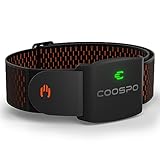
The COOSPO HW9 Bluetooth 5.0 ANT+ Heart Rate Monitor Armband offers accurate heart rate monitoring in a convenient and comfortable design.
Ideal for fitness enthusiasts, it’s a reliable tool to optimize your workouts and track your progress.
WHAT DO WE GET FROM THESE?
Heart Rate Monitoring:
The COOSPO HW9 heart rate armband serves as both an optical heart rate monitor and a calorie tracker, using advanced optical heart rate technology to deliver accurate readings with a monitoring error of ±1 BPM.
This ensures precise heart rate and calorie-burn tracking during workouts.
With a 5-color LED indicator for Heart Rate Zone Training, the HW9 lets users monitor heart rate zones at a glance and optimize intensity in real time.
The device also supports heart rate variability (HRV), providing further insights into overall cardiovascular health.
Designed for comfort, the armband heart rate monitor offers a convenient alternative to chest straps and wrist-based devices.
Its soft, breathable, and adjustable band ensures maximum freedom of movement, making it suitable for a wide range of sports and exercises.
With Bluetooth 5.0 and ANT+ connectivity, the COOSPO HW9 armband heart rate sensor can easily connect with GPS bike computers, fitness apps, running watches, and other compatible devices.
The latest technology allows for two simultaneous Bluetooth connections, ensuring seamless integration with multiple devices for comprehensive fitness tracking.
Rechargeable Battery:
The Heartool/Coosporide app lets users customize their actual maximum heart rate with the HW9 armband.
It helps users reach their target heart rate zone for optimal workout intensity.
By personalizing their max heart rate, users can ensure more accurate tracking and better performance.
The default maximum heart rate is set to 200 bpm.
The HW9 armband features a max heart rate vibration function that warns when the user’s heart rate exceeds the preset max heart rate or their customized value.
This feature helps ensure training safety by alerting users to potentially unsafe heart rate levels.
Equipped with a rechargeable battery, the HW9 armband offers up to 35 hours of battery life on a single charge.
It supports fast charging and comes with a magnetic charger for convenient recharging.
To extend battery life, it’s recommended to use a DC 5V power adapter or a computer USB port for charging.
The COOSPO Bluetooth 5.0 heart rate armband works with 200+ apps, including Wahoo Fitness, Strava, Polar Beat, DDP Yoga, HR monitor, CooSporide, Elite HRV, and Zwift.
This compatibility ensures seamless integration with a wide range of fitness-tracking and training platforms, enhancing the user experience and the device’s versatility.
COROS: (Wearable activity tracker without a screen)

The COROS Heart Rate Monitor is a top choice for fitness enthusiasts seeking comfort and ease of use.
Its ergonomic design and auto-wear detection make heart rate tracking hassle-free during workouts.
Perfect for those who prioritize comfort and convenience in their fitness journey.
WHAT DO WE GET FROM THESE?
Comfortable and Quick Cleaning:
The COROS Heart Rate Monitor features a soft, breathable fabric band, providing a comfortable alternative to traditional chest straps.
The band can be easily cleaned by removing the sensor, ensuring hygiene and convenience for users.
Designed for ease of use and a flexible fit, the COROS Heart Rate Monitor band lies flat around the arm and locks in place thanks to its textured surface.
Users can adjust the placement and tension of the elasticated band by sliding the buckle, allowing a customized, secure fit during workouts.
With an advanced sensor in a rugged yet sleek body and a scratch-resistant cover, the COROS Heart Rate Monitor delivers reliable, accurate heart rate monitoring.
Users can track workouts with confidence and comfort, knowing they are getting precise data without distractions.
Long-Lasting Battery Timing:
The COROS Heart Rate Monitor boasts impressive battery life, offering 38 hours of continuous operation or 80 days of standby on a single charge.
Users can easily monitor the battery level on their COROS watch or in the app and quickly recharge the device in just 2 hours with the provided magnetic cable.
Featuring built-in wear detection, the COROS Heart Rate Monitor automatically powers on and off based on whether it is being worn.
This ensures convenient, efficient use, as the device seamlessly connects to paired devices whenever a workout is initiated.
With its multiple connectivity options, the COROS Heart Rate Monitor is designed to work seamlessly with COROS watches and apps.
It can also pair with up to three devices at once, including sports watches, indoor trainers, bikes, computers, phones, apps, treadmills, and indoor rowers.
This versatility lets users integrate the heart rate monitor into their fitness routines and connect to a variety of devices for comprehensive workout tracking.
Conclusion:
The COROS Heart Rate Monitor does one thing and does it well.
If you train with a COROS watch or need to connect to gym equipment, a bike computer, or a treadmill all at once, this armband removes the guesswork and delivers clean, accurate heart rate data every session.
For serious training without a screen in the way, it is a quiet and reliable choice.
Buying Guide:
Form Factor:
- Look for a compact, discreet form factor, such as a clip-on tracker or a minimalist wristband. Consider your preferred wearing style and whether you want a device that is worn on the wrist, clipped to clothing, or attached to other accessories.
Activity Tracking:
- Make sure the fitness tracker offers comprehensive activity-tracking features, including step counting, distance tracking, estimated calorie burn, and sleep monitoring. Look for a tracker that accurately captures your daily activity levels without the need for a screen.
Heart Rate Monitoring:
- Consider whether you want a fitness tracker with built-in heart rate monitoring capabilities. Some non-screen fitness trackers use optical heart rate sensors to track your heart rate throughout the day and during workouts.
Battery Life:
- Check the fitness tracker’s battery life, as longer battery life means less frequent charging. Look for a tracker with at least several days to a week of battery life, depending on your usage habits.
Water Resistance:
- Choose a water-resistant or waterproof fitness tracker, especially if you plan to use it for swimming or showering. Look for trackers with a water resistance rating of at least IPX7 or higher.
Compatibility:
- Ensure that the fitness tracker is compatible with your smartphone’s operating system (iOS or Android). Check if the tracker syncs data to a companion app on your smartphone for easy access to your fitness metrics.
Design and Comfort:
- Choose a fitness tracker with a design that suits your style and stays comfortable for extended wear. Look for adjustable straps or clips and lightweight materials for added comfort.
FAQs:
What is the difference between a smart ring and a screenless band?
A smart ring sits on a finger and collects health data from the finger’s blood vessels, which are close to the skin surface and provide strong optical sensor contact during rest and sleep. Smart rings are invisible under gloves and work in all clothing contexts, and they don’t create wrist bulk during sport, typing, or activities where a wrist device would otherwise interfere. A screenless band sits on the wrist like a watch but shows nothing on its surface. The wrist position allows larger sensor arrays, which can improve accuracy during vigorous exercise where movement creates more artefact in finger ring sensors. Both collect the same core health metrics. The choice between them comes down to wearing preference, sport-specific accuracy needs, and whether wearing something on the wrist creates practical issues in daily work or sport.
Do fitness trackers without a screen track fewer metrics than full smartwatches?
Not necessarily, and in some cases they track more accurately. The Oura Ring 4 tracks over 50 health metrics from a device that most people in a room would not identify as a health tracker. Smart rings and screenless bands are designed around sensor performance and comfort for 24-hour continuous data collection, while smartwatches balance sensor performance with display, battery management, and notification features. Independent testing has shown that dedicated screenless health trackers can match or exceed wrist-based smartwatch accuracy in heart rate accuracy during sleep, overnight HRV, skin temperature deviation, and sleep stage analysis. The trade-off is that screenless trackers offer no real-time data display during activity, no GPS, no contactless payment, and no notification management, all of which remain advantages of full smartwatches.
Should I buy a smart ring or a screenless band if I want to stop wearing a smartwatch?
The deciding factor is usually sport and professional context. If you train in a way that creates friction with a wrist device, whether through equipment contact, wearing gloves, or sport-specific wrist demands like gymnastics or climbing, a smart ring removes that issue entirely. If your professional life involves a lot of typing, handshaking, or fine manual work where a wrist presence is uncomfortable or inappropriate, a ring removes that concern. If you want the most accurate exercise heart rate tracking during high-intensity training, a wrist-based, screenless band’s larger sensor area beats the smaller sensors inside ring designs. Most people who switch from a smartwatch to a smart ring describe the first week as an adjustment period where they unconsciously glance at their wrist for the display that is no longer there, followed by a settled wearing experience where the absence of a screen becomes specifically the point rather than a limitation.
Related Articles:
Best Watches with Vibrating Alarms
Best GPS Fitness Trackers for Soccer Players
Luis Cooper

Hi, I'm Luis, the guy behind this site. I love wearing watches, especially ones that look great on small wrists (mine are about 6.3" around). The Watches Geek is dedicated to helping you learn about and buy watches that you will love wearing. I want this website to be the last destination for people to pick the best watches to fit their needs. You can find our unbiased reviews here on Thewatchesgeek.