Last Updated on May 9, 2026 by Luis Cooper
Before anything else, one thing needs to be said clearly that most articles about smartwatches for soccer players skip entirely.
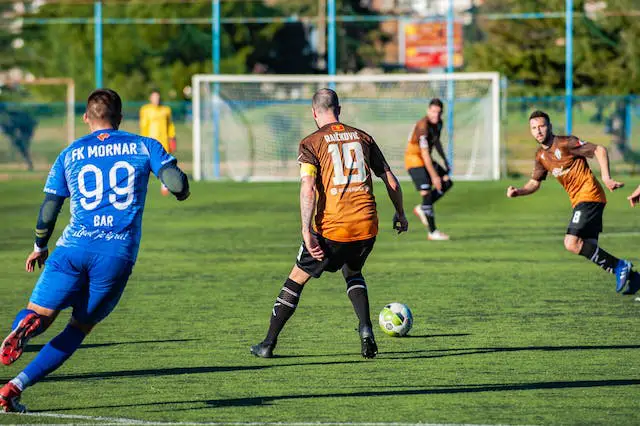
During an official match, you cannot wear a smartwatch on the field.
FIFA Law 4 prohibits players from wearing jewellery or electronic wearable devices during competition.
If you show up to a game with a watch on your wrist, the referee will ask you to remove it before you can play. No exceptions.
This is not a reason to stop reading.
It is a reason to understand exactly what a smartwatch actually does for a soccer player, because the value is entirely outside the 90 minutes of the match itself.
Where a smartwatch genuinely helps is in the training sessions before a game, the recovery process after it, and the daily monitoring that determines whether a player shows up on match day physically prepared or already running on empty.
Professional clubs use GPS vests and specialist sensor pods worn on the back for in-game movement tracking.
But the recovery data, the HRV monitoring, the sleep analysis, and the training load management that supports daily fitness happen through watches worn off the field.
A youth player tracking whether last Tuesday’s session was too intense before Saturday’s game.
A college midfielder figuring out why her legs feel heavy three days into a week of double sessions.
A recreational player who wants to know if his body has recovered from Sunday’s match before Wednesday’s training.
These are the situations where the right watch changes the decisions that affect performance.
Every watch on this list was chosen because it tracks what soccer players actually need between sessions and matches.
GPS accuracy for training runs.
HRV monitoring for recovery.
Training load tracking to prevent overtraining.
Heart rate zone data for conditioning.
These are the metrics that build the fitness required to perform across an entire season.
Which are the Best Smartwatches for Soccer Players?
Here are my recommended top 8 Best GPS Fitness for Soccer Players:-

![Apple Watch Ultra 3 [GPS + Cellular 49mm] Running & Multisport Smartwatch w/Rugged Titanium Case w/Black Ocean Band. Satellite Communications, Advanced Health & Fitness Tracking](https://m.media-amazon.com/images/I/41H6S7vjc+L._SL160_.jpg)


![Samsung Galaxy Watch 8 40mm Bluetooth Smartwatch, Cushion Design, Quick Button, Sleep Coaching, Now Bar, Running Coach, Energy Score, Graphite [US Version, Amazon Exclusive 2Yr Warranty]](https://m.media-amazon.com/images/I/41pVUmtVzHL._SL160_.jpg)


Garmin Fenix 8: (Best Overall Smartwatch for Serious Soccer Players)

A university women’s soccer midfielder described the Fenix 8 as the watch that made her first conversation with her fitness coach genuinely data-driven rather than conversational.
She had been telling her coach she felt tired after heavy training weeks for two seasons.
The coach had been adjusting sessions based on those reports, but there was always uncertainty about whether a reported fatigue level reflected actual physical load or mental state.
The Fenix 8 produced numbers. Training Readiness on a Tuesday morning after a hard Saturday match told them both exactly where her recovery stood, combining HRV, sleep quality, and training load into a single score that neither of them had to interpret from scratch.
Her coach adjusted the Wednesday session based on that number.
She played on Friday at full intensity.
Training Load and Why It Matters for Soccer Conditioning:
Soccer training is not consistent.
A week might include two pitch sessions, a gym day, and a game.
The following week might have a tournament with three matches in four days.
Accumulating too much load before a high-demand week is one of the most common causes of soft tissue injuries in field sports, and it happens gradually enough that subjective fatigue reports rarely catch it in time.
The Fenix 8 tracks what Garmin calls Training Load, measuring the acute load from recent sessions against your chronic load from the past several weeks.
When the acute load spikes too far above the chronic load, the watch flags the imbalance.
This is the same principle that professional sports science departments use to manage squad fitness, and it becomes available on the wrist of anyone willing to wear the watch consistently through training.
Body Battery synthesises overnight HRV data, recent training load, and sleep quality into a number between 5 and 100 each morning.
A score below 40 when you are three days from a match is actionable information.
You train lighter.
You protect the Saturday performance rather than sacrificing it to prove fitness on Wednesday.
The AMOLED display reads clearly in all outdoor conditions during training sessions.
Multi-band dual-frequency GPS tracks running routes precisely enough to review sprint distribution and total distance after training sessions.
For soccer players who use running as conditioning work between matches, seeing distance, average pace, and heart rate zones together in a post-session review builds exactly the picture that supports intelligent training load management.
The Fenix 8 also connects to Garmin’s ecosystem, which includes compatibility with Garmin’s Running Dynamics, power data, and various third-party apps.
The built-in speaker enables calls from the wrist, and the LED flashlight illuminates early-morning sessions during darker months.
Water resistance at 10 ATM handles outdoor training in any weather.
Specifications:
| Feature | Details |
|---|---|
| Display | AMOLED 454×454 pixels, 47mm |
| Battery Smartwatch | Up to 18 days |
| Battery GPS | Up to 10 hours with maps |
| GPS | Multi-band dual-frequency |
| Sensors | Barometric altimeter, compass, Elevate V5 heart rate, SpO2 |
| Training Features | Training Load, Body Battery, Training Readiness, HRV Status, recovery advisor |
| Water Resistance | 10 ATM |
| Maps | Preloaded TopoActive |
Apple Watch Ultra 3: (Best Smartwatch for Soccer Players on iPhone)
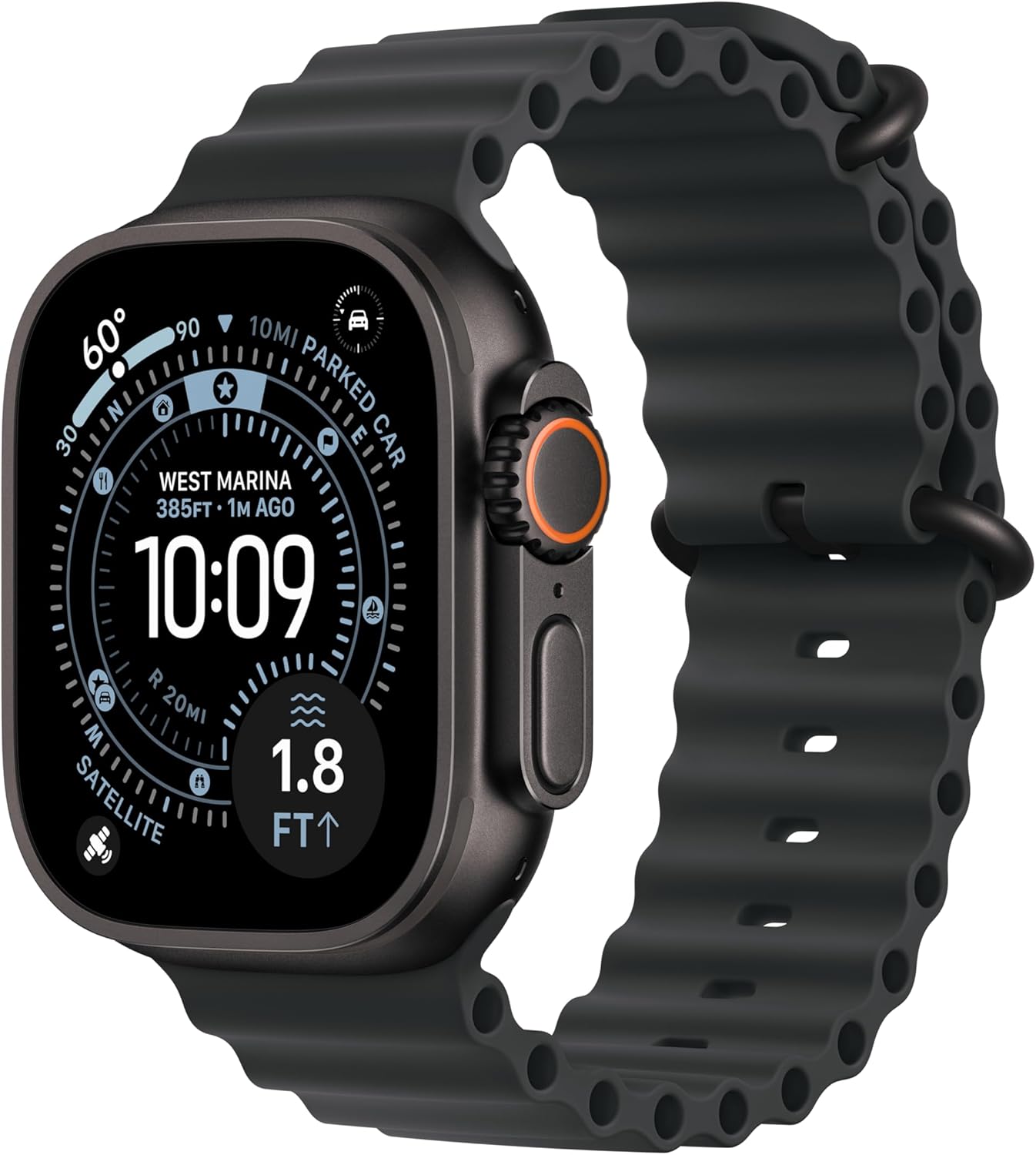
A sports science student who plays college soccer described using the Apple Watch Ultra 3 for a full season and writing her thesis on the relationship between overnight HRV trends and next-day training intensity.
She had been collecting data informally before finding the pattern that changed how she trained.
When her HRV Status dropped below her four-week baseline for three consecutive nights, her sprint performance in the next session was measurably worse than on nights when her baseline held.
She had known she felt better on some days than others.
She had not known the HRV trend was a reliable predictor of that difference until the watch made the data visible across an entire season of sessions.
What the Apple Health Ecosystem Provides:
The Apple Watch Ultra 3 sits within the most integrated health data ecosystem available on a consumer wearable.
Heart rate, HRV, sleep stages, activity rings, and training sessions all flow into the Apple Health app, where they can be reviewed together, shared with a coach or physio, and exported for analysis.
For soccer players working with a training staff that already uses Apple devices, this integration is practically useful rather than theoretically appealing.
Workout detection identifies the type of exercise automatically and records it without any input from the player.
For training sessions that begin as warmups and escalate into interval work, automatic detection captures the full session rather than relying on the player to start and stop tracking manually.
Custom workouts allow structured interval sessions to be programmed and followed from the watch face, which, for conditioning runs between matches, provides a consistent training format that generates comparable data across weeks.
The dual-frequency GNSS GPS system on the Ultra 3 doubled its signal power over the Ultra 2, and in independent testing, it matched dedicated GPS running watches in route accuracy across varied terrain, including parks, tracks, and urban environments where buildings create signal challenges.
For soccer players who use running as their primary conditioning method outside sessions, accurate GPS means the distance and pace data that drive their fitness calculations are reliable.
The battery at 42 hours in standard use removes the constraint that made earlier Apple Watch generations impractical for continuous monitoring.
Wearing the watch through training, on match day, and during overnight sleep tracking without charging anxiety requires the extended battery life that the Ultra 3 provides for most weekly schedules.
Who Should Not Buy This:
Android users cannot pair the Apple Watch with their phones.
If you use Android, the Samsung Galaxy Watch 8, later on this list, provides comparable health monitoring within the Android ecosystem.
If offline topographic maps and a multi-week battery are priorities for training in remote environments, Garmin’s platform serves those needs more specifically.
Specifications:
| Feature | Details |
|---|---|
| Display | Wide-angle OLED LTPO3, 3000 nits, 49mm |
| Battery | 42 hours standard, 60 hours optimised |
| GPS | Dual-frequency GNSS, doubled signal power |
| Health Features | HRV, sleep stages, heart rate zones, ECG, SpO2, skin temperature |
| Training Features | Automatic workout detection, custom interval workouts, training load through third-party apps |
| Emergency | Two-way satellite SOS and messaging |
| Water Resistance | 100m |
| Compatibility | iPhone only |
Garmin 970: (Best Smartwatch for Soccer Players Who Also Run Competitively)

A centre-back who ran half marathons during the off-season described the Forerunner 970 as the first watch that served both sides of his athletic life without compromise.
He had been carrying a Garmin Fenix for soccer conditioning and using a separate running watch for road races, dealing with two charging cables and two apps for two years.
The Forerunner 970 handled every session in either sport and produced the training data he needed for both without switching devices or platforms.
Running Metrics That Transfer to Soccer Conditioning:
Soccer players who use running as their primary conditioning method between seasons and during pre-season benefit from the running-specific analytics that the Forerunner 970 was built to provide.
Running Economy, estimated based on how efficiently your body uses oxygen relative to your pace, changes as fitness improves over a training block.
Seeing that number move over a pre-season provides objective confirmation that conditioning work is producing aerobic adaptation.
Cadence, stride length, vertical oscillation, and ground contact time are all captured through the wrist sensor without requiring external pods.
These metrics matter for injury prevention during high-volume conditioning periods.
A striker who adds significant mileage before pre-season and starts showing increasing ground contact time and decreasing stride length in the data is exhibiting early signs of a running form breakdown, which typically precedes soft tissue injury.
Having that data visible before symptoms appear changes the training decision.
Training Readiness and Body Battery provide the same morning recovery score as the Fenix 8, synthesising HRV, sleep, and training load into a single daily number that guides decisions about session intensity.
FTP testing for running power provides a benchmark that calibrates heart rate zones and pace targets to your current fitness level rather than population norms.
After enough running sessions, the watch categorises your runner type based on your power curve, which for soccer players typically reveals strong short-distance power alongside moderate aerobic capacity, shaping how conditioning should be structured to address the aerobic demands of a 90-minute match.
For a broader look at how the Forerunner 970’s training platform compares across running and multisport contexts, the full analysis at best-smart-watches-for-runners covers the running watch category in detail.
Specifications:
| Feature | Details |
|---|---|
| Case | 47mm titanium, sapphire crystal |
| Display | AMOLED, brightest in any Garmin watch |
| Battery GPS | 31 hours |
| Battery Smartwatch | 23 days |
| GPS | Multi-band dual-frequency |
| Training Features | Training Readiness, Body Battery, HRV Status, Running Economy, running dynamics, FTP testing |
| Water Resistance | 10 ATM |
| Speaker/Mic | Yes |
COROS PACE 3: (Best Lightweight Smartwatch for Soccer Players)

A college winger who had been wearing the same heavy fitness watch for two seasons described putting on the COROS PACE 3 for the first time and checking the weight out of curiosity.
Thirty grams.
He had been wearing a 68-gram watch throughout training sessions for two years without realising the difference until he ran his first interval session with something lighter.
He described the session as the first time in two years he had not once thought about the watch on his wrist while running.
Why Weight Matters for Soccer-Specific Training:
Soccer players perform explosive movements throughout training.
Acceleration and deceleration.
Quick changes of direction. Jump headers. Sliding tackles.
A watch that adds meaningful mass to the wrist introduces a small but genuine mechanical asymmetry to these movements.
Over hundreds of repetitions in a session, that asymmetry accumulates.
At 30 grams with the nylon strap, the COROS PACE 3 is the lightest GPS watch on this list by a significant margin.
On the wrist during a pitch session, it creates no awareness of itself.
COROS EvoLab provides the training load management that soccer players need between sessions.
The recovery advisor shows how many hours of recovery are needed after a session.
Training load balance shows whether the current week’s cumulative load is appropriate for your current fitness level.
VO2 max estimation and race time predictions provide fitness benchmarks that confirm conditioning progress over a pre-season block.
Heart rate accuracy during running at moderate intensities is solid.
During sprint efforts and rapid directional changes in training, the optical sensor exhibits the same limitations as all wrist-based sensors under high motion and cold temperatures.
Players who want precise heart rate data during high-intensity interval work on the pitch benefit from pairing the watch with a Bluetooth chest strap, which provides more reliable readings during the most demanding phases of a session.
Battery runs to 38 hours in GPS mode, covering multiple consecutive training sessions without charging between them.
In standard daily use, ten days between charges covers a full week of training without any battery management required.
Who Should Not Buy This:
If preloaded topographic maps are needed for navigation during outdoor conditioning in unfamiliar environments, the COROS PACE 3 uses breadcrumb navigation from synced routes rather than onboard maps.
If you use ANT+ cycling sensors for cross-training on the bike, the PACE 3 dropped ANT+ support from this generation.
And if the Garmin Connect ecosystem is already established in your training setup, the COROS app operates independently.
Specifications:
| Feature | Details |
|---|---|
| Weight | 30g nylon, 39g silicone strap |
| Case | 41.9mm, 11.7mm thick |
| Display | 1.2 inch MIP with touchscreen |
| Battery GPS | 38 hours |
| Battery Daily | 15 days |
| GPS | Dual-frequency multi-GNSS |
| Training Features | COROS EvoLab, recovery advisor, training load balance, VO2 max |
| Water Resistance | 5 ATM |
Samsung Galaxy Watch 8: (Best Smartwatch for Android Soccer Players)

A recreational soccer player who trains four times a week and plays weekend matches described the Galaxy Watch 8 as the watch that connected data she had been collecting separately for two years.
She had been using a sleep tracker, a fitness app on her phone, and a standalone heart rate monitor.
Three separate apps.
Three separate datasets that never informed each other.
The Galaxy Watch 8 produced a single Energy Score each morning that synthesised all three sources into one number.
On the mornings it was low, her legs were heavy at training.
She started trusting the number rather than arguing with it, and described her training decisions becoming meaningfully more consistent as a result.
Energy Score and AI-Driven Readiness:
The Galaxy Watch 8’s AI Energy Score combines sleep data, overnight heart rate, HRV, and recent training load into a single daily vitality indicator.
It is a simpler number than Garmin’s Training Readiness but more actionable than a raw HRV reading for someone who does not have time to interpret the underlying metrics before a training session.
Vascular load monitoring during sleep adds a cardiovascular health dimension that no other watch on this list provides.
For soccer players who are also managing the cardiovascular stress of a heavy match schedule, understanding how the heart and blood vessels are recovering overnight adds context to the Energy Score that heart rate and HRV alone cannot provide.
FDA-authorised sleep apnea detection screens for a condition that suppresses the quality of recovery data across all health metrics.
A player whose overnight HRV consistently looks poor despite adequate sleep time may have undiagnosed sleep apnea disrupting the quality of rest their numbers are supposed to reflect.
Having that screen built into the watch passively provides a layer of health monitoring that would otherwise require a clinical referral.
Dual-frequency GPS covers training runs in urban and suburban environments with the accuracy that single-band watches cannot match in signal-challenged locations.
The AMOLED display at 3000 nits reads clearly outdoors during morning training sessions.
The battery at 40 hours covers continuous monitoring through training, daily wear, and overnight sleep data collection for most weekly training schedules.
Who Should Not Buy This:
iPhone users cannot pair the Galaxy Watch 8.
If you use an iPhone, the Apple Watch Ultra 3 or any other Apple Watch covers Android-comparable health monitoring within the Apple ecosystem.
If dedicated running analytics with Training Load Pro and power curve tracking are the priority, Garmin’s platform goes deeper on those specific features.
Specifications:
| Feature | Details |
|---|---|
| Display | AMOLED 1.5 inch, 3000 nits |
| Battery | 40 hours |
| GPS | Dual-frequency L1 and L5 |
| Health Features | AI Energy Score, vascular load monitoring, HRV, ECG, sleep apnea detection, Antioxidant Index |
| Water Resistance | 5 ATM, IP68, MIL-STD-810H |
| Compatibility | Best on Samsung Android |
Garmin Venu 4: (Best Everyday Smartwatch for Recreational Soccer Players)
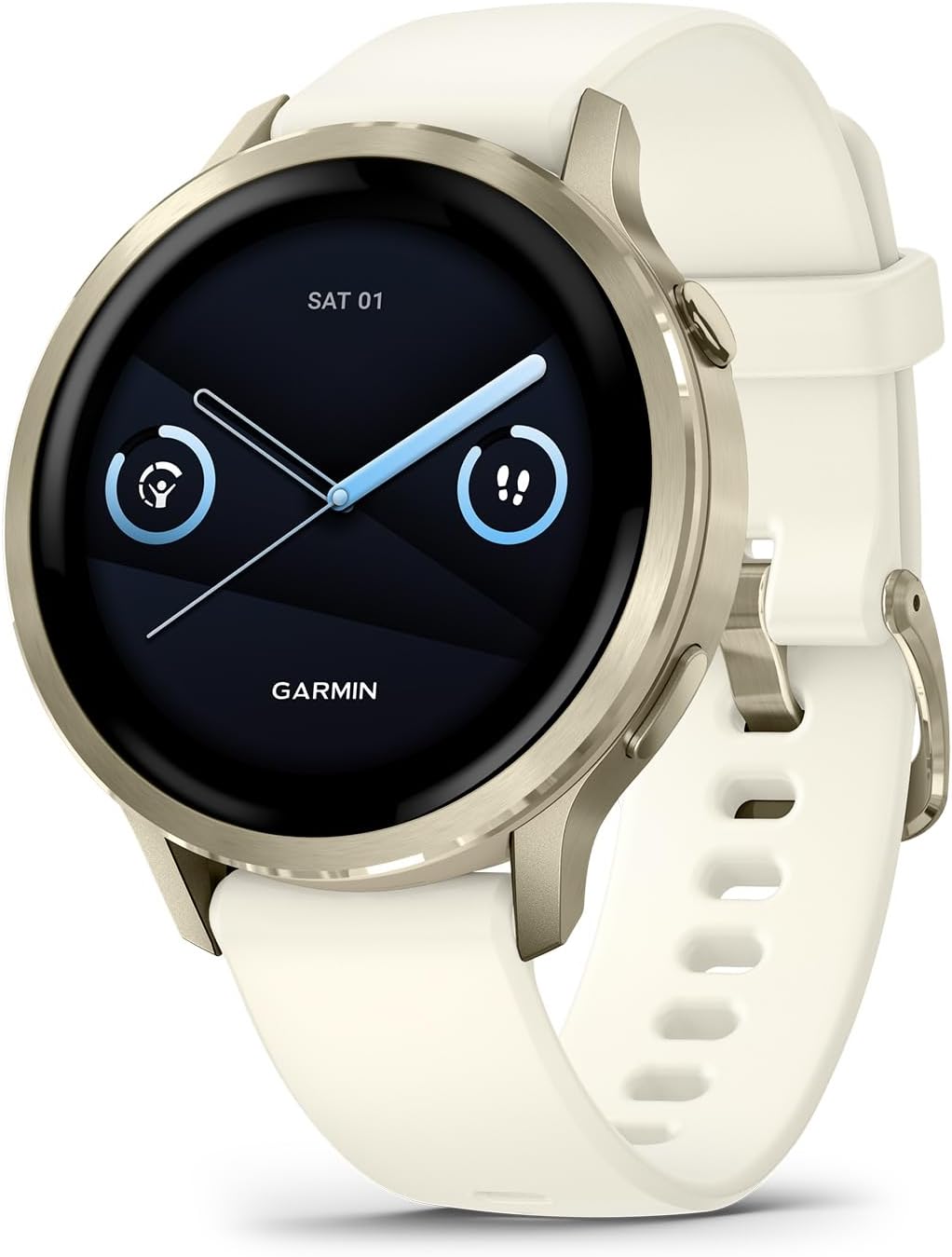
A teacher who plays recreational soccer twice a week described the Venu 4 as the watch that stopped him treating his body as a machine that either worked or did not.
He had been showing up to Tuesday evening soccer having done a gym session at lunch and wondering why his legs felt heavy for the first twenty minutes.
The Body Battery score on Tuesday mornings after gym days was consistently lower than he expected, factoring in poor sleep from the previous week’s workload.
The watch was not telling him anything his legs did not already know.
It was telling him before his legs did.
Lifestyle Logging and Habit Tracking for Casual Players:
The Venu 4’s Lifestyle Logging feature connects daily habits to health metrics in a way that specifically serves people managing energy across both work and sport.
Log a late meal, an evening coffee, or a short night of sleep, and the Garmin Connect app shows you how those inputs correlated with your Body Battery and HRV across the following days.
Over several weeks this builds a personalised map of which habits affect how you feel at Tuesday training.
Health Status monitoring establishes a four-week personal baseline across overnight HRV, resting heart rate, SpO2, respiration, and skin temperature, then alerts you when readings drift outside your normal range.
For recreational players who are not working with a fitness staff and need the watch to flag changes rather than requiring them to track trends manually, this passive alerting is practically useful.
The AMOLED display with always-on option and multi-band GPS provide the same core tracking quality as the higher-tier Garmin watches for daily use.
Offline music storage through Spotify, Deezer, and Amazon Music subscriptions adds a feature that some players specifically want during solo conditioning runs between sessions.
ECG capability adds a cardiac monitoring layer that exceeds what recreational players typically require but provides meaningful health value for older players managing cardiovascular risk.
At 47 grams with the standard silicone strap, it is light enough for all-day wearing including overnight sleep tracking without discomfort.
The design reads as a lifestyle watch rather than sports equipment in non-training contexts, which for players who also wear the watch in professional environments matters practically.
For a deeper look at how the Venu 4’s health platform handles stress monitoring and recovery analysis for athletes managing both training load and daily life demands, the review at best-smartwatches-for-monitoring-stress covers the platform in full.
Who Should Not Buy This:
If you play soccer seriously at club level or above with multiple training sessions weekly and need the depth of training load analytics the Fenix 8 and Forerunner 970 provide, the Venu 4 is positioned as a wellness and lifestyle watch rather than a performance analytics platform.
If you want preloaded topographic maps, Garmin’s Fenix and Forerunner lines include those.
Specifications:
| Feature | Details |
|---|---|
| Display | AMOLED 1.4 inch (45mm) |
| Battery | Up to 12 days smartwatch |
| Battery GPS | Up to 20 hours |
| GPS | Multi-band dual-frequency |
| Health Features | Health Status baseline monitoring, Lifestyle Logging, Body Battery, ECG, HRV, Sleep Coach, circadian rhythm coaching |
| Music | Offline Spotify, Deezer, Amazon Music |
| Water Resistance | 5 ATM |
| Compatibility | iOS and Android |
Amazfit T-Rex 3: (Best Budget Smartwatch for Soccer Players)

A college club soccer player who funded his own kit described the T-Rex 3 as the watch that gave him data he had never had access to at a price he could actually afford.
He had been watching teammates with Garmin and Apple watches reviewing training data after sessions while his fitness decisions remained entirely subjective.
The T-Rex 3 changed that without requiring the investment those options demanded.
He described reviewing his overnight recovery score before Thursday training and making the specific decision to skip the extra shooting practice he had planned, having seen his recovery score and the previous two days of training load in the Zepp app.
His legs felt better on Saturday’s match than they had for three consecutive weeks.
What You Get at This Price:
The T-Rex 3 delivers dual-frequency GPS across five satellite systems, an AMOLED display that reads clearly outdoors, and a rugged build certified to 15 military standards.
For a soccer player who trains on grass and artificial surfaces in varying weather, the construction handles the conditions without requiring any special care.
The Zepp app provides daily readiness scoring, sleep stage tracking, training recovery analysis, and VO2 max estimation.
These are not the most developed analytics platform available, but they are functional and accessible for a player building a first relationship with recovery data. The readiness score synthesises HRV and sleep quality into a morning number.
Over the first four weeks of consistent wearing, the personal baseline develops enough to make the score meaningful.
27-day battery in smartwatch mode with daily GPS training sessions producing roughly four to five day returns between charges.
For a watch that needs to be worn consistently through daily life and overnight to capture the recovery data that matters, the battery supports that consistency without charging interruption during most training weeks.
Offline topographic maps via the Zepp app are available for download, providing route navigation during outdoor conditioning runs in unfamiliar terrain without subscription cost.
Who Should Not Buy This:
If dedicated training load analytics with Training Readiness, HRV Status across a five-week baseline, and recovery advisor specific to athletic performance are required, Garmin’s platform provides that depth and the T-Rex 3 does not.
If the Zepp ecosystem does not integrate with your coaching or physiotherapy setup, the data stays within Amazfit’s own platform.
And if heart rate accuracy during high-intensity sprint intervals is a priority for pacing work, the T-Rex 3 benefits from chest strap pairing during maximum-effort sessions.
Specifications:
| Feature | Details |
|---|---|
| Case | 47mm |
| Display | 1.5 inch AMOLED |
| Battery GPS | Up to 42 hours |
| Battery Smartwatch | Up to 27 days |
| GPS | Dual-frequency, five satellite systems |
| Durability | 15 military standards, 10 ATM |
| Maps | Offline topo via Zepp app |
| Health Features | Daily readiness, sleep stages, HRV, VO2 max, recovery analysis |
Garmin Fenix 7 Solar: (Best Smartwatches for Soccer Players)

FEATURES:
Solar Charging:
One of the standout features of this watch is its solar charging capabilities.
This removes the problem of frequently charging the batteries.
Rugged Design:
The Fenix 7 Solar is robust and durable, making it suitable for outdoor adventures.
It’s built to withstand tough conditions.
GPS and Navigation:
The watch offers GPS, which helps you navigate ND and plan your routes.
Health/Wellness Tracking:
The watch provides comprehensive health and fitness tracking, including heart rate monitoring, sleep tracking, Pulse Ox sensor, Body Battery energy monitoring, and stress tracking.
Touchscreen Display:
The Fenix 7 Solar features a touchscreen display that is easy to use and navigate, even in outdoor conditions.
Connectivity:
It offers smartphone connectivity, allowing you to receive notifications and messages.
You can get the notifications on your wrist.
WHY IS IT THE BEST FITNESS TRACKER FOR SOCCER PLAYERS?
The best part about this watch is its solar charging capability.
The watch is charged using a natural source, so the batteries do not need to be charged in a hurry.
The watch offers various fitness-tracking features to support your health and features a rugged design.
The watch is compatible with your smartphones and devices.
CONCLUSION:
I enjoyed using this watch.
The watch has a stylish and durable design.
The watch is easy to use and can withstand harsh conditions.
Garmin always keeps your comfort at first.
FAQs:
Can I wear a smartwatch during a soccer match?
No. FIFA Law 4, which covers player equipment, prohibits the wearing of electronic devices, jewellery, and any item considered dangerous during a match. This applies in all competitions that follow FIFA regulations, which includes most organised leagues from grassroots level upward. A referee has the authority to ask you to remove a smartwatch before you can take the field, and refusing to do so would prevent your participation in the match. The rule exists because of the risk of injury to yourself and other players during physical contact. The value of a smartwatch for soccer players is entirely in what it does between matches and training sessions, not during them. GPS performance vests worn under the jersey are the technology used for in-match movement tracking in professional and semi-professional environments.
What health metrics actually matter for soccer performance?
The metrics with the strongest documented relationship to soccer performance and injury prevention are heart rate variability, training load, sleep quality, and session distance and intensity data. HRV reflects the state of the autonomic nervous system and is one of the most reliable indicators of whether a player’s body has recovered from previous sessions. Training load tracking compares acute session stress against chronic fitness level, and when the ratio spikes, soft tissue injury risk increases, which is well established in sports science literature for field sport athletes. Sleep quality affects both physical recovery and cognitive performance, both of which are relevant to decision-making under fatigue in the final twenty minutes of a match. Session data including total distance, high-intensity running distance, and sprint count builds a picture of conditioning level that supports pre-season planning and in-season load management.
What is heart rate variability and why do soccer coaches and physios track it?
Heart rate variability measures the tiny fluctuations in time between consecutive heartbeats. When the body is fully recovered, the autonomic nervous system produces high variability in these intervals. When the body is under physical or psychological stress from training load, illness, poor sleep, or emotional pressure, those intervals become more uniform and variability drops. For soccer players, a declining HRV trend over several days before a match is one of the most reliable early signals that the player is carrying accumulated fatigue that will affect performance. Clubs using sports science staff monitor HRV across entire squads to identify players who need reduced training load before high-stakes matches. The same information is now accessible to individual players through consumer smartwatches, and the research supporting its use in athlete monitoring across team sports including soccer is available through the British Journal of Sports Medicine at bjsm.bmj.com.
Related Articles:
Best Fitness Trackers For Yoga Lovers
Best Smartwatch for Football Referees
Best Garmin Watches For Interval Training
Luis Cooper

Hi, I'm Luis, the guy behind this site. I love wearing watches, especially ones that look great on small wrists (mine are about 6.3" around). The Watches Geek is dedicated to helping you learn about and buy watches that you will love wearing. I want this website to be the last destination for people to pick the best watches to fit their needs. You can find our unbiased reviews here on Thewatchesgeek.