
Last Updated on May 12, 2026 by Luis Cooper
Most fitness trackers are built for people who count steps and measure kilometres.
The metrics for a productive yoga session differ.
How did your heart rate respond during a challenging hold? How deeply did you breathe during pranayama? Did your stress response calm through savasana? Did last night’s sleep quality affect how your practice felt this morning?
Yoga places different demands on tracking technology than running or cycling.
The wrist position changes constantly across poses, from downward dog to warrior three to child’s pose, which means a tracker that digs into the wrist or sits awkwardly on the forearm becomes a distraction rather than a tool.
A thick strap that creases under pressure during floor work interrupts focus at exactly the moments that deserve the most of it.
And a display that buzzes with notifications during meditation is precisely the opposite of what a practice is supposed to create.
The best fitness tracker for yoga does three things well.
It tracks heart rate accurately during slow and intense poses alike, giving you a clear picture of how your cardiovascular system responds to different practices.
It monitors stress through heart rate variability so you can see whether your practice is actually producing the physiological calm it is supposed to create.
And it tracks sleep quality so you can understand the relationship between rest and how your practice feels the following morning.
Every tracker on this list was chosen because it does those three things well, sits comfortably on the wrist through any pose, and has been reviewed by real people who practice yoga daily.
Some are slim bands that disappear during floor work.
Some are full smartwatches that offer deeper health monitoring.
Which are the Best Fitness Trackers For Yoga Lovers?
Here are my recommended top 9 Best Fitness Trackers For Yoga Lovers:-


![SAMSUNG Galaxy FIT 3 [2025, 40MM] 1.6' AMOLED Display | IP68 Water Resistant | 14 Days Battery Life | 100+ Watchfaces | 100+ Exercise Modes | International Model (Fast Charger Bundle, Black)](https://m.media-amazon.com/images/I/418RlYE+wfL._SL160_.jpg)
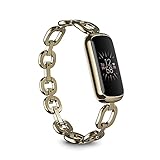
Fitbit Inspire 3: (Best Slim Fitness Tracker for Yoga)

A yoga teacher who practices twice daily described the Fitbit Inspire 3 as the tracker she stopped noticing after three days of wearing it.
She had tried two previous trackers, both of which she had removed before every practice because the case pressed into her wrist during downward dog, and the strap created a pressure mark during extended floor holds.
The Inspire 3 stayed on.
She described the first time she checked her stress score after a particularly demanding hot yoga session and saw the number had dropped significantly from its pre-practice reading.
She had known intellectually that yoga reduced physiological stress.
Seeing the actual number move confirmed it in a way that changed how she talked about the practice with her students.
Stress Management Score and What It Shows:
The Fitbit Inspire 3 tracks stress during sleep using heart rate variability, skin conductance, and respiration, synthesising these into a daily Stress Management Score that reflects how effectively your body manages its overall stress load.
For yoga practitioners who use their practice specifically as a stress-management tool, this score provides an objective metric to connect with the subjective feeling of calm after a session.
Daily Readiness Score synthesises overnight HRV, recent activity levels, and sleep quality into a morning number that tells you how prepared your body is for physical effort.
For practitioners who attend regular classes, understanding whether a morning of soreness after a demanding practice reflects a genuine physical need for a yin session or whether the body is ready for a more active flow is practical information rather than just data.
The form factor matters specifically for yoga.
The Inspire 3 measures 14.7mm wide and sits almost flat against the wrist.
During poses such as downward dog, plank, and chaturanga, where significant weight passes through the wrists, the slim profile creates no pressure points and does not contact the mat in a way that would shift wrist position.
10-day battery life means the tracker stays on the wrist continuously for a week of daily practice, plus overnight sleep tracking, without a charging interruption that would break the data stream.
Sleep stages, including REM, deep, light, and awake, are tracked and reviewed in the Fitbit app alongside the Stress Management Score and heart rate from practice sessions.
Specifications:
| Feature | Details |
|---|---|
| Form Factor | Slim band, 14.7mm wide |
| Battery | Up to 10 days |
| Health Features | Stress Management Score, Daily Readiness Score, 24/7 heart rate, HRV, sleep stages, SpO2 |
| Yoga Mode | Yes, dedicated yoga workout profile |
| GPS | Phone GPS only |
| Water Resistance | 50m |
| Compatibility | iOS and Android |
Fitbit Charge 6: (Best Feature-Rich Fitness Tracker for Yoga Practitioners)

A mindfulness coach who teaches both yoga and meditation described the Fitbit Charge 6 as the tracker that enabled her to talk to clients about their physiological stress response rather than just their subjective experience of it.
She had been teaching for eight years.
The EDA scan feature on the Charge 6, which measures electrodermal activity during a two-minute mindfulness session to show the body’s stress response, gave her a way to demonstrate physiological calm that clients could see for themselves.
She described clients who had been resistant to mindfulness practice becoming genuinely curious when they could see their own EDA response change across a session.
EDA Scan for Mindfulness Sessions:
The electrodermal activity scan is Charge 6’s most distinctive feature for yoga and mindfulness practitioners.
During a two-minute session where you hold your fingers on the watch face, the sensor measures micro-changes in skin conductance caused by the autonomic nervous system.
When the body is calm, EDA activity is lower.
When stress is elevated, it increases.
The graph produced after the session shows how your body responded during the mindfulness practice, making the session’s physiological effects visible.
For yoga practitioners who combine asana with pranayama and meditation, this provides a way to see which elements of practice produce the strongest physiological calming response.
Multiple reviewers who use the EDA scan during yoga nidra and guided relaxation practices report consistently measurable changes they had previously only been able to confirm subjectively.
Built-in GPS allows independent outdoor tracking when yoga is part of a broader fitness routine, including runs or walks.
ECG recording checks the heart rhythm at moments of choice.
Heart rate on exercise equipment connects to compatible gym machines for session tracking.
The Daily Readiness Score and Stress Management Score from the Inspire 3 platform are both present.
One honest limitation: some of the best features on the Charge 6 require a Fitbit Premium subscription beyond the included period.
The Daily Readiness Score is behind the Premium paywall.
For yoga practitioners who want those analytics long-term, factoring the subscription cost into the total ownership is worth doing before purchasing.
Specifications:
| Feature | Details |
|---|---|
| Form Factor | Fitness tracker band |
| Battery | Up to 7 days |
| Health Features | EDA scan, ECG, Stress Management Score, Daily Readiness Score, 24/7 heart rate, HRV, SpO2, skin temperature |
| Yoga Mode | Yes |
| GPS | Built-in |
| Water Resistance | 50m |
| Special Features | Heart rate on exercise equipment, Google Maps, Google Wallet |
Garmin Vivoactive 6: (Best Smartwatch for Yoga Practitioners Who Want More)

A yoga instructor who also runs three times a week described the Vivoactive 6 as the first tracker that made her feel the watch understood what her week actually looked like.
On Monday, after a Sunday long run and a demanding yoga class, the Body Battery score reflected the accumulated load of both.
The watch was not treating her yoga sessions as rest days and her runs as training days in isolation.
It was about building a picture of her cumulative physical state from everything she did and producing a single number that reflected it all.
She described this as the specific insight she had been looking for in a tracker for two years.
Body Battery and How It Applies to Yoga:
Garmin’s Body Battery synthesises overnight HRV, resting heart rate, sleep quality, and stress indicators into a daily energy score ranging from 5 to 100.
For someone who practices yoga both as a physical practice and as a recovery tool from other training, this score reflects what the body is actually carrying into a session.
A Body Battery of 80 before a morning practice tells you the session can be demanding.
A Body Battery of 35 on a Thursday morning after three consecutive days of activity suggests a yin class rather than a power flow.
The watch does not dictate what you practice, but it provides an objective measure of readiness that supplements the subjective sense of how the body feels before unrolling the mat.
The dedicated yoga activity profile records heart rate, session duration, and calories, logging the practice specifically as yoga in Garmin Connect’s history.
The Health Snapshot feature takes a two-minute reading that captures SpO2, heart rate, HRV, stress, and breath rate simultaneously, providing a comprehensive physiological snapshot at that specific moment, before or after a session.
Lifestyle Logging allows manual recording of specific habits, including poor sleep, alcohol, and stress events, connecting them to Body Battery and HRV trends over time.
For yoga practitioners who notice their practice quality varying without understanding why, logging the night-before habits that precede a poor session helps build a personal picture of what most consistently affects practice quality.
For a broader look at how the Vivoactive 6 handles stress monitoring and recovery analysis across a full health platform, the review at best-smartwatches-for-monitoring-stress covers the Garmin health ecosystem in detail.
Who Should Not Buy This:
If the slim fitness tracker form factor is important for wrist-heavy yoga poses, the Vivoactive 6, at its smartwatch dimensions, is larger than the Fitbit options on this list.
If GPS is not a priority because you only practice yoga and do not run or cycle, the Inspire 3 provides the stress and sleep tracking core at a lower cost.
Specifications:
| Feature | Details |
|---|---|
| Display | AMOLED 1.2 inch |
| Battery | Up to 11 days |
| Health Features | Body Battery, HRV status, sleep coaching, nap detection, Health Snapshot, Lifestyle Logging, stress monitoring |
| Yoga Mode | Yes, dedicated yoga profile |
| GPS | Multi-band dual-frequency |
| Water Resistance | 5 ATM |
| Music | Offline Spotify, Deezer, Amazon Music |
| Compatibility | iOS and Android |
Amazfit Active 2: (Best Value Smartwatch for Yoga Lovers)

Daily Readiness Without a Subscription:
The Active 2’s daily readiness score synthesises overnight HRV, resting heart rate, skin temperature, and sleep quality into a single morning number.
Unlike the Fitbit platform, where the Daily Readiness Score is behind a Premium subscription, Amazfit’s readiness score is available in the standard Zepp app at no additional cost.
For practitioners who want that daily guidance without ongoing subscription fees, this distinction makes a practical difference to the total cost of ownership.
The one-tap health snapshot reads SpO2, heart rate, breathing rate, and stress simultaneously from the watch face in under a minute.
Before a yoga session, this provides a quick baseline.
After savasana, it gives a reading on how the session has affected those markers.
Comparing the two across multiple sessions over weeks reveals the physiological pattern by which practice affects each metric for your specific body.
The AMOLED display reads clearly across the wide range of lighting conditions in yoga studios, from dim, candlelit evening classes to bright morning classes with full natural light.
Reviewed for display quality as one of the most impressive screens available at this price, the display renders watch faces and health data crisply in any ambient light.
The stainless steel round case looks like a watch rather than a fitness device, which, for practitioners who move from studio to social to work contexts without changing accessories, matters in a way that sport-focused designs cannot address.
Who Should Not Buy This:
If Garmin’s broader health ecosystem, including Body Battery, Training Readiness, and Sleep Coach, is important to your overall fitness-tracking setup, the Amazfit platform operates independently and does not integrate with it.
If built-in GPS for outdoor training is a priority, confirm the specific model variant before purchasing, as GPS availability varies across Active 2 configurations.
Specifications:
| Feature | Details |
|---|---|
| Display | AMOLED, up to 1900 nits |
| Case | Round, stainless steel |
| Battery | Up to 10 days |
| Health Features | Daily readiness score, one-tap health snapshot, 24/7 HRV, sleep stages, stress monitoring, SpO2, skin temperature |
| Yoga Mode | Yes, 164 sports modes including yoga |
| Water Resistance | 5 ATM |
| Subscription | No subscription required for core features |
| Compatibility | iOS and Android |
Garmin Vivosmart 5: (Best Slim Garmin for Yoga)

Slim Design for Yoga Wrist Positions:
At 12.8mm wide, the Vivosmart 5 is the slimmest Garmin tracker available in 2026.
For yoga practitioners who find standard watch cases create pressure points during weight-bearing poses, this dimension means the tracker genuinely disappears from the wrist during downward dog, wheel, and any other pose where the wrist bears weight.
Body Battery and HRV Status are both present, providing the core Garmin recovery analytics that guide decisions about session intensity.
Nap detection automatically logs rest periods during the day, which, for practitioners who incorporate yoga nidra or restorative rest into their routine, means these periods contribute to recovery data rather than appearing as inactive time.
Sleep coaching adjusts recommended sleep duration based on recent activity and stress levels.
For practitioners who notice their practice quality varies with sleep but do not know whether they need more hours or higher-quality sleep on difficult days, the sleep coaching recommendations provide data-driven direction rather than generalised advice.
The display is a touchscreen in a slim chassis, which means the interface is navigated by touch rather than physical buttons.
Multiple reviewers who wear the Vivosmart 5 during yoga describe the touchscreen as responsive enough for quick glances between poses, without the awkward need to press the side buttons.
Who Should Not Buy This:
The Vivosmart 5 does not include GPS.
If you combine yoga with outdoor activities that need distance tracking, the Vivoactive 6 covers both.
If you want a colour display with AMOLED brightness for clear readability in dim studio environments, the Vivoactive 6 also provides that at a higher price.
Specifications:
| Feature | Details |
|---|---|
| Width | 12.8mm |
| Battery | Up to 7 days |
| Display | Touchscreen, monochrome |
| Health Features | Body Battery, HRV Status, stress monitoring, sleep coaching, nap detection, SpO2 |
| Yoga Mode | Yes |
| GPS | None |
| Water Resistance | 5 ATM |
| Compatibility | iOS and Android |
Xiaomi Smart Band 9: (Best Budget Fitness Tracker for Yoga)

A university student who practices yoga three times a week described the Smart Band 9 as the tracker that eliminated every excuse she had for not properly tracking her health.
The excuses had been genuine.
She had been put off by prices that felt disproportionate to what she actually needed: a heart rate tracker, a sleep monitor, and something slim enough not to get in the way of her practice.
The Smart Band 9 costs less than a single month of her yoga studio membership and delivers all three.
She described reviewing her sleep score every morning for the first two weeks as discovering a pattern she had never noticed, that her practice quality correlated directly with how deep her sleep had been two nights before, not the night before.
Why It Works for Yoga Specifically:
The Smart Band 9 is thinner than any watch on this list and lighter than any comparable health tracker.
The slim AMOLED display clearly reads notifications and health data.
The strap sits flat against the wrist in every yoga position without adding any meaningful mass or bulk to the wrist.
The yoga workout mode tracks heart rate throughout a session and records session duration, logging the practice in the Xiaomi Health app.
Stress monitoring runs continuously through the day, using HRV fluctuations to show how stress levels change before, during, and after practice.
Sleep tracking covers stages and total duration with a sleep score calculated each morning.
Battery life lasts approximately 21 days in standard use, which, for a tracker worn continuously during daily practice and overnight sleep tracking, means charging roughly twice a month.
For a student who would otherwise forget to charge more frequently, this is a practical advantage.
The 120 sports modes include yoga, allowing the tracker to recognise the session type and log it separately from other activities in the app history.
Compared to tracking every practice as a generic exercise, the dedicated mode produces a searchable history of yoga sessions over weeks and months.
One honest point for practitioners who want clinical-grade data accuracy: the Smart Band 9’s HRV readings and stress scores are directional rather than precise.
The trends across days and weeks are meaningful.
The absolute numbers require comparison against a baseline rather than treatment as stand-alone clinical readings.
For a new practitioner building their first relationship with body data, this limitation is acceptable.
For an advanced practitioner who uses HRV to make precise training-load decisions, the Garmin and Fitbit options offer more refined algorithms.
Specifications:
| Feature | Details |
|---|---|
| Display | AMOLED 1.62 inch |
| Width | Ultra slim |
| Battery | Up to 21 days |
| Health Features | 24/7 heart rate, stress monitoring, sleep stages, SpO2, HRV |
| Yoga Mode | Yes, 120 sports modes |
| GPS | No built-in GPS |
| Water Resistance | 5 ATM |
| Compatibility | iOS and Android |
Samsung Galaxy Fit 3: (Best Slim Samsung for Yoga)

Large Screen in a Slim Form:
The Galaxy Fit 3 stands out among fitness tracker bands for its 1.6-inch AMOLED display, which is significantly larger than most competitors in the same slim form factor.
For yoga practitioners who want quick glances at their heart rate or session timer during practice without reading a small screen, the size difference is immediately apparent.
Samsung Health’s Energy Score uses sleep quality, overnight heart rate, and HRV to produce a daily readiness number each morning.
For practitioners whose morning routine begins with yoga, knowing whether the body is energised or carrying recovery debt before unrolling the mat guides the choice between a vigorous flow and a gentle yin session.
100-plus workout modes include yoga, Pilates, and multiple mindfulness activity types.
The sleep tracking covers stages, duration, and consistency, with Samsung’s AI sleep coaching providing personalised guidance based on data patterns rather than generic recommendations.
14-day battery life is strong for a tracker of this screen size.
For practitioners who wear the tracker continuously during daily practice and overnight, charging approximately twice a month is realistic.
The Galaxy Fit 3 pairs fully with Samsung phones and partially with other Android phones. iPhone users will find the integration incomplete.
If you use an iPhone and want the full Samsung Health feature set, this is worth confirming before purchasing.
For a broader look at how Samsung’s health platform handles the relationship between stress, sleep, and recovery across a full week of mixed activity, the detailed analysis at best-smartwatches-for-monitoring-stress covers Samsung Health in the context of comprehensive wellness tracking.
Who Should Not Buy This:
iPhone users will not get the full Samsung Health integration with this tracker.
If you want deeper analytics for Samsung’s full smartwatch, including vascular load monitoring and AI Energy Score, the Samsung Galaxy Watch 8 offers them on a full smartwatch platform.
And if GPS for outdoor activity tracking is important to you, this tracker does not include it.
Specifications:
| Feature | Details |
|---|---|
| Display | AMOLED 1.6 inch |
| Battery | Up to 14 days |
| Health Features | Energy Score, sleep stages, AI sleep coaching, 24/7 heart rate, SpO2, stress monitoring |
| Yoga Mode | Yes, 100 plus workout modes |
| GPS | No built-in GPS |
| Water Resistance | 5 ATM |
| Compatibility | Best on Samsung Android |
Fitbit Luxe: (Best Sleep Tracking, 24/7 Heart Rate)

WHAT DO WE GET FROM THESE?
Intelligent Tracker/Sleep Tracking:
This fantastic watch features an intelligent tracker and looks stunning with all my outfits.
It has a bright-colored display and a sleek design.
It helps me sleep better and boosts my sleep at night with a sleep tracker and scoring shown in the Fitbit application.
I love that this watch provides my sleep score so I can improve it.
Notifications/Subscription Method:
When I reach my target heart rate, this watch notifies me with a buzz and tracks minutes in the active zone.
I love that this watch helps me improve my heart rate.
Moreover, it offers a 6-month trial for Fitbit Premium.
I activated the test 60 days after activating my device.
It also requires a valid payment method; if the user doesn’t need a premium version, the subscription must be canceled after the trial period to avoid extra charges.
Features may get updated.
Fitness And Health:
I have started calculating all my sports routines with this watch.
I tried to maximize my workout, understand my resting heart rate, and calculate the calories I burned throughout the day using its 24/7 heart rate tracking technology.
It helped me tune my body to accurate, healthy metrics like breathing rate, heart rate variability, and more, using only its own Fitbit application.
Incredible Battery And GPS:
This watch lasts for five days straight without requiring charging every other day.
Still, it depends on the usage and other factors.
If the user has connected Luxe to their phone’s GPS, they can see the distance covered in real time on their wrist.
Conclusion:
I recommend this Fitbit Luxe fitness tracker to all fitness freaks.
If you are a yoga lover, this watch is made for you.
It did a fantastic job for yoga.
With its unique features and trackers, I can keep an eye on my fitness and health.
Fitbit Charge 4: (Best Budget Sleep & Swim Tracking Tracker)

WHAT DO WE GET FROM THESE?
GPS And Active Zone Minutes:
When I choose to run or walk outside, I can use the GPS to see the distance I have covered and the training intensity map in the application, which shows my heart rate changing along my route.
It tracks active zone minutes; when I reach my goal, it notifies me and lets me earn extra minutes from my workout.
90-Day Trial And 24/7 Heart Rate:
To help me stay active, sleep well, and manage stress, I got a 90-day free trial for Fitbit Premium.
I can unlock everyone on the Fitbit Premium.
The operating temperature for this is -4.0 degrees to 140.0 degrees.
When I put on weight and have to check the calories I have burned, I use its 24/7 heart rate feature.
It also helps me check my heart rate.
If I have to synchronize, I need it to pair with my smartphone via Bluetooth and Wi-Fi.
Fitbit App And Tracking:
I can monitor my blood oxygen saturation throughout the night right on my wrist, and the Fitbit app shows me trends from the previous week.
It allows me to track my skin temperature every night to see how it differs from my secret base.
Workout Modes With Incredible Battery:
It features more than 20 workout modes and real-time tracking.
This watch is also waterproof; I can use it for swimming or showering.
Its battery lasts about 7 days and 5 hours when I’m using the GPS feature.
It allows me to track my sleep stages and check my sleep score in the app to see how I can quickly improve my sleep.
Conclusion:
I recommend using this Fitbit Charge Comfy fitness tracker for workouts and maintaining health.
It helped my dad maintain his health.
It’s the best watch for fitness freaks.
FAQs:
Can a fitness tracker actually track yoga accurately?
Modern fitness trackers can log yoga sessions and capture heart rate throughout the practice with reasonable accuracy for most pose types. The technical limitations are well understood. During inversions like headstand and shoulder stand, the optical heart rate sensor on the wrist receives a different blood flow signal than during upright poses, which can affect reading accuracy. During static holding poses where the heart rate is genuinely lower, some trackers correctly reflect that. During rapid transitions between poses, optical sensors can lag behind actual heart rate changes by several seconds. For practitioners who want the most accurate heart rate during practice specifically, a chest strap that stores data and syncs afterward provides more reliable readings. For the large majority of yoga practitioners who want general session tracking, stress monitoring before and after practice, and sleep data to understand how practice relates to recovery, the wrist-based trackers on this list provide useful and directionally accurate information.
What health metrics matter most for yoga practitioners?
The three metrics most directly relevant to a yoga practice are heart rate variability, sleep quality, and the stress response before and after sessions. HRV reflects the state of the autonomic nervous system and shows whether the body is in a stressed or recovered state going into practice and how that state changes after it. Sleep quality affects both the physical capacity for demanding poses and the mental clarity for meditation and breathwork. The stress response, measured through HRV changes and some trackers’ dedicated EDA sensors, shows whether the body is actually achieving the physiological calm that yoga is designed to produce. Beyond these three, daily readiness scores synthesise them into a single actionable number that guides session type selection. Secondary metrics including session calories, duration, and step count are less yoga-specific and more useful for overall activity level monitoring.
Should I remove my fitness tracker during yoga practice?
There is no technical requirement to remove a fitness tracker during yoga, and most practitioners who wear their tracker through practice describe the experience as entirely unnoticeable with a slim band-style device. The one situation where removal is worth considering is during poses where significant weight passes through the wrists, including handstands, arm balances, and weight-bearing arm positions, if the specific tracker creates any pressure point or discomfort. A slim band like the Fitbit Inspire 3, Xiaomi Smart Band 9, or Garmin Vivosmart 5 typically creates no issue during these poses. A full smartwatch with a thicker case may create minor contact with the mat during floor poses. The decision is personal and depends entirely on the individual’s comfort during their specific practice. The American Council on Exercise, which certifies yoga and fitness instructors, notes that personal comfort during practice takes priority over any secondary consideration at acefitness.org.
Related Articles:
Best Watches to Track Calories Burned
Best GPS Fitness Trackers for Soccer Players
Best Fitness Trackers for Sensitive Skin
Luis Cooper

Hi, I'm Luis, the guy behind this site. I love wearing watches, especially ones that look great on small wrists (mine are about 6.3" around). The Watches Geek is dedicated to helping you learn about and buy watches that you will love wearing. I want this website to be the last destination for people to pick the best watches to fit their needs. You can find our unbiased reviews here on Thewatchesgeek.