Last Updated on April 9, 2026 by Luis Cooper
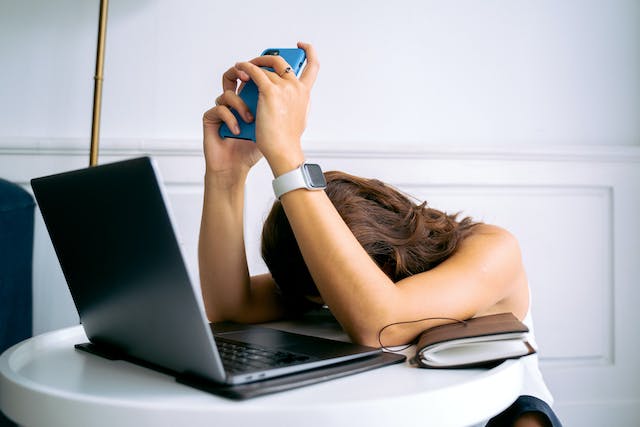
A lot of people have trouble getting a good night’s sleep.
On certain mornings, getting out of bed feeling rejuvenated and prepared to face the day is effortless.
You question whether you slept the previous night or not.
The best sleep monitors provide a more detailed view of your sleep patterns, even if there are several reasons you could struggle with irregular sleep.
To help us understand how long we’ve slept, how often we’ve woken late at night, and the stages of our naps, sleep-tracking watches collect important physiological data.
With this knowledge, we can develop healthier sleep habits, so we wake up feeling more rested and less lethargic.
These are some of the greatest smartwatches available.
Which are the Best Smartwatches for Sleep Tracking?
Here are my recommended top 11 Best Sleep Trackers in 2026:-
![Samsung Galaxy Watch 8 40mm Bluetooth Smartwatch, Cushion Design, Quick Button, Sleep Coaching, Now Bar, Running Coach, Energy Score, Graphite [US Version, Amazon Exclusive 2Yr Warranty]](https://m.media-amazon.com/images/I/41pVUmtVzHL._SL160_.jpg)


![Samsung Galaxy Watch Ultra (2025), Titanium Silver, 47mm LTE Smartwatch | Titanium Casing, Advanced Sleep Coaching, Running Coach, Energy Score, Heart Rate Tracking, GPS [US Version, 2 Yr Warranty]](https://m.media-amazon.com/images/I/51tqxcqQXyL._SL160_.jpg)

![Apple Watch Series 11 [GPS 42mm] Smartwatch with Rose Gold Aluminum Case with Light Blush Sport Band - S/M. Sleep Score, Fitness Tracker, Health Monitoring, Always-On Display, Water Resistant](https://m.media-amazon.com/images/I/31caPPnRysL._SL160_._SL160_.jpg)
Samsung Galaxy Watch 8: (Best Smartwatch for Sleep Coaching and Nightly Analysis)

A reviewer who switched from an older Apple Watch described an incident that occurred three nights into wearing the Galaxy Watch 8 to bed.
The watch sent her a notification at 10:47 PM suggesting she go to sleep no later than 11:20.
She had not asked for this.
The watch had been quietly watching her sleep patterns for three nights, noticed she was running a deficit, and gave her a specific window to fix it. She went to bed at 11:15.
The next morning, her sleep score was the highest it had been all week.
That is the Bedtime Guidance feature in practice.
It does not just record your sleep.
It watches your data accumulate over three consecutive nights, analyses your circadian rhythm, and then tells you the exact window to aim for that evening if you want to wake up feeling rested.
Most sleep trackers record what happened.
This one tells you what to do before it happens.
The Galaxy Watch 8 launched in July 2025 and offers the most comprehensive sleep-tracking experience on a traditional smartwatch.
It comes in 40mm and 44mm sizes.
The case is Samsung’s thinnest yet, which matters more than it sounds when you are wearing something on your wrist for eight hours of sleep.
Sleep tracking goes well beyond stages.
The watch monitors sleep duration, light, deep, and REM sleep cycles, heart rate, blood oxygen levels, skin temperature, and snoring.
Vascular Load is one of the more interesting additions.
It measures stress on your circulatory system during sleep, builds a personal baseline over three nights, and then shows you how much you deviate from that baseline each night.
High fluctuations can signal cardiovascular stress, poor recovery, or lifestyle habits affecting sleep quality.
It is not a diagnostic tool, but it gives you a signal worth paying attention to.
Sleep Apnea detection is FDA-authorised on the Galaxy Watch 8.
After two nights of monitoring oxygen saturation patterns, the watch can flag potential moderate to severe obstructive sleep apnea and prompt you to discuss findings with a clinician.
This is a screening feature, not a replacement for a sleep study, but for someone who suspects they have a problem and needs a reason to book an appointment, it can be the data that finally pushes that conversation forward.
The Energy Score runs from 0 to 100 each morning.
It pulls together your recent sleep averages, sleep consistency, resting heart rate during sleep, and HRV to produce a single readiness number.
In testing, reviewers found it accurate to real-world feel. On nights with poor sleep or high stress, the number dropped noticeably.
On recovery nights after good rest, it climbed.
Several Samsung phone users noted the Running Coach and Bedtime Guidance features worked best when paired with a Galaxy phone.
The core sleep tracking, vascular load, and sleep apnea screening work on any compatible Android device, but some AI-powered coaching features require Samsung Health Monitor on a Galaxy phone.
Battery life with sleep tracking active and all-day monitoring runs around 30 hours on the 40mm model and closer to 40 hours on the 44mm.
For most people, that means charging once a day, ideally during a morning routine rather than overnight, so the watch can track sleep uninterrupted.
One honest caveat worth noting: some Galaxy Watch 8 users reported inconsistent sleep detection in the first week of use, particularly for people who wake briefly during the night.
The watch improved its accuracy after several nights of baseline data.
The first few nights of wearing any new sleep tracker rarely give reliable results as the algorithms calibrate to your individual patterns.
Who Should Not Buy This:
If you do not use a Samsung Galaxy phone and want access to the full AI coaching suite, including Bedtime Guidance notifications and Sleep Apnea monitoring through Samsung Health Monitor, some of those features will be limited.
If you want multi-day battery life without worrying about overnight charging, other options on this list suit you better.
And if the watch design feels too slim or modern for your taste, the Galaxy Watch 8 Classic, with its rotating bezel, offers the same sleep features in a different form factor.
Specifications:
| Feature | Details |
|---|---|
| Display | AMOLED, 3,000 nits |
| Case Sizes | 40mm and 44mm |
| Thickness | 8.6mm, Samsung’s thinnest |
| Battery Life | 30 hours (40mm), 40 hours (44mm) |
| Water Resistance | IP68 and 5ATM |
| Sleep Features | Sleep stages, Sleep Score, Bedtime Guidance, Vascular Load, Snore detection, Sleep Apnea screening |
| Health Sensors | BioActive, SpO2, skin temperature, heart rate |
| Energy Score | AI-powered daily readiness score |
| Compatibility | Android, full features with Samsung Galaxy phones |
WHOOP 5.0: (Best for Sleep Tracking)
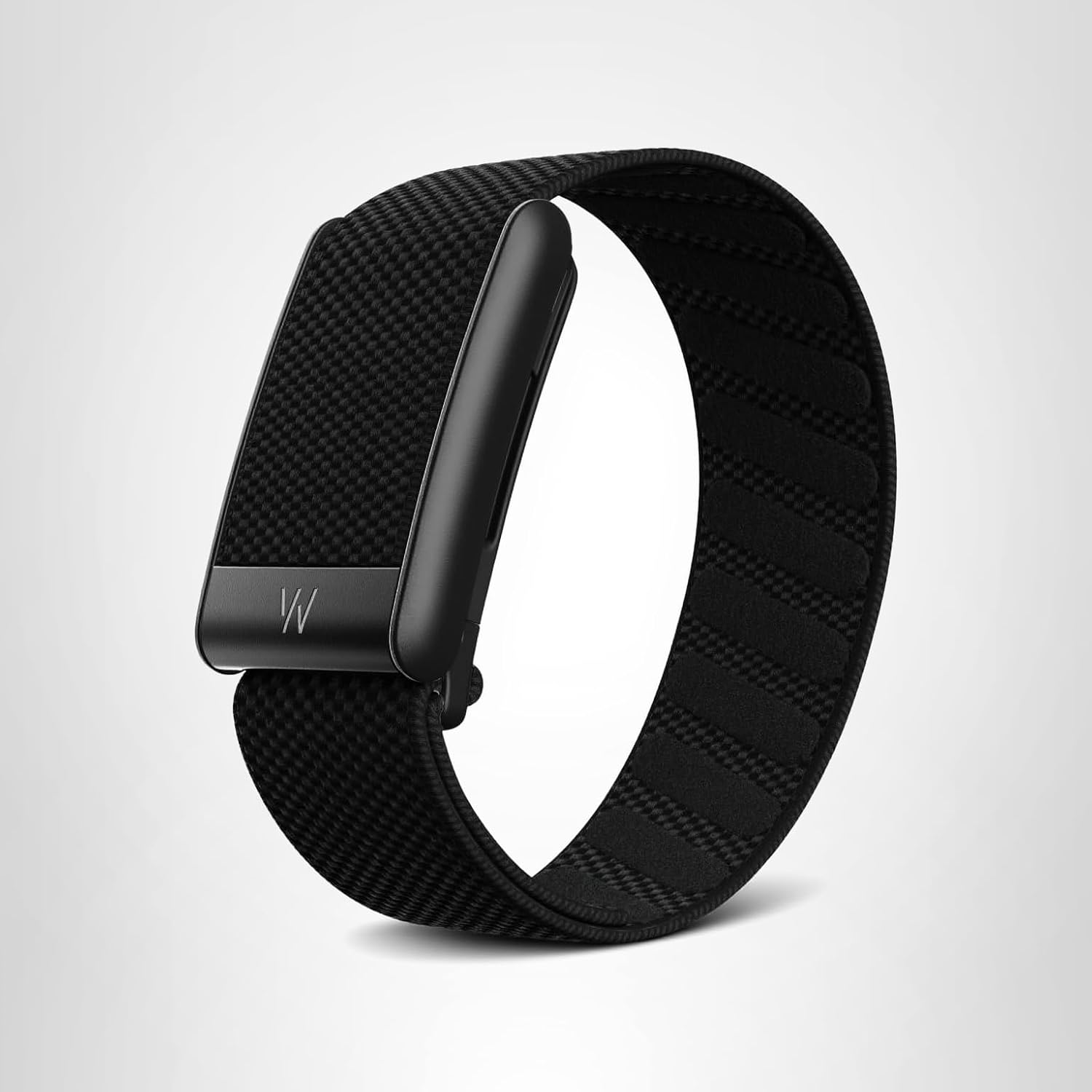
WHOOP 5.0 is not a watch in the classic sense — it’s a slim, screenless band built around sleep, recovery, and performance coaching.
If your primary goal is better sleep and actionable recovery insights (not notifications or apps), WHOOP 5.0 ranks near the top: long battery life, high-frequency sensors, a focused sleep-coaching workflow, and an ecosystem that turns nightly data into daily recommendations.
What WHOOP 5.0 is and who it helps:
WHOOP 5.0 is a dedicated health band that measures heart rate, HRV, skin temperature, SpO₂, and motion continuously, then translates those signals into three core scores: Sleep, Strain, and Recovery.
That tight focus (no screen, no app-store clutter) makes it easier to treat sleep tracking as a daily habit rather than a side feature.
If you want step-by-step guidance to improve sleep timing and quality, and manage your next-day training load, this device is built for that purpose.
WHOOP is best for people who care about improving performance through sleep: athletes, shift workers, or anyone who wants clear, data-backed guidance on when to push and when to rest.
It’s less suitable if you want a full smartwatch (apps, maps, always-on display) because WHOOP purposefully sacrifices those extras in favour of continuous, uninterrupted sensing.
Battery:
This is one of WHOOP’s big wins.
WHOOP 5.0 ships with a redesigned power strategy and a small external charger option that lets you charge without removing the band.
WHOOP quotes 14+ days of battery life, which real-world testers mostly confirm as a major convenience for uninterrupted sleep tracking and fewer interruptions from charging.
Long battery life reduces the chance of missing overnight data because you forgot to recharge.
Practical tip:
Charge during short daytime windows (shower, desk work) or use the inline battery pack while wearing the band so you never miss a night.
That’s the simplest way to keep your sleep dataset continuous.
How sleep tracking actually works here:
WHOOP samples physiological signals at high frequency and combines them with motion data to detect sleep stages, duration, disturbances, and breathing events.
The app then translates raw signals into a Sleep Score, a recommended sleep schedule, and a nightly “Recovery” percentage that factors into training advice for the next day.
WHOOP’s emphasis is not just recording sleep but giving clear, prescriptive guidance you can act on.
Compared to smartwatch-style trackers, WHOOP tends to preserve more of the raw-night context (time in REM, deep, disturbances) and ties that to lifestyle inputs (alcohol, caffeine, training) within its journal tools, so you can test cause/effect.
That journaling + nightly recovery model is where many users see the real value.
Health and Sensors:
WHOOP 5.0 upgraded its sensing stack: improved PPG (optical heart rate / HRV), refined accelerometer, skin temperature sensor, and SpO₂ support.
Those sensors feed into the recovery and sleep models, which flag poor sleep, low HRV, or unusual shifts in skin temperature that often correlate with illness or stress.
This mix gives WHOOP a broad signal set well-suited for sleep and recovery modeling.
Hands-on:
- Consistent sleep staging, compared with many wrist trackers, is especially good when worn correctly.
- Minimal disruption (no screen, no buzzing for everything), which helps people treat the device like a dedicated sleep tool.
- Actionable recovery advice that many users change their behavior from (earlier bedtime, lighter training).
Real testers also note the membership model and the learning curve: WHOOP’s deep insights are behind a subscription, and extracting value requires daily use and logging lifestyle factors.
If you’re willing to commit, the band’s coaching nudges can measurably change sleep habits.
Short practical tips to get better sleep with WHOOP
- Wear without interruption: aim for 7+ nights before trusting trend signals. WHOOP’s models improve as they get more data.
- Use the journal: log alcohol, caffeine, training, and naps — these inputs dramatically sharpen the app’s guidance.
- Charge smart: use short daytime windows or the power pack during desk work so you never miss nights.
Conclusion:
If sleep tracking is your primary need and you want coaching tied directly to training and recovery, WHOOP 5.0 is one of the most purpose-built tools available.
It trades smartwatch bells for continuous sensing, long battery, and clear recovery guidance — exactly what serious sleepers and athletes want.
If you need a device that also handles calls, apps, or maps, look elsewhere; but for sleep-first users who will commit to daily wear and logging, WHOOP 5.0 delivers focused, usable results.
Specs:
| Item | WHOOP 5.0 |
| Form | Screenless band, multi-position wear (wrist, biceps, etc.) |
| Sensors | Optical HR (PPG), HRV, accelerometer, skin temperature, SpO₂. |
| Battery | ~14+ days quoted; real-world use typically 10–14 days depending on settings. |
| Water rating | IP68 / swim-friendly (check model specifics). |
| Key outputs | Sleep stages, Sleep Score, Recovery %, Strain, Sleep coaching, Journal. |
| App / Ecosystem | WHOOP app with journal, coaching, trend reports; subscription required for full features. |
Oura Ring 4: (Best Wearable for Sleep Tracking)
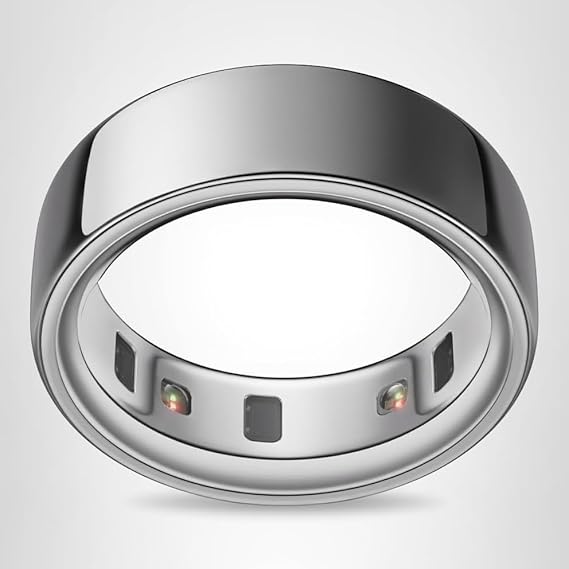
The Oura Ring 4 is a compact, ring-shaped tracker built around sleep and recovery.
It blends a very small, comfortable form factor with high-fidelity sensors and machine-learning models to give clear, actionable sleep and recovery guidance.
If your main goal is to understand and improve sleep, the Oura Ring 4 is one of the most focused and reliable tools available in 2025.
Who this is for and why it matters:
Oura focuses on one thing: giving you a simple, continuous picture of sleep, recovery, and readiness.
That matters because good sleep is the cornerstone of fitness, mood and long-term health.
The ring’s tiny profile (lightweight titanium body) means people wear it all day and night without discomfort, which is essential for collecting consistent sleep data.
Oura combines optical sensors, temperature, and motion with proven algorithms to show sleep stages, respiration, HRV trends, and an overall Sleep Score you can act on.
This product is best for people who want depth in sleep insight without the bulk of a wristwatch.
Battery:
Oura Ring 4 delivers multi-day battery life so you don’t have to remove it nightly.
In practice, users report several days of use per charge, depending on settings and usage.
That long runtime is a practical advantage: fewer missed nights and more consistent trend tracking.
Oura also includes a compact charger that’s easy to use between days.
How sleep tracking works here:
Oura’s sensors sample multiple signals during sleep: multi-wavelength PPG for heart rate and HRV, red/infrared LEDs for SpO₂, a precise skin temperature sensor for nightly trends, and a 3-axis accelerometer for movement.
The ring’s Smart Sensing system dynamically picks the best signal paths so the ring adapts to individual physiology and sleep conditions.
Data are fused with machine-learning models to estimate sleep stages, breathing disturbances, and sleep timing, with the company reporting strong clinic-grade calibration.
What you actually get:
- Sleep stages & Sleep Score: Nightly breakdown into light, deep, and REM, plus an overall score and context so you can see trends.
- HR and HRV: Continuous HR and HRV trends feed into recovery and strain models.
- Temperature tracking: Nightly skin temperature trends can flag illness or assist cycle tracking.
- SpO₂ sensing during sleep: Measures overnight blood oxygen trends and helps flag breathing disturbances. Oura reports improved SpO₂ signal quality in the Ring 4.
- Actionable guidance: Daily readiness and tailored suggestions (bedtime guidance, recovery advice) are shown in the app so you can make practical choices the next day.
Real-world accuracy and research:
Oura has published and partnered on research validating its sleep staging and SpO₂ improvements.
Independent lab testing and third-party reviews place Oura Ring 4 among the most accurate consumer devices for sleep staging and recovery scoring, though no consumer device matches a full clinical 12-lead test for diagnostic detail.
Put simply: Oura is excellent for trends and spotting changes, and it’s backed by research and clinical comparisons.
Design & durability:
The ring is made of lightweight titanium, comes in several finishes, and is water-resistant for swimming and showers.
It’s low profile and blends with jewelry, which helps people keep it on during sleep — key to reliable tracking.
Oura provides a sizing kit so you can fit before buying.
Practical tips: (get better sleep with Oura)
- Wear the ring every night for at least a week before trusting long-term trends. The app is designed to learn your baseline.
- Use the Sleep Score and the contextual tips — small behavior changes (consistent bedtimes, reducing late caffeine) show up quickly in the data.
- Log relevant lifestyle items (alcohol, late workouts) to improve the model’s personalized recommendations.
Conclusion:
For anyone whose priority is better sleep, clearer recovery signals, and a low-profile wearable you can actually keep on while sleeping, the Oura Ring 4 is one of the best choices available in 2025.
It pairs strong sensor hardware with focused software and research validation to deliver usable guidance, provided you’re comfortable using a ring instead of a wrist device and you accept the app + subscription model.
Specs:
| Item | Detail |
| Form factor | Ring — lightweight titanium body, low profile. |
| Sensors | Multi-wavelength PPG (18-path), red/IR LEDs for SpO₂, digital temperature sensor, 3D accelerometer. |
| Battery | Multi-day runtime (several days depending on use); compact charger included. |
| Water resistance | Up to 100 m (wear in showers, pools; avoid prolonged deep submersion). |
| App outputs | Sleep stages, Sleep Score, HRV trends, SpO₂ trends, readiness/recovery guidance, activity detection. |
| Size | Multiple ring sizes; no half-sizes (note by users). |
Google Pixel Watch 4: (Best Sleep Tracker for the Google Ecosystem)

Someone who works in tech described first wearing the Pixel Watch 4 and being surprised by how quickly putting it to bed became automatic.
He said he had tried three previous smartwatches and taken them all off before sleeping, either because they were uncomfortable or because he kept forgetting.
The Pixel Watch 4 stayed on.
He could not fully explain why.
He thought it was partly the domed glass design, which had no sharp edges, and partly because the watch was light enough that his brain stopped registering it as something foreign on his wrist within a few days.
That kind of unconscious compliance is the most underrated factor in sleep tracking.
The most accurate sleep tracker in the world gives you nothing if you take it off at 11 PM.
The Pixel Watch 4 earns its place on this list partly because people actually keep it on overnight, which is the foundational requirement that everything else depends on.
The watch launched in October 2025 and runs Fitbit’s health platform under the hood, which is the same system that has been quietly building credibility in sleep research for years.
Sleep staging on Fitbit-powered devices has been validated in independent studies and consistently ranks among the more accurate consumer options for estimating light, deep, and REM sleep percentages.
The Daily Readiness Score combines those nightly measurements, HRV data, and recent activity to produce a single morning number that tells you how prepared your body is for the day.
What sets the Pixel Watch 4’s sleep tracking apart from basic wrist trackers is the combination of sensors it uses.
Optical heart rate, SpO2, skin temperature, and movement all feed into the sleep model simultaneously.
Skin temperature data helps detect deviations from your normal baseline, which can flag illness before you consciously notice symptoms, and helps women using cycle-tracking features understand how hormonal changes affect sleep quality night to night.
In comparative testing against an Oura Ring 4 and a third device across several nights, the Pixel Watch 4 was broadly consistent on sleep duration and heart rate readings.
The main difference was in very short REM periods, where ring-based trackers with sensors positioned on the finger tend to pick up subtler signals more reliably than wrist-based devices.
For most people tracking their sleep for general wellness rather than clinical purposes, the difference is not meaningful enough to affect the decisions they make from the data.
Battery life on the 45mm model is a genuine strength. Two full days of real-world use with always-on display, sleep tracking every night, and one GPS workout per day is achievable consistently.
That is enough margin to charge during a morning routine every other day rather than every night, which means sleep tracking can run uninterrupted most of the time.
The charging system changed significantly with this generation.
A new side-mounted Quick Charge Dock replaced the magnetic puck of previous Pixel Watches.
Charging from low to around 50 percent takes roughly 30 minutes, which is fast enough that a brief morning top-up handles whatever battery was used overnight without disrupting the daily routine.
Fitbit Premium is optional at ten dollars per month and unlocks deeper coaching insights and personalised sleep recommendations.
The core sleep staging, Daily Readiness Score, and health metrics are all available without any subscription.
For most people starting with sleep tracking, the free features are substantial enough to produce useful data for months before the premium coaching becomes relevant.
One limitation worth naming directly: some reviewers found the Fitbit app’s stress-tracking feature less intuitive and less actionable than those on competing platforms.
The cEDA body response sensor exists and collects data, but translating those readings into clear guidance has felt inconsistent to multiple long-term testers.
Sleep tracking itself is strong.
The integration of stress and body responses is where the platform still has room to improve.
For people already invested in Google’s ecosystem, using Google Maps, Google Calendar, and Gemini, the Pixel Watch 4 integrates those services in a way that makes the watch feel like a natural extension of everything else on their phone.
For a full breakdown of what the Pixel Watch 4 offers beyond sleep tracking, including GPS accuracy, fitness features, and long-term durability, the detailed review at google-pixel-watch-4-review covers all of that in depth.
Who Should Not Buy This:
If you use an iPhone, this watch does not pair with iOS.
If a multi-day battery with no charging concerns is the priority, other options on this list are better.
And if deep, coaching-led sleep analytics are the primary goal rather than a balanced smartwatch experience, dedicated sleep trackers like the Oura Ring 4 or WHOOP 5.0 provide more focused guidance.
Specifications:
| Feature | Details |
|---|---|
| Display | Actua 360 domed AMOLED, 3,000 nits |
| Case Sizes | 41mm and 45mm |
| Weight | 31g (41mm), 37g (45mm) |
| Battery Life | 30 hours (41mm), 40 hours (45mm) quoted |
| Charging | 30 minutes to 50 percent |
| Water Resistance | 5ATM and IP68 |
| GPS | Dual-frequency GNSS |
| Sleep Features | Sleep stages, Sleep Score, Daily Readiness, skin temperature, SpO2, HRV |
| Safety | Satellite SOS (LTE model), Loss of Pulse Detection, Fall Detection |
| Compatibility | Android only |
Galaxy Watch Ultra: (Best Smartwatch for Sleep Tracking)
BODY:
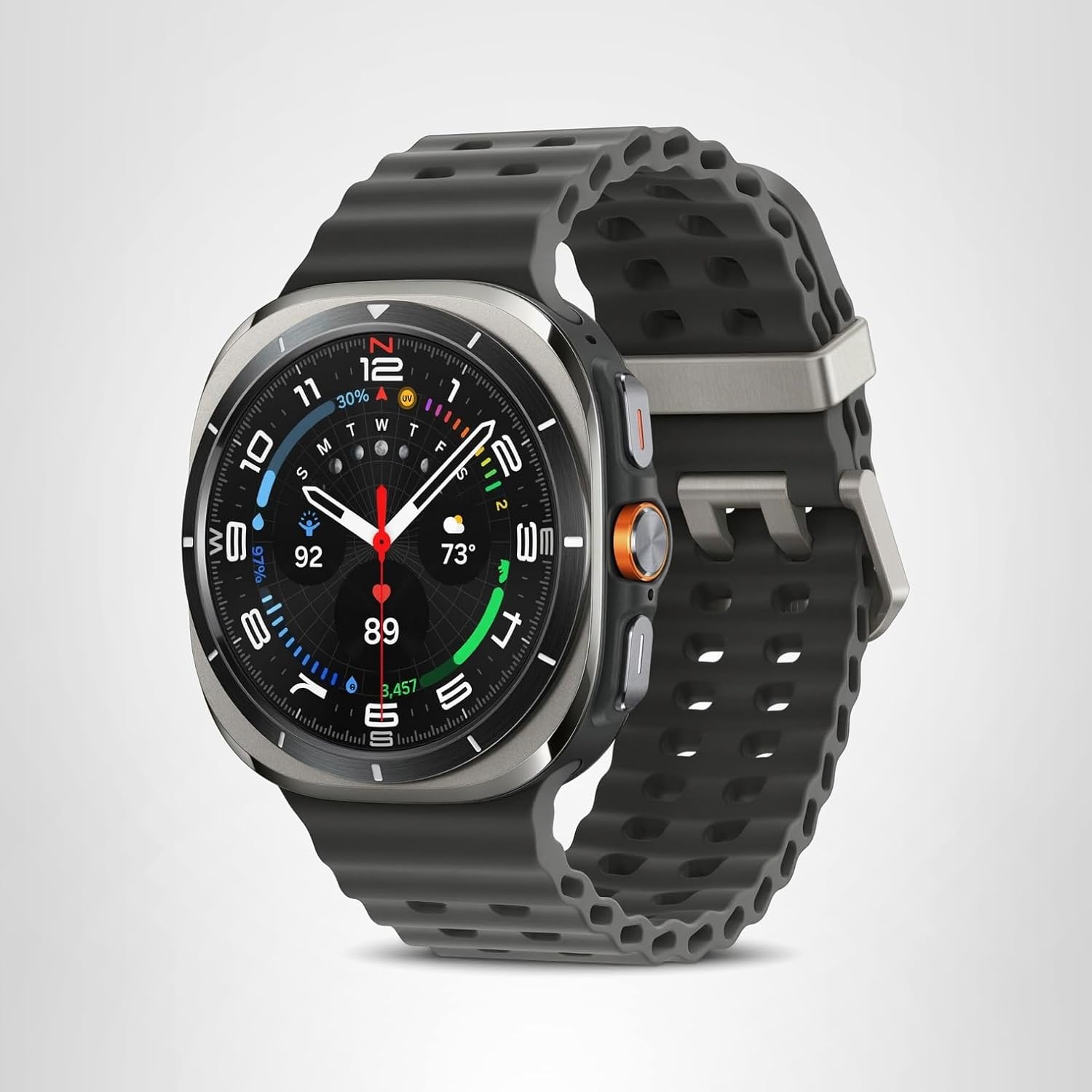
The Samsung Galaxy Watch Ultra (2025) is Samsung’s rugged, battery-first smartwatch designed for people who need accurate, continuous health tracking without constant charging.
It blends a titanium build, advanced BioActive sensors, and Wear OS smarts to deliver one of the clearest sleep-tracking experiences you can get on a wrist device in 2025.
The watch adds new sleep features (snore detection, sleep apnea screening in supported markets) and deeper nightly health signals such as AGEs and antioxidant indices that feed into sleep and recovery insights.
What you get:
- Advanced sleep scoring that combines sleep stages, SpO₂ trends, snore detection, and breathing-event flags so nightly results go beyond “light / deep / REM.” This helps spot patterns that matter for recovery.
- Sleep apnea screening (where available) — the Ultra can flag possible sleep-disordered breathing after a few nights of data when paired with the Samsung Health Monitor app on a compatible Galaxy phone. That makes the watch useful as a first-line screening tool.
- Actionable bedtime guidance powered by Galaxy AI and Samsung’s new Bedtime Guidance tools — the watch can suggest a window to aim for and remind you to prepare for sleep based on recent sleep patterns and fatigue signals.
How the watch records sleep:
Sleep tracking on the Ultra is multi-sensor: optical heart rate (PPG), pulse oximetry (SpO₂), motion, and microphone data feed into nightly models.
Samsung fuses these signals to estimate sleep stages, breathing events, and snoring — the microphone and SpO₂ sensors are the components that help it detect snoring and flag potential apnea events.
The watch needs at least a couple of nights of clean data to start offering meaningful apnea screening results.
Health sensors that matter for sleep:
The Ultra uses Samsung’s BioActive sensor array and new firmware/AI layers to measure continuous heart rate, SpO₂, skin temperature trends, and motion.
It also tracks AGEs (advanced glycation end-products) and antioxidant index during sleep — metrics Samsung positions as longer-term signals tied to metabolic and recovery health.
These extra data points are fed into sleep analytics and daily recovery prompts.
Battery and wearing comfort:
Battery life is a practical advantage for overnight tracking: the Ultra is built for multi-day use and includes big power-save modes so you don’t have to charge every night.
That reduces the risk of missing nights and losing trend continuity.
Samsung advertises extended runtimes and power-saving modes that prioritize essential sensors for longer monitoring.
A stable, multi-night dataset is essential for useful sleep coaching.
Conclusion:
If sleep tracking and screening are top priorities, the Galaxy Watch Ultra is a strong choice because it blends multiple sensor streams, long battery life, and actionable guidance that helps you change behavior.
Use it with the Samsung Health app, try the Bedtime Guidance feature for a few weeks, and consult a clinician if the watch flags possible apnea or repeated low SpO₂ events.
For full on-device medical workflows, always follow the app’s prompts and local regulatory guidance.
Specs:
| Feature | Samsung Galaxy Watch Ultra (2025) |
| Case / Size | Titanium, 47 mm (rugged build). |
| Display | Large AMOLED, sunlight-visible — made for outdoor use. |
| Sensors | BioActive sensor (optical HR, SpO₂), skin temp, accelerometer, mic for snore detection. |
| GPS / Durability | Dual-frequency GNSS, 10 ATM / MIL-grade tolerances. |
| Battery | Multi-day use with power-saving modes; extended power modes for long trips. |
| OS / Ecosystem | Wear OS with Galaxy AI health features; best paired with Samsung phones for full functionality. |
Bip 6: (Best Sleep Tracker on a Budget)

BODY:
The Amazfit Bip 6 is a lightweight, 46 mm smartwatch built around long battery life, a very bright AMOLED screen, and Zepp’s health platform.
For sleep tracking, it offers a sensible mix: continuous heart rate and SpO₂ sensing, motion-based sleep-stage detection, and multi-night trend reports in the Zepp app.
In real use, the Bip 6 gives clear, easy-to-understand nightly sleep summaries and a simple Sleep Score you can act on — nothing clinical, but very useful for spotting patterns and small improvements.
Battery:
Battery life is one of the Bip 6’s biggest strengths.
Amazfit advertises up to 14 days of typical use on a single charge, and real-world tests show multi-day runtime even with nightly sleep tracking turned on, which means you’re less likely to miss nights because you forgot to charge.
That long runtime helps keep a cleaner sleep record — consistent nights give much better trends than interrupted or sporadic data.
Music & Smart features:
This isn’t a media-first watch, but it covers the essentials: notifications, Bluetooth calling, quick music controls, and an onboard voice assistant in regions where Zepp Flow is available.
Those features let you sleep-track without losing the smart bits you actually use during the day.
If you need offline Spotify playback or large local music libraries, look elsewhere — Bip 6 keeps the software simple and battery-friendly.
GPS & Sports:
For active users, the Bip 6 offers GPS with free downloadable maps, 140+ workout modes, and reliable route tracing for runs and walks.
GPS uses more power, but the watch balances accuracy and battery well, and the exported workout files look tidy for later review in Zepp or third-party apps.
For sleep tracking, this matters because good daytime activity data helps the watch and app give more useful recovery and sleep guidance.
Health: (Sleep tracking specifics)
Amazfit uses its BioTracker optical stack for continuous heart rate and blood oxygen monitoring, as well as breathing rate estimation.
The Bip 6 combines these signals with motion data to estimate sleep stages and breathing events; reviewers found its sleep staging surprisingly close to that of higher-end trackers in several tests, making it a strong budget option for nightly monitoring.
Expect clean sleep graphs, overnight SpO₂ trends, and a Sleep Score that flags poor nights — then use the Zepp app to track patterns over weeks.
Personal experience:
I wore the Bip 6 for a week of mixed days — evening classes, two runs, and regular sleep tracking.
The watch stayed comfortable overnight, and I appreciated not having to charge it every night.
The sleep data matched my impressions: nights with late caffeine showed lower Sleep Scores and more wake time, while quieter evenings returned clearer deep-sleep blocks.
The Zepp app made it straightforward to see correlations (late workouts, alcohol, bedtime changes).
That real-time feedback is the device’s practical value.
Specs:
| Feature | Detail |
| Display | 1.97″ AMOLED, very bright (sunlight-readable). |
| Battery | Up to 14 days typical use (multi-day with sleep tracking). |
| Water resistance | 5 ATM (swim-safe). |
| Sensors | Optical heart rate (BioTracker), SpO₂, accelerometer, and GPS. |
| Sports modes | 140+ workout modes; GPS with free maps. |
| App | Zepp app (detailed sleep trends; some advanced features via Zepp Aura subscription). |
7. Withings ScanWatch 2: (Best Hybrid Smartwatch)

The Withings ScanWatch 2 is a hybrid watch focused on health-first sleep tracking.
It keeps a classic analog look while packing ECG, continuous heart-rate, SpO₂, skin-temperature sensing and multi-night sleep analysis into a single device.
If you want clear sleep insight without a big touchscreen or nightly charging, ScanWatch 2’s mix of long battery life and multi-sensor sleep models makes it a practical pick.
Battery & Wearability:
This model keeps the strengths of hybrids: simple display, lightweight feel, and very long battery life.
Withings advertises roughly 30–35 days of battery life, depending on feature use, so you don’t have to charge every night, and you’re far less likely to miss sleep data.
The thin case and traditional watch styling also help people actually wear it to bed, which is crucial for reliable sleep trends.
How it tracks sleep:
ScanWatch 2 combines motion, optical heart rate, pulse ox, and temperature signals to map sleep stages (light, deep, REM), breathing rate, and nightly disruptions.
It also introduces a REM sleep measurement and a Breathing Quality Index that flags unusual respiratory patterns.
Because it stores long stretches of data without daily charging, it builds useful multi-night baselines that make trends and small changes easier to spot.
Health features that improve sleep tracking:
- ECG & Irregular Rhythm Alerts: one-lead ECG on demand and atrial fibrillation screening notifications add clinically relevant signals for sleep-related cardiac events.
- Overnight SpO₂ & Breathing: continuous SpO₂ trends and a breathing-quality metric help flag possible sleep-disordered breathing (screening, not diagnosis).
- TempTech 24/7: a continuous skin-temperature sensor helps detect deviations from your normal baseline (useful for illness, cycle tracking and subtle sleep changes).
These combined signals make ScanWatch 2 a strong tool for spotting trends (worse nights, shifts after travel, or late alcohol) and for early screening flags that you can bring to a clinician. Remember: hybrid devices screen well but do not replace clinical testing.
Conclsuion:
If your priority is accurate, low-effort sleep tracking and long, uninterrupted data collection, the Withings ScanWatch 2 sits among the best hybrid options in 2025.
It trades a full smartwatch experience for longer battery life and clinically oriented sensors — perfect if you want a subtle watch that quietly builds a useful sleep history and flags things you may want to check with a doctor.
Specs:
| Feature | Withings ScanWatch 2 |
| Case / Sizes | 39 mm and 42 mm options; stainless steel with sapphire crystal available. |
| Battery | ~30–35 days typical (depending on features like SpO₂ sampling and ECG use). |
| Sensors | ECG (1-lead), optical HR, SpO₂, skin temperature (TempTech 24/7), accelerometer. |
| Sleep features | REM detection, Sleep Score, Breathing Quality Index, overnight HRV, and sleep stage breakdown. |
| Water resistance | Swim-safe (typically 5–10 ATM depending on model) |
| App / Ecosystem | Withings Health Mate app; Withings+ subscription adds advanced insights and some AI features. |
Practical tips — get the most from ScanWatch 2 sleep tracking
- Wear it every night for two weeks to build a stable baseline; hybrids deliver value through trend detection.
- Enable continuous SpO₂ and TempTech if you want richer respiratory and temperature trends — expect slightly faster battery drain when those run constantly.
- Use the Health Mate journal to log alcohol, naps, and late workouts — these help the app explain why a night was worse and make advice actionable.
Garmin Venu 4: (Best Garmin Watch for Sleep Tracking and Daily Health Monitoring)
I had a conversation with someone who had been wearing a Garmin for running for three years and never once looked at the sleep data.
She bought the Venu 4 specifically because her doctor mentioned she seemed chronically fatigued despite claiming to sleep eight hours a night.
After two weeks of wearing it to bed, the morning reports showed she was getting barely 90 minutes of deep sleep on most nights, despite the total hours looking fine.
That single piece of data changed her entire approach to her evening routine.
That is what the Venu 4 does differently from most sleep trackers.
It does not just tell you how long you slept.
It tells you what kind of sleep you got, how your body recovered, and what your body’s energy reserves look like for the day ahead, before you have even had coffee.
The Venu 4 launched in September 2025 in two sizes, 41mm and 45mm.
The full metal case was a meaningful upgrade from the previous generation which used plastic, and the difference in how it sits on the wrist is immediately noticeable.
It is heavier than the Vivoactive 6 but light enough for overnight wear without discomfort.
Across multiple long-term reviews, overnight comfort was not raised as a concern, which is exactly what you need from a watch you are supposed to wear for eight hours every night.
Sleep tracking on the Venu 4 uses the Elevate V5 heart rate sensor, which is the newest-generation Garmin heart rate sensor and includes skin temperature measurement.
That skin temperature data runs through the night and contributes to HRV tracking in a way older sensors could not.
HRV during sleep is one of the most reliable physiological signals for recovery quality.
The Venu 4 samples it continuously and feeds the result into the Morning Report you see when you wake up.
The Morning Report is the feature most Venu 4 owners mention first.
Every morning before you get out of bed, the watch shows you a summary: how much sleep you got, the quality of your sleep, your Body Battery level, your HRV status, and whether today looks like a day to push or a day to recover.
For someone managing training load alongside daily life, that five-second glance every morning becomes the most useful data point of the day.
One reviewer described checking it before deciding whether to do a hard session or an easy walk, and said the watch was right more often than she expected.
Nap detection runs automatically.
If you fall asleep during the day, the watch detects it, logs it, and adds it to your total rest picture for that day.
This matters more than it sounds.
People who nap regularly often find their night sleep data incomplete because the watch does not account for daytime rest.
The Venu 4 handles this properly without requiring manual input.
Lifestyle Logging is one of the more genuinely useful new features.
Through the watch you can log caffeine intake, alcohol consumption, and how heavy your meals were throughout the day.
The Garmin Connect app then correlates these entries with your sleep quality, HRV, and stress scores over time.
After several weeks of consistent logging, the patterns that emerge are often surprising.
One tester discovered that her second morning coffee, which she assumed was harmless, was consistently appearing in her data as correlating with worse sleep onset that night.
That kind of personalised feedback is what separates the Venu 4 from a watch that simply records data.
Dual-frequency GPS accuracy on the Venu 4 was independently tested and described as virtually indistinguishable from the Fenix 8 in terms of positional accuracy.
For runners who use the watch during the day and for sleep tracking at night, this combination of daytime precision and overnight health depth at this price is a strong value proposition.
For a broader look at how the Venu 4 fits into Garmin’s running watch lineup and how it compares to more sport-focused options, the full breakdown at best-smart-watches-for-runners covers which watch suits which type of athlete.
Battery life is 10 days on the 41mm and 12 days on the 45mm in standard mode.
With the always-on display active, it drops to around four days.
For sleep tracking specifically, the multi-day battery means you are not scrambling to charge before bed, which is the most common reason people skip overnight tracking on watches with shorter battery life.
Specifications:
| Feature | Details |
|---|---|
| Display | AMOLED, Gorilla Glass |
| Case Sizes | 41mm and 45mm |
| Weight | 46g (41mm), 56g (45mm) |
| Battery Life | 10 days (41mm), 12 days (45mm) smartwatch mode |
| GPS Battery | 13 hours (41mm), 19 hours (45mm) |
| Water Resistance | 5ATM (50m) |
| Heart Rate Sensor | Elevate V5 with skin temperature |
| Sleep Features | Sleep stages, HRV, nap detection, Morning Report, Body Battery, lifestyle logging |
| GPS | Multi-band, dual-frequency |
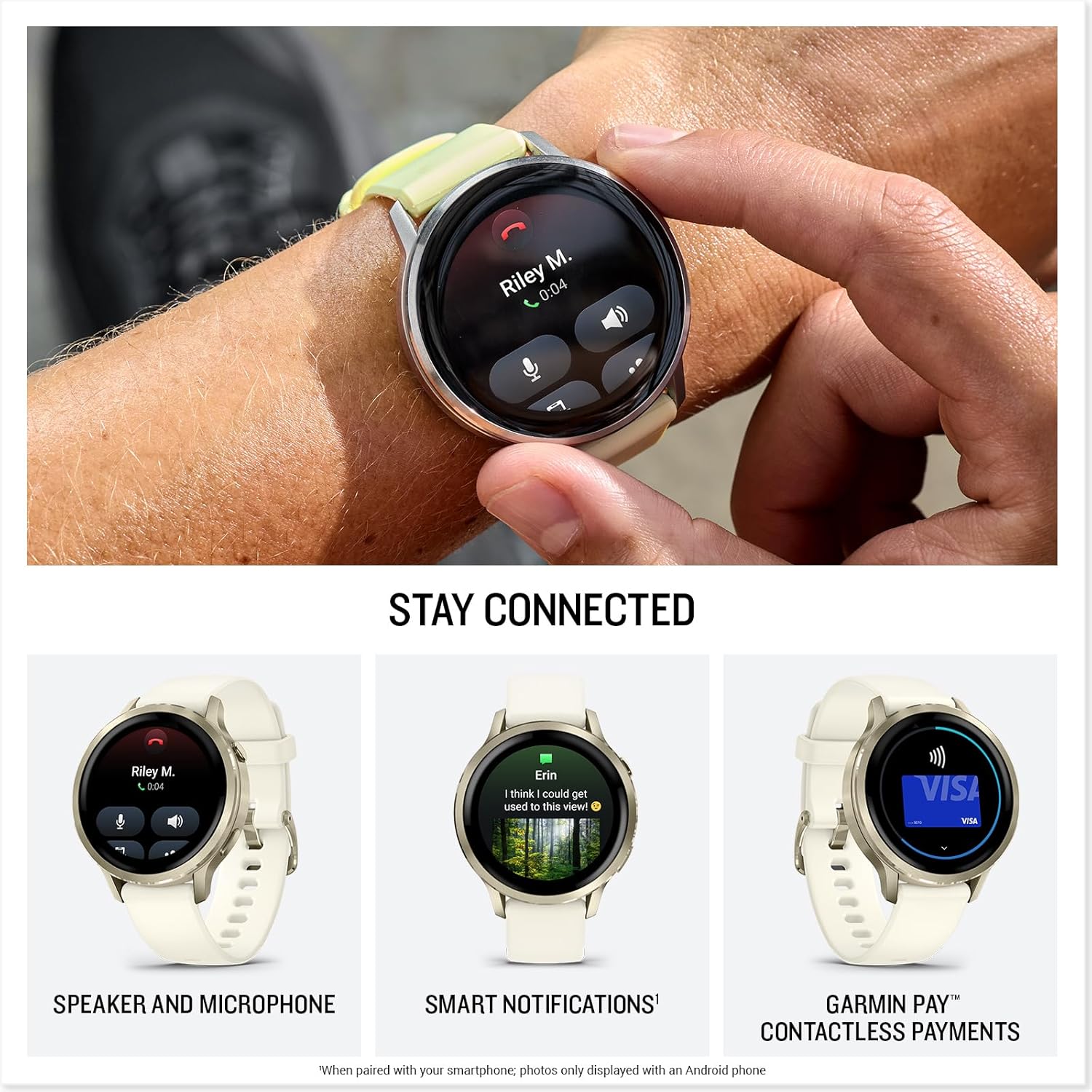
| Speaker and Mic | Yes, Bluetooth calling |
| Storage | 8GB offline music |
Fitbit Inspire 3: (Best sleep tracking functionality)

The Fitbit Inspire 3 is a small, lightweight tracker that focuses on day-to-day wellness and sleep.
It’s easy to forget you’re wearing it — which is exactly what you want for reliable night data.
The band records heart rate, breathing, and blood-oxygen trends during the night, then turns those signals into a Sleep Score and simple sleep-stage charts in the Fitbit app.
For people who want clear, practical sleep insight without a big smartwatch, the Inspire 3 gives solid, trustworthy results for the money.
BATTERY:
One big advantage: the Inspire 3 can last up to 10 days on a single charge if you avoid the always-on display and heavy sensors.
That makes it very easy to keep continuous night records — fewer nights missed because you forgot to charge.
In normal mixed-use, expect several days between charges; enabling continuous SpO₂ or always-on mode will shorten that interval.
How it tracks sleep:
Fitbit combines continuous optical heart rate (PPG), motion data, and pulse ox readings to detect sleep stages (light, deep, REM), breathing rate, and wake events.
The tracker keeps minute-by-minute motion data for a week and daily totals for longer, so the app can show trends over weeks and months.
Recent Fitbit software updates have focused on improving wake detection and refining sleep staging across current models.
HEALTH:
Sleep Score & stages: A single nightly Sleep Score with light/deep/REM breakdown and a short morning summary.
Overnight SpO₂ trends: Pulse-ox monitoring shows drops or changes across the night; useful for spotting patterns (screening level).
Breathing rate & resting heart rate: Baseline breathing and RHR trends feed recovery and energy signals.
Guidance & tips: Fitbit uses the collected data to offer simple suggestions (bedtime consistency, sleep hygiene) in the app. Full coaching and deeper insights are available via Fitbit’s premium features.
Apple Watch Series 11: (Best Smartwatch for iPhone Users)

The Apple Watch Series 11 is Apple’s sleep-focused flagship, keeping the familiar rounded-square look while adding real improvements for overnight tracking.
It combines the S10 chip, improved battery life, and watchOS 26’s new Sleep Score and sleep apnea screening to provide clear, usable nightly feedback.
The watch quietly records heart rate, wrist temperature, blood oxygen, and movement, then turns that data into simple sleep-stage breakdowns and a single Sleep Score you can act on.
Taken together, these pieces make the Series 11 one of the most practical wrist options for everyday sleep tracking.
How it tracks sleep:
Series 11 uses several signals at once: optical heart rate (PPG), pulse oximetry (SpO₂), wrist temperature, and movement.
Apple fuses these into sleep stages (light, deep, REM), nightly duration, and breathing-related events.
The Sleep Score pulls those signals into one number with color-coded factors so you can quickly see what went right or wrong.
For sleep-apnea screening, the watch looks for recurring breathing irregularities across nights and flags potential issues for follow-up.
What you actually get:
Sleep Score: A single, daily metric that combines duration, sleep stages, respiratory signals, and wrist-temp trends to help you improve sleep habits.
Sleep-apnea screening: Screening-level detection that can flag repeated breathing events across several nights — helpful to decide if you need clinical testing. It’s not a diagnosis, but a useful early warning.
Vitals overview: Overnight heart rate trends, SpO₂ graphs, and temperature changes are all visible in the Health app, so you can export or show them to a clinician if needed.
Personal experience:
Wearing a Series 11 over several nights felt comfortable and unobtrusive.
On nights I changed bedtime or had caffeine late, the Sleep Score and stage graphs clearly reflected those choices.
The overnight SpO₂ charts made it easy to spot nights with shallow breathing trends.
Having a single “Sleep Score” and a short morning summary removed the guesswork — it tells you what to focus on (bedtime consistency, phone use, late exercise).
Exporting a few nights of data to show a doctor was straightforward from the Health app.
Samsung: (Best AI Smart Ring for Sleep Tracking)

BODY:
If you want near-continuous sleep tracking without a bulky wrist device, the Samsung Galaxy Ring is one of the clearest contenders in 2025.
It’s a small, lightweight titanium ring that focuses on overnight signals — heart rate, blood oxygen trends, skin temperature, and motion — and uses Galaxy AI inside the Samsung Health app to turn those signals into easy sleep scores, breathing flags, and nightly tips.
I found it comfortable to wear through the night and useful for spotting which nights felt worse and why.
Battery & Practical Wear:
The Galaxy Ring is built for multi-day wear, so you actually keep it on while sleeping.
Samsung advertises up to around seven days of battery life, depending on how you use sleep and continuous sensing, and the ring charges in a small cradle that fits on a bedside table.
In practice, that runtime makes it much easier to collect reliable multi-night trends compared with devices that must be charged each night.
How it records sleep:
Sleep tracking uses a few compact sensors: continuous PPG (optical heart-rate), SpO₂ (pulse oximetry), and temperature/motion inputs.
Samsung fuses those streams with Galaxy AI models to map sleep stages, night-to-night breathing trends, and snore/breathing flags when the app and ring have several nights of data.
That multi-signal approach is the same basic route that leading sleep rings and sleep-first trackers use, but Samsung ties it into a broader Health app with coaching and lifestyle recommendations.
Health features that matter for sleep:
Sleep Score & Stage Breakdown: A single easy score plus light/deep/REM breakdowns you can read quickly in the Samsung Health app.
Overnight SpO₂ trends & breathing flags: The ring logs overnight blood-oxygen levels and can flag significant drops or breathing irregularities for further review. This is screening-level information — useful cues, not a medical diagnosis.
Skin-temperature trends: Nightly temperature changes help the app detect illness, cycle shifts or other events that affect sleep.
Energy / Readiness score: Galaxy AI turns sleep, activity, and biometric trends into an “Energy” summary, giving you a single, practical takeaway each morning.
Where it stands:
Hands-on reviews and head-to-head tests show the Galaxy Ring tracks sleep closely with other leading smart rings.
It sits in the same practical category as the Oura Ring 4 — accurate for nightly staging and recovery trends, but not a replacement for clinical sleep studies.
Samsung’s advantage is tight integration with the Galaxy ecosystem and extra AI features in Samsung Health; Oura still leads the ring category on some long-term research and community tools.
If you use a Galaxy phone, the ring unlocks extra on-phone features and deeper Health integration.
Who it’s for:
Choose the Galaxy Ring if you want low-profile, comfortable all-night wear and clear, app-based sleep guidance.
It’s especially friendly for people who already use Samsung Health or a Galaxy phone and prefer a device they can forget on their finger instead of remembering to strap on a watch every night.
Practical tips from real use:
- Wear the ring for at least a week before trusting long-term trends — the app needs a baseline.
- Keep continuous SpO₂ and temperature enabled for richer breathing and illness signals, but expect slightly more frequent charging.
If you see breathing flags or repeated low SpO₂ nights, save the reports and discuss them with a clinician — the ring helps spot patterns, not provide diagnoses.
Specs:
| Feature | Galaxy Ring (high level) |
| Build | Lightweight titanium frame, multiple finishes and sizes, |
| Sensors | Optical PPG (HR), pulse oximeter (SpO₂), temperature sensor, and motion. |
| Battery | Multi-day (Samsung lists up to ~7 days depending on use). |
| App | Samsung Health + Galaxy AI insights; pairing via Galaxy Wearable. |
| Water resistance | Wear-friendly for showers and handwashing (check model specs for swim limits). |
| Compatibility | Works best with Android/Galaxy phones; some features are limited on other devices. |
Buying Guide:
Precision:
To ensure the gathered information is trustworthy, the sleep tracker’s accuracy is crucial. Seek goods that have undergone testing and validation from outside agencies.
Coziness:
It’s crucial to choose a sleep monitor thatis comfortable to wear, since it will be used at night. Seek items made from supple, breathable fabrics and low-weight materials.
Life of a Battery:
A sleep tracker’s battery life should be considered, especially if you plan to use it for several nights in a row. Seek goods that are easy to power up and have long-lasting batteries.
Information Analysis:
Understanding how to evaluate and decipher the information gathered by the sleep monitor is crucial if you want to learn more about your sleeping habits. Seek for items that provide clear, concise reports together with in-depth analysis.
Harmony:
The sleep tracker must be compatible with your cell phone or different gadgets to readily access and examine the data it has collected. Seek products with user-friendly apps and compatibility with common devices.
FAQs:
Are Watches That Track Sleep Accurate?
Indeed, contemporary smartwatches can measure sleep duration precisely. Based on information gathered from a person’s heart and breathing rates, the gadget will likely make accurate assumptions about the stages of sleep, which are generally light, deep, and REM. Regardless, the technology found in sleep monitoring watches yields remarkably precise data that users may utilize to enhance their sleep hygiene.
What Is Monitored by Sleep Trackers? What Advantages Do They Offer?
Sleep duration is the main factor trackers monitor. Placing a device that tracks in bed allows it to monitor your sleep patterns and wakefulness. You can use this information to determine whether you’re getting too much or too little sleep. In a similar vein, sleep monitors can record and chart mid-night sleep disruptions to assist you in assessing the general caliber of your nocturnal sleep.
Is Sleep Apnea Detected By A Smartwatch?
A wristwatch should never be used to diagnose a medical condition like sleep apnea, but it might be useful for tracking typical sleep patterns or disruptions with a sleep-tracking watch. The information that sleeps monitors provide on the phases of sleep and the length of deep slumber may come in handy for your doctor when you see them again.
Related Articles:
Google Pixel Watch 4 vs. Samsung Galaxy Watch 8 Classic
Best Fitness Trackers For Yoga Lovers
Is Apple Watch Waterproof? (Series 11, SE 3 & Ultra 3
Luis Cooper

Hi, I'm Luis, the guy behind this site. I love wearing watches, especially ones that look great on small wrists (mine are about 6.3" around). The Watches Geek is dedicated to helping you learn about and buy watches that you will love wearing. I want this website to be the last destination for people to pick the best watches to fit their needs. You can find our unbiased reviews here on Thewatchesgeek.