Last Updated on July 4, 2026 by Luis Cooper
There is a moment in watchmaking history that changed everything. On December 25, 1969, Seiko released the Astron — the world’s first quartz wristwatch.
The movement’s accuracy was within 0.2 seconds per day, roughly 500 times more precise than the best mechanical watches available.
Swiss manufacturers, who had built their entire industry on mechanical precision, had no equivalent answer.
The Quartz Crisis that followed collapsed the Swiss watch industry, reducing the number of companies from 1,600 to fewer than 600 within a decade.
Japanese watchmaking did not just survive the twentieth century.
It redefined it.
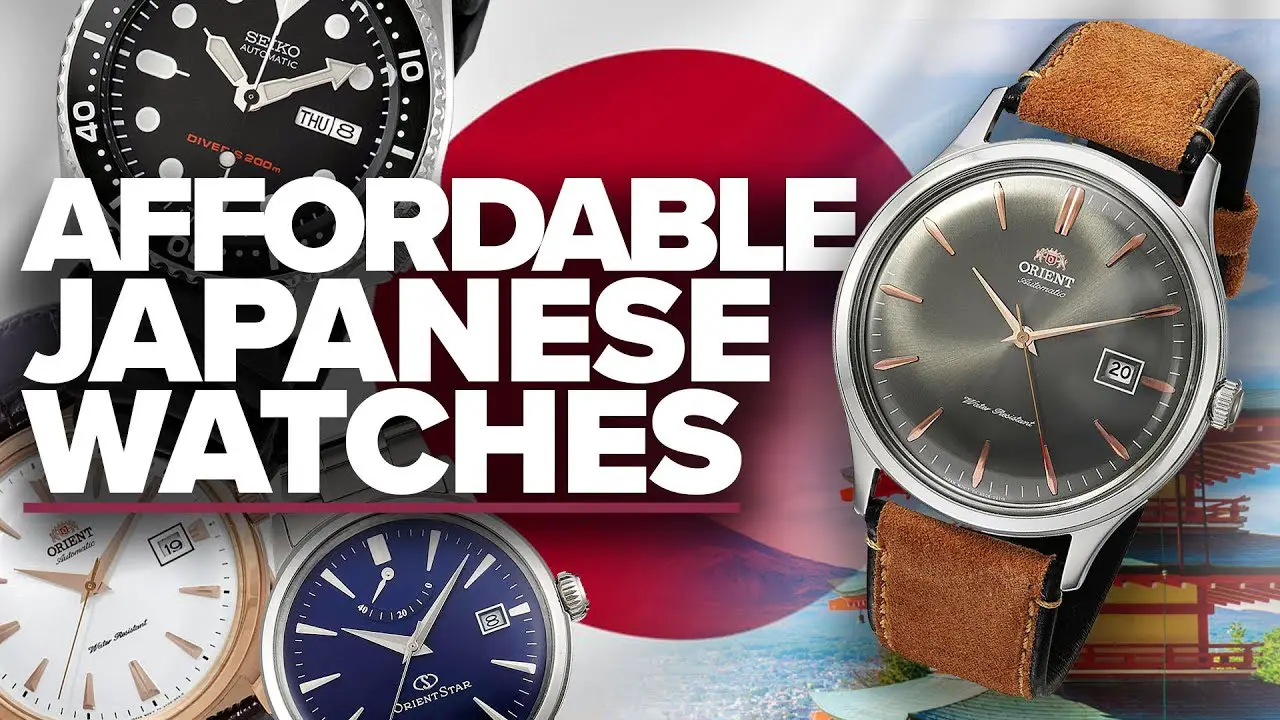
The three companies that dominate Japanese watchmaking — Seiko, Citizen, and Casio — collectively produce more watches than any other country and have introduced more category-defining innovations than any other nation in the past seventy years.
This guide covers the genuine Japanese watch brands.
Not Chinese brands with Japanese-sounding names.
Not American fashion brands.
Not Swedish minimalist companies.
The brands below are Japanese, made by Japanese companies with Japanese engineering, quality standards, and a Japanese watchmaking philosophy.
Which are the Best Japanese Watch Brands?
Here are my recommended top 8 Best Japanese Watch Brands:-
1. Seiko: (The Most Important Japanese Watch Brand)

A watchmaker who has been repairing watches in Tokyo’s Ginza district for thirty-four years described Seiko as the brand that made him understand watchmaking as engineering rather than craft.
He had trained in Switzerland, spent time with Patek Philippe’s service department in Geneva, and then returned to Japan specifically because Seiko was doing things technically that no Swiss manufacturer was attempting.
He described the Spring Drive movement as the invention that proved Japanese watchmakers were not following Swiss watchmaking but developing something entirely separate from it.
Founded 1881 — Japan’s Watchmaking Pioneer:
Seiko was founded by Kintaro Hattori in Tokyo in 1881 as a watch and jewellery shop.
The company began manufacturing in 1892.
It supplied Japan’s first domestically produced wall clock, its first pocket watch, its first wristwatch, its first automatic watch, and in 1969, the world’s first quartz wristwatch — the Seiko Quartz Astron 35SQ.
The Quartz Crisis that devastated Swiss watchmaking was largely Seiko’s creation.
By making quartz technology affordable and mass-producible, Seiko shifted the global definition of what a watch was expected to deliver.
Accuracy, previously the province of expensive mechanical watches with regular servicing, became the default expectation of any quartz watch purchased in a department store.
RotateWatches’ 2026 Japanese watch brand guide described Seiko as a watch brand where “Seiko NH36 and Miyota 8215 movements power many of the world’s most popular DIY watch-building kits” — a reflection of the company’s movement manufacturing scale that extends far beyond its own retail brands.
What Seiko does that no one else does:
The Spring Drive movement is a Seiko invention with no direct equivalent anywhere else in watchmaking.
It uses a mechanical mainspring for power and a glide wheel controlled by electromagnetic braking for regulation — achieving mechanical watch aesthetics with quartz-level precision.
The sweeping hand moves in a true continuous glide rather than a tick because the regulation is electromagnetic rather than a mechanical escapement.
No Swiss manufacturer offers this technology.
Seiko’s range covers more ground than any other single brand:
Seiko 5 Sports is the entry point — an in-house automatic movement, day-date complication, and genuine Seiko build quality from approximately $100. RotateWatches described it as delivering specifications that should cost three times the asking price.
Seiko Prospex is the outdoor and dive line, covering everything from the SRPD series diver at $200 to the Marine Master Professional at $2,000.
The Alpinist is distinctive — with an inner rotating bezel, 1950s Japanese mountain-climbing inspiration, and a watch design with no Swiss equivalent.
Seiko Presage is the cocktail-dial line — featuring enamel, urushi lacquer, and hand-applied textures that reference traditional Japanese craft techniques in watch dial creation.
The SRPK43 and similar Presage cocktail time dials represent some of the most visually distinctive watch faces available at any price.
Who Seiko suits:
Anyone who wants Japanese automatic watchmaking, genuine in-house movement production, proven reliability over decades, and an authentic design identity.
First, automatic watch buyers, collectors who want movement quality at accessible prices, and anyone who finds Swiss watches with equivalent specifications overpriced.
2. Citizen: (The Solar Pioneer and Titanium Master)

- Men's luxury timepieces with technical advancements and a sporty style
- 3 Hand, Day / Date
- Silver-Tone Super Titanium
- Sapphire Crystal
- 100 Meters Water Resistant and 5 Year Limited Warranty
An environmental scientist who powered all her field equipment with renewable energy described the Citizen Eco-Drive as the only watch she owned that aligned with the principles she applied to everything else she used.
She had considered this before choosing a watch and found no other mainstream watch brand offered the combination of solar charging, no battery replacement, and no mining-dependent power source in a watch that also performed correctly across field research conditions.
She described wearing the Garrison through three consecutive field seasons in tropical, arctic, and temperate environments without a single power-related interruption.
Founded 1918 — The Solar Technology Innovator:
Citizen was founded in Tokyo in 1918.
The company’s most significant contribution to watchmaking is Eco-Drive, introduced in 1976 — a solar technology that converts any light source, natural or artificial, into stored electrical energy.
A Citizen Eco-Drive watch, with a full charge, provides approximately 6 months of operation in complete darkness.
In practice, normal wearing provides sufficient light to run the watch indefinitely without any manual charging or battery replacement.
AuthenticWrist’s March 2026 guide to Japanese watch brands described Citizen’s Caliber 0100 as “±1 second per year accuracy — more accurate than any mechanical movement, more accurate than almost any other quartz movement available.”
This places the Caliber 0100 in a category of accuracy that Swiss chronometer standards (±4 seconds per day for COSC certification) do not approach.
What Citizen does that no one else does:
Super Titanium with Duratect surface hardening.
Citizen has been working with titanium since 1970 — the company made the first titanium watch.
The Duratect process hardens the surface of Super Titanium, increasing its scratch resistance to approximately five times that of steel.
Gear Patrol’s January 2026 analysis confirmed Super Titanium as 40 percent lighter than stainless steel and five times harder.
No other brand applies a surface treatment to titanium with equivalent results at comparable prices.
Citizen’s range:
Eco-Drive covers everyday solar watches across dress, field, and sport categories.
The BM8560-53E Garrison Field in Super Titanium delivers the complete Eco-Drive experience in an outdoor-capable field-watch format.
Promaster is the professional tool watch line — ISO-certified diving watches, aviation chronographs, and the Promaster Tough with GPS and atomic timekeeping in a rugged field case.
Attesa is Citizen’s premium line — featuring Grade 5 titanium, Eco-Drive, atomic timekeeping, and the ATTESA AT designation, which signals the brand’s highest-specification combination.
Who Citizen suits:
Anyone who wants zero battery maintenance from their watch forever.
Buyers with nickel sensitivity who specifically need hypoallergenic titanium.
Outdoor and field professionals who need corrosion resistance and lightweight.
Anyone who values Japanese technological innovation over Swiss mechanical heritage.
3. Casio: (The Brand That Changed What a Watch Could Survive)

- Shock-resistant construction protects against impact and vibration. Patented Hollow Core Guard Structure protects against impact and vibration. The tough mineral glass resists scratching. This watch features a resin case and resin band for comfort. Resin is the ideal material for wrist straps thanks to its extremely durable and flexible properties.
- Stopwatch function - 1/100 sec. - 24 hours. Elapsed time, split time and final time are measured with 1/100-sec accuracy. The watch can measure times of up to 24 hours. Times can be displayed in either a 12-hour or 24-hour format. For fans of precision: the countdown timers help you to remember specific or recurring events by giving off an audible signal at a preset time. They The time can be set to the nearest second and up to 24 hours in advance.
- Multi alarm. This model is equipped with a multifunctional alarm. This clock has the perfect alarm for any type of appointment. The model is equipped with a total of four repeat alarms: 1. Daily alarm, sounds at the same time each day, 2. Date alarm, e.g. to help you remember birthdays, 3. Monthly alarm, sounds on the same day at the same time each month, 4. Alarm for every day of a particular month.
- Automatic calendar with Date, Day and Month. Once set, the automatic calendar always displays the correct date. Illuminator. An electro-luminescent panel causes the entire face to glow for easy reading.
- Watch dimensions; Width; 42.8mm. Height; 48.9mm. Thickness; 13.4mm. Weight; 60g. 2 Years - 1 Battery. The battery supplies the watch with sufficient energy for approx. two years. Water resistance classification (200 metres) Perfect for free diving without scuba gear.
An alpine rescue team leader who described his team’s equipment selection process as eliminating everything that had failed in the field, described Casio G-Shock as the one watch brand that had never failed any of his team members over nineteen years of operations.
He had replaced phones, GPS units, radios, and boots across that period.
The G-Shocks had been there from the first season and were still functioning.
He described replacing them not because they had failed but because team members had retired.
Founded 1946 — The Watch That Survived a Drop From Three Stories:
Casio’s founding story begins in 1946 as an electronics company.
The G-Shock’s creation story is specific and well-documented: engineer Kikuo Ibe broke his father’s pocket watch as a child and spent years determined to create a watch that could never be broken.
In 1983, after two years and over two hundred prototypes, the DW-5000C was tested by dropping it from a third-floor window.
It survived. The G-Shock launched in April 1983.
Teddy Baldassarre’s 2026 Japanese watch brand guide described G-Shock as “setting the standard for shock resistance” with forty-three years of development that has extended through professional military adoption, luxury gold plating, collaboration with fashion designers, and the CasiOak GA-2100 — which became one of the most discussed affordable watches of 2020 through 2026 for its Royal Oak-reminiscent integrated octagonal bezel design.
What Casio does that no one else does:
The price-to-durability ratio. A Casio G-Shock DW-5600 that costs approximately $55 provides 200-metre water resistance, shock resistance from a three-story drop, two-year battery, and a backlight that has been verified by rescue professionals, military personnel, and surfers since 1983.
Watchscanning 2026 brand guide described the DW-5600 as “virtually indestructible” and noted its current resurgence as a cultural fashion item, trending among style accounts and younger buyers, who describe the retro digital aesthetic as genuinely cool in 2026.
Casio’s range:
G-Shock is the core line covering everything from the $55 DW-5600 to solar, Bluetooth, carbon fibre, and metal variants extending well above $1,000.
The GA-2100 CasiOak sits in the middle — carbon core guard structure, twelve-sided case, and the octagonal design language that references luxury sports watches at $99.
Pro Trek covers the outdoor ABC sensor market — altimeter, barometer, compass, and thermometer in solar-powered cases for hikers, climbers, and rescue professionals who need field instrumentation independent of phone connectivity.
Edifice is the motorsport-themed analog line. In 2025, Casio launched the EFK-100D series — the first Edifice models to carry a mechanical movement, marking the brand’s entry into automatic watchmaking after seventy-nine years of quartz production.
Oceanus is Casio’s pinnacle — titanium construction, atomic timekeeping from six radio signal transmitters globally, GPS synchronisation, and Tough Solar charging combined in a design that Teddy Baldassarre described as “where you’ll find the most elevated materials, finishing standards, and high-tech features in the brand’s catalog.”
Casio A168WA is the retro digital — the gold-tone stainless steel digital watch from 1988 that has been continuously produced and is now specifically trending in 2026 among younger buyers who describe the vintage digital aesthetic as the watch equivalent of a vintage band tee.
Who Casio suits:
Anyone who needs a watch that absolutely will not fail in field, aquatic, outdoor, or extreme environments.
Buyers who want the retro digital aesthetic that is currently trending. Collectors who appreciate the depth of G-Shock’s forty-three-year development history.
Outdoor professionals who want ABC sensor instruments without GPS battery dependency.
4. Orient: (The Best Value Automatic Watch Brand in the World)
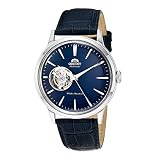
- Powered by the Orient F6T22 Automatic / Hand-Winding / Hacking Movement
- Case Diameter 40.5 mm | Lug to Lug Length 46 mm | 21 mm Lug Width | 12 mm Thick
- Open- Heart | Exhibition Caseback
- Stainless Steel Case | Domed Mineral Crystal | Genuine Leather Strap
- Water resistant to 30m (100ft): in general, withstands splashes or brief immersion in water, but not suitable for swimming or bathing
A watchmaker who teaches introductory mechanical watchmaking courses described recommending Orient to every student who asks what they should buy as their first mechanical watch.
He described Orient as the answer to the question every new watch buyer eventually asks — how do you get a genuine in-house automatic movement, something that most brands at this price point cannot offer, without paying the Swiss premium for that distinction? He described thirty years of teaching students who bought Orient watches and almost none who came back to report a movement failure.
Founded 1950 — Every Orient Uses an In-House Movement:
Orient was founded in Tokyo in 1950 and is now a subsidiary of Seiko Epson.
The fact that matters most about Orient is the one that Watchscanning.com’s 2026 brand guide specifically highlighted: “Every Orient watch uses an in-house movement — a distinction that matters because most brands at this price point use externally purchased movements.”
At the $120 to $250 price bracket where Orient operates, most alternatives use either off-the-shelf ETA movements from Switzerland or externally sourced Japanese movements. Orient designs and manufactures their own.
AuthenticWrist described the Orient Bambino as “the definitive affordable dress watch” and the Orient Mako as “the best diver under $200.”
Both assessments reflect consistent, independent evaluations by watch reviewers who specifically compare in-house movement quality and finishing at accessible prices.
Orient Star:
is Orient’s premium sub-line, extending the same in-house movement philosophy into $300 to $500 territory with open-heart apertures showing the movement, power reserve indicators, and finishing quality that watchscanning.com described as “punches well above its weight class.”
Who Orient suits:
Anyone buying their first mechanical watch and wanting the genuine in-house automatic experience without the Swiss premium.
Buyers who understand that “in-house movement” means something specific about a company’s manufacturing depth and commitment. Anyone who wants a dress watch that looks more expensive than it costs.
5. Grand Seiko: (Japan’s Answer to Swiss Luxury)
No products found.
A luxury watch retailer who carried both Swiss and Japanese inventory described Grand Seiko as the single brand that most consistently surprised buyers who came in expecting to pay Swiss luxury prices for Swiss luxury quality and discovered that the Japanese alternative offered comparable finishing at lower prices with a design language they could not find anywhere else.
He described the snowflake dial — created to represent snow fields on the Japanese Alps — as the single most discussed dial he had ever stocked, generating more conversations per customer than any Swiss equivalent.
Seiko’s Luxury Division Since 1960:
Grand Seiko was established in 1960 as Seiko’s luxury watchmaking division, initially producing watches that had to meet and exceed the Swiss COSC chronometer standard.
In 1960, Grand Seiko watches were not marketed outside Japan — the brand existed as an expression of what Japanese watchmakers could achieve when budget was not the primary constraint.
Grand Seiko’s Spring Drive movement is the most technically distinctive watch caliber in production anywhere in the world.
It uses a wound mainspring for power — like any mechanical watch — but regulates through a glide wheel controlled by electromagnetic braking rather than a traditional escapement.
The result is a seconds hand that moves with a true continuous glide, not a tick, and accuracy typically within ±0.5 seconds per day, far exceeding the ±4 seconds required by COSC certification.
Teddy Baldassarre’s 2026 guide described Spring Drive as one of the “18 Best Japanese Watch Brands,” highlighting “Zaratsu polishing technique rivaling anything produced in Switzerland.”
The Zaratsu polishing technique is a Japanese hand-polishing method that produces flat, mirror-bright surfaces on the case without the convex buffing that mechanical polishing creates.
The technique takes years of training to execute correctly and produces a case finish that Swiss manufacturers of equivalent price acknowledge as exceptional.
Who Grand Seiko suits:
Buyers who want luxury watch quality and are open to a Japanese brand.
Anyone who finds Swiss luxury watches overpriced for their specifications.
Collectors who specifically value finishing quality, movement technology, and dial artistry over Swiss heritage and brand recognition.
For a closer look at how Grand Seiko’s finishing compares to Swiss alternatives across price points, the full guide at best-swiss-watches covers the Swiss watch category alongside accessible alternatives.
6. Casio Oceanus: (The Pinnacle of Japanese Quartz Technology)

- Based on the brand concept of "Elegance, Technology", we are introducing a radio-controlled solar model that features a square case with a solid image from the OCEANUS classic line, which combines advanced technology and sporty design.
- Display type: Analog
- Power source type: Solar Powered
A telecommunications engineer who described his professional context as precision timing systems — maintaining the atomic clock synchronisation infrastructure for a national telecommunications network — described the Casio Oceanus as the watch that his professional peer group wore specifically because it used the same underlying atomic timekeeping infrastructure they maintained for a living.
Radio-controlled atomic timekeeping synchronises to the same caesium atomic clocks that provided the global timing standard.
He described wearing a watch that connected to that infrastructure from the wrist as something that carried professional significance beyond the watch itself.
Titanium, Solar, and Atomic Timekeeping Combined:
Oceanus is Casio’s premium sub-brand, sitting above Edifice and G-Shock in the product hierarchy.
Teddy Baldassarre’s 2026 guide described it as offering “the most elevated materials, finishing standards, and high-tech features in the brand’s catalog” with pricing starting around $1,000.
The Oceanus combination — titanium construction with Duratect hardening, Tough Solar charging, atomic timekeeping from six global radio transmitters, and GPS synchronisation — represents the most technically comprehensive quartz watch platform available from any manufacturer at any price.
GPS synchronisation is specifically relevant for buyers who travel internationally and want the watch to automatically adjust to local time via satellite rather than by manual reset.
The design language is specifically Japanese — clean without being minimal, technical without the display-heavy aesthetic of G-Shock, and appropriate for professional wearing contexts that require a watch that reads as considered rather than sporty.
Who Oceanus suits:
Professionals who want the ultimate quartz performance in a premium dress-capable case.
Buyers who understand atomic timekeeping and want it integrated with solar charging in a single premium watch.
The buyer who would otherwise choose a Swiss mechanical chronometer but specifically values quartz accuracy over mechanical romance.
7. Casio Edifice: (Motorsport Engineering in Watch Form)

- Edifice Motorsports Chronograph, inspired by classic sportscars
- Water Resistance rating of 100M | 10 ATM ensures your watch is protected during light water activities
- Built to last, with durable sapphire crystal over the dial, and stainless steel case|band construction
- Additional features include a 1-second Chronograph, with measuring capacity of 59'59, and a date indicator at the 4.5 o'clock position

A motorsport engineer who described the paddock environment as the one professional context where wearing a watch was genuinely relevant to identity described the Casio Edifice as the watch he recommended to junior engineers who asked what to wear to their first race week.
He described the tachymeter bezel — a tool specifically for calculating speed over a measured distance using the chronograph — as a genuine reference to the mathematical work of timing performance in motorsport contexts.
He described the Casio partnership with Scuderia AlphaTauri in Formula 1 as relevant rather than decorative.
2025: Casio Edifice Enters Mechanical Watchmaking:
Casio Edifice was introduced in 2000 as the brand’s motorsport-inspired analog line.
RotateWatches’ 2026 Japanese watch brand guide specifically noted that “the 2025 EFB-730D series marked Edifice’s entry into mechanical movements” — a significant development that moved Casio’s motorsport line from quartz exclusivity into automatic watchmaking for the first time in seventy-nine years of the brand’s history.
The Edifice design language — chronograph subdials, tachymeter bezels, stainless steel with polished and brushed alternation — draws directly from the visual vocabulary of racing instrumentation.
The brand’s official partnership with Scuderia AlphaTauri in Formula 1 grounds the design reference in professional motorsport rather than aesthetic borrowing.
Who Casio Edifice suits:
Engineers, motorsport professionals, and buyers who find the G-Shock design too casual and the Oceanus too expensive but want a Casio chronograph with genuine technical presence.
Anyone whose professional or recreational context connects directly to the motorsport reference the Edifice makes.
8. Orient Star: (Where Japanese Watchmaking Quality Exceeds Price)
![Orient Star RK-AU0006S [Watch Contemporary Standard]](https://m.media-amazon.com/images/I/41KyyKM-FdL._SL160_.jpg)
- Target Audience: Men's
- Set Includes: Watch, box, instruction manual (English language not guaranteed)
- . Reinforced waterproofing for everyday use: 10BAR
- , Made in Japan
A financial analyst who described his professional context as one where a watch was a visible daily statement about how he thought about quality, described choosing the Orient Star open-heart specifically after his watch-collecting colleague examined it up close and asked which Swiss brand made it.
He described the question as the specific validation he had been looking for — that the finishing, the dial texture, and the movement visible through the aperture read as Swiss luxury to someone who owned Swiss luxury watches.
He described paying a fraction of the equivalent Swiss price as the additional satisfaction.
Orient’s Premium Sub-Brand With Finishing Above Its Price:
Orient Star is Orient’s premium sub-line, covering approximately $300 to $500 territory with specifications and finishing that Watchscanning.com’s 2026 guide described as “genuine luxury feel at an accessible price.”
The open-heart models display the automatic movement through an aperture cut into the dial — the same feature that Swiss luxury brands use as a mark of transparency in watchmaking — combined with power reserve indicators that show remaining mainspring tension on a graduated arc.
The in-house movements in Orient Star watches are regulated more precisely than those in standard Orient production, with the finishing level stepped up to include bevelled and polished movement components visible through the open heart.
The sapphire crystal on Orient Star models provides the scratch resistance that mineral glass alternatives cannot match.
For a broader comparison of how Orient and Orient Star sit within the Japanese automatic watch landscape alongside more accessible options, the full comparison at best-seiko-watches covers Japanese automatic movements in depth.
Who Orient Star suits:
Buyers who specifically want the open-heart movement display and power reserve indicator aesthetic at an accessible price.
Anyone who has looked at Swiss open-heart watches, found the pricing unjustifiable, and wants the equivalent experience from Japanese manufacturing.
A Note on Japanese Microbrands:
Several independent Japanese watchmakers deserve mention, even though their presence on Amazon is limited compared to major commercial brands.
Kurono Tokyo was founded by Hajime Asaoka, who is described by watch publications as Japan’s most celebrated independent watchmaker. Each Kurono model — including recent releases with meteorite dials — sells out within minutes of release from a global collector community.
Minase produces watches in Akita Prefecture, northeast Japan, using CNC machining that Minase describes as achieving tolerances of three thousandths of a millimetre. Their five-case design concept explores different geometric expressions of the same precision engineering.
Knot produces watches assembled in Tokyo, with a philosophy centered on Japanese components and transparent manufacturing practices.
These brands represent the highest tier of Japanese independent watchmaking — not available on Amazon but worth researching for buyers who have explored the major commercial brands and want to go further.
FAQs:
Are Japanese watches as good as Swiss watches?
At comparable price points, Japanese watches typically deliver better technical specifications for the money than Swiss alternatives. The Seiko Prospex titanium diver provides 200-metre water resistance, in-house movement, and Dia-Shield surface treatment for approximately $400. A Swiss dive watch with equivalent specifications typically costs two to three times that. At the luxury tier, Grand Seiko’s Spring Drive movement, Zaratsu polishing, and hand-finished dials are assessed by independent reviewers as comparable in quality to Swiss luxury watches costing significantly more. Where Swiss watches maintain a clear advantage is in heritage, brand recognition, and the specific prestige value that Swiss origin carries in certain professional and social contexts. Watchscanning.com’s 2026 analysis described Japanese watchmaking as delivering “more per dollar than any other country” while acknowledging that Swiss brands carry “heritage, prestige, and the most complex mechanical complications.”
Which Japanese watch brand is best for a first watch?
For a first automatic watch, Orient — specifically the Bambino for dress contexts or the Mako for everyday and dive-capable wearing — provides the best starting point. The in-house movements that Orient makes at $120 to $200 are a distinction that matters specifically for a first mechanical watch purchase. For a first watch overall, Seiko’s range provides the widest range of styles at accessible prices, with the Seiko 5 Sports delivering verified in-house automatic quality from approximately $100. For a first quartz watch that will never need a battery, Citizen’s Eco-Drive is the specific choice — solar powered indefinitely with no maintenance. The National Association of Watch and Clock Collectors provides educational resources for first-time watch buyers at nawcc.org.
What was Japan’s most important contribution to watchmaking?
The quartz watch. Seiko’s December 25, 1969 release of the Seiko Quartz Astron 35SQ was the invention that triggered the Quartz Crisis — the period through the 1970s and 1980s where Swiss watchmaking nearly collapsed under competition from Japanese quartz accuracy and affordability. Switzerland went from 1,600 watch companies to fewer than 600 in under a decade. The Swatch Group, now the world’s largest watch company, was created specifically as a response to Japanese quartz competition. Beyond the quartz watch, Japan contributed: the G-Shock shock resistance standard (Casio, 1983), Eco-Drive solar technology (Citizen, 1976), and the Spring Drive hybrid mechanical-electronic movement (Seiko, 1999) — three category-defining innovations across three separate Japanese companies within thirty years.
Related Articles:
Luis Cooper

Hi, I'm Luis, the guy behind this site. I love wearing watches, especially ones that look great on small wrists (mine are about 6.3" around). The Watches Geek is dedicated to helping you learn about and buy watches that you will love wearing. I want this website to be the last destination for people to pick the best watches to fit their needs. You can find our unbiased reviews here on Thewatchesgeek.