
Last Updated on August 7, 2026 by Luis Cooper
The short answer is: it depends on what you mean by measure.
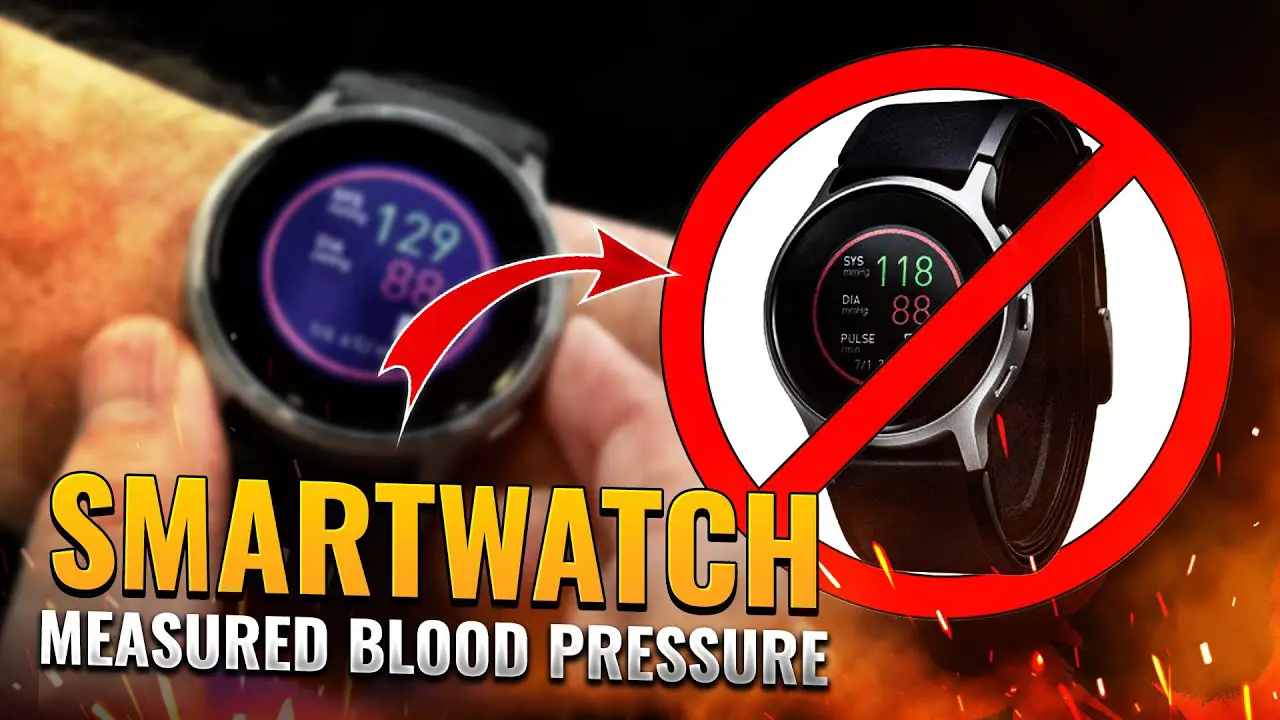
If you mean getting an accurate blood pressure reading like 128/82 — the kind your doctor uses to diagnose hypertension or adjust your medication — then most smartwatches cannot do this reliably.
The technology is improving, but it has not reached clinical measurement accuracy on the wrist outside of one specific device.
If you mean getting an alert that your blood pressure patterns suggest possible hypertension you may not know about — a nudge to get properly tested — then yes, certain smartwatches now offer that capability, and the research supporting its usefulness is genuinely encouraging.
The confusion between these two things is the source of most misinformation about smartwatch blood pressure features.
This guide explains what smartwatches actually do, what the 2026 research says about how well they do it, which specific devices offer which capabilities, and what no smartwatch can replace.
Can Smartwatches Measure Blood Pressure
Why Blood Pressure Is Difficult to Measure From the Wrist
Traditional blood pressure measurement works through a process called oscillometry. An inflatable cuff wraps around the upper arm, inflates to stop blood flow, then slowly deflates while sensors detect when blood starts flowing again and measure the pressure at that point. The two numbers — systolic (heart contracting) and diastolic (heart relaxing) — come directly from those pressure measurements. Upper arm cuffs work because the brachial artery in the upper arm sits close to the surface and the cuff can completely occlude blood flow.
The wrist presents two specific challenges. First, the radial artery at the wrist is smaller and more affected by body position, wrist movement, and the ambient temperature of the skin. Second, a smartwatch sitting on the wrist cannot inflate to occlude blood flow the way a cuff does, which eliminates the oscillometric measurement approach entirely.
This is why every wrist-worn smartwatch that estimates blood pressure uses a fundamentally different approach — and why that different approach produces results that research consistently describes as useful for trend awareness but not reliable enough to replace traditional cuffs for clinical decision-making.
The Three Technologies Behind Smartwatch Blood Pressure Features
Understanding these three approaches makes every specific device claim more interpretable.
PTT — Pulse Transit Time. This method measures the time it takes for a pulse wave to travel from the heart to the wrist. When blood pressure is higher, the arterial walls are under more tension, and the pulse wave travels faster. When blood pressure is lower, it travels more slowly. By combining a heart rate sensor (ECG electrode) with an optical sensor on the wrist, the watch calculates how long the pulse wave takes to arrive and estimates the blood pressure from that interval.
The limitations are significant. PTT accuracy depends on the relationship between pulse wave velocity and blood pressure being consistent across different people, which it is not. Age, arterial stiffness, body temperature, wrist position, and physical activity all affect pulse wave velocity independently of blood pressure. PTT-based estimates require regular calibration against a traditional cuff — typically every four weeks — because the algorithm needs a current reference point to remain useful.
Samsung’s Galaxy Watch series uses PTT-based blood pressure estimation. It is the most common technology in smartwatches that display an estimated blood pressure number.
PPG — Photoplethysmography. This is the optical heart rate sensor technology present in almost every modern smartwatch. PPG uses light reflected from the blood vessels to detect blood volume changes with each heartbeat. Blood pressure changes affect the shape and timing of the PPG waveform in ways that machine learning algorithms can attempt to detect.
Apple Watch does not use PTT or display blood pressure numbers. Instead, watchOS 26 introduced hypertension notifications — an alert system that analyses PPG patterns across thirty days and notifies the user if those patterns suggest possible hypertension. This is a screening approach, not a measurement approach.
Oscillometric with inflatable cuff. This is how traditional blood pressure monitors work, and the Omron HeartGuide applies the same principle at the wrist. The watch band contains a small inflatable bladder that applies pressure to the wrist during measurement. Because it uses the same fundamental measurement principle as upper arm cuffs, it is the most accurate of the three approaches — and the only one with FDA clearance specifically for blood pressure measurement. The trade-off is a bulkier device and a measurement process that requires you to sit still for thirty seconds.
What Apple Watch Actually Does in 2026
Many people ask about Apple Watch blood pressure monitoring and assume it works like a Samsung Galaxy Watch — displaying a number after you press a button. That is not accurate.
Apple Watch Series 9, 10, 11, Ultra 2, and Ultra 3 running watchOS 26 (released September 2025) provide hypertension notifications, not blood pressure numbers. The watch analyses your heart rate patterns across thirty consecutive days and generates an alert if those patterns are consistent with hypertension. It does not show 128/82. It shows a notification telling you that your patterns suggest you may have high blood pressure and recommending that you see a doctor.
The accuracy of this approach was assessed in a February 2026 study published in the Journal of the American Medical Association. The JAMA study applied Apple’s validation data to the National Health and Nutrition Examination Survey, a large multi-year US health population study. It found that the hypertension notification has a positive predictive value of 69.1 percent — meaning roughly seven in ten people who receive the alert actually have hypertension when subsequently tested with a proper monitor. The sensitivity was 41.2 percent, meaning the system detects approximately 41 percent of all actual hypertension cases in the population, missing about six in ten people who have hypertension without receiving an alert.
Houston Methodist’s clinical analysis published in May 2026 described this as meaningfully useful for identifying undiagnosed hypertension while being clear that a negative result — not receiving a notification — does not confirm that blood pressure is normal.
The Apple Watch hypertension feature is not available on the Apple Watch SE 3. It requires watchOS 26 and a Series 9 or later.
Empirical Health’s June 2026 update noted that Apple Watch does not yet display a blood pressure number and that the FDA issued updated guidance in January 2026 around blood pressure on wearable devices, making it possible that future software updates could add number-based tracking with periodic cuff calibration.
What Samsung Galaxy Watch Does in 2026
Samsung introduced blood pressure monitoring on Galaxy Watch devices starting with the Galaxy Watch 3 in 2020. The current Galaxy Watch 8 carries the same PTT-based blood pressure measurement feature, displaying an estimated systolic and diastolic reading after a brief measurement session.
The important limitation to understand is calibration. Samsung’s blood pressure feature requires calibration against a traditional blood pressure cuff every twenty-eight days. Without regular recalibration, accuracy decreases over time — research cited by Cardiowell noted that measurement stability decreases noticeably two weeks after the last calibration. The initial calibration process involves taking simultaneous readings on the watch and a traditional cuff to establish a personal baseline that the algorithm uses for subsequent estimates.
A March 2026 study at Czech Technical University was actively evaluating Samsung Galaxy Watch blood pressure accuracy as a long-term validation study. Results from that ongoing research will provide clearer clinical accuracy data than earlier shorter-term evaluations.
Critically, the Samsung Galaxy Watch blood pressure feature is not FDA-cleared for blood pressure measurement in the United States. Samsung markets it as a wellness tool rather than a medical device, which is the regulatory category that allows the feature without clinical clearance. The feature is available and widely used in countries with different regulatory frameworks.
The Only FDA-Cleared Wrist Blood Pressure Monitor
The Omron HeartGuide holds FDA 510(k) clearance specifically for blood pressure measurement. This is a different and more meaningful standard than the regulatory status of the Samsung or Apple features.
The HeartGuide uses an oscillometric inflatable cuff built into the watch band. To take a reading, you sit still, hold your wrist at heart level, and the cuff inflates briefly before providing systolic and diastolic numbers comparable in accuracy to a standard upper arm monitor. The American Heart Association’s December 2025 statement on cuffless blood pressure technologies specifically noted that oscillometric devices with properly designed wrist cuffs can achieve clinical-grade accuracy, and the HeartGuide’s FDA clearance reflects that validation.
The practical limitation is the form factor. The inflatable cuff creates a bulkier band than standard smartwatches, and the sit-still, wrist-at-heart-level measurement requirement means you cannot take readings during activity. For buyers whose primary need is reliable blood pressure data for clinical purposes, the HeartGuide remains what Momentarylab’s March 2026 analysis described as “the most defensible choice” among wrist-worn blood pressure devices.
What Doctors and Research Say About Smartwatch BP Accuracy
The American Heart Association’s December 2025 statement on cuffless blood pressure monitoring technologies — published after reviewing the accumulated research on PTT, PPG, and other wrist-based methods — described most consumer smartwatches with blood pressure features as not having been validated to replace traditional cuff monitors for clinical decision-making.
A 2025 feasibility study published in the journal Clinical Hypertension found that cuffless wrist-based blood pressure monitoring is technically viable for daily use but noted that accuracy varies considerably across individuals. The specific factors that reduce accuracy include physical activity, ambient temperature, skin tone, wrist circumference, and arterial stiffness — variables that affect optical sensors and pulse wave calculations in ways that traditional arm cuffs are not affected by.
Wellue’s February 2026 clinical analysis described the most useful framing for smartwatch blood pressure data: rather than focusing on whether a single reading matches a cuff measurement, buyers should focus on whether the device consistently identifies patterns over time. A smartwatch that shows your blood pressure trending upward over three weeks is providing useful information even if individual readings vary from a cuff by five to ten points.
The distinction between managing hypertension and monitoring trends matters here. Someone who has been diagnosed with hypertension and needs to know whether their medication is keeping blood pressure within a specific target range needs the accuracy of a validated cuff device. Someone who wants to know whether they should be concerned enough to get tested needs something different — and the Apple Watch hypertension notification and Samsung Galaxy Watch trend monitoring can serve that second purpose meaningfully.
What a Smartwatch Cannot Replace
No smartwatch currently available can replace a validated blood pressure cuff for clinical purposes. If you have been diagnosed with hypertension, if your doctor is adjusting your medication based on blood pressure readings, or if you are monitoring blood pressure during pregnancy, the American Heart Association specifically recommends using a validated upper arm monitor rather than relying on smartwatch readings.
This is not a limitation of technology — it is an honest description of what the current technology has been validated to do. Blood pressure affects medication dosing decisions, surgical clearance, and diagnosis of conditions where a ten-point error in the reading changes the clinical conclusion. The evidence base required to trust a wrist-worn sensor for those decisions has not yet been established for any smartwatch outside the Omron HeartGuide’s oscillometric approach.
For a look at which specific smartwatches offer blood pressure features and how those features compare across Samsung, Apple, and Withings models, the full guide at best-smartwatches-to-monitor-blood-pressure covers the blood pressure smartwatch category with specific model comparisons and Amazon availability.
FAQs
Is the Apple Watch blood pressure feature accurate?
The Apple Watch hypertension notification — introduced with watchOS 26 in September 2025 — does not measure blood pressure in the traditional sense. It analyses heart rate patterns across thirty days and sends an alert if those patterns suggest possible hypertension. A February 2026 JAMA study found that about seven in ten people who receive the alert actually have hypertension when subsequently measured with a proper blood pressure monitor, which clinicians at Houston Methodist described in May 2026 as meaningfully useful for identifying undiagnosed hypertension. However, the system only detects about 41 percent of actual hypertension cases — meaning many people with high blood pressure will not receive an alert. The Apple Watch hypertension feature is best understood as a screening tool that can prompt someone to get properly tested, not as a diagnostic device or a replacement for a blood pressure cuff.
Does Samsung Galaxy Watch measure blood pressure accurately enough for daily monitoring?
Samsung Galaxy Watch blood pressure estimation uses PTT technology and requires calibration against a traditional blood pressure cuff every twenty-eight days. Within the first two weeks after calibration, readings are generally close enough to validated cuffs for trend monitoring. Research cited by Cardiowell in April 2026 notes that accuracy decreases as the calibration date approaches and that the feature works best when used to monitor patterns over time rather than relying on individual readings as clinical data points. Samsung Galaxy Watch blood pressure is not FDA-cleared in the United States and is classified as a wellness feature rather than a medical device. For someone with diagnosed hypertension monitoring their condition under medical supervision, a validated traditional cuff remains more reliable than the Samsung Galaxy Watch’s estimations for clinical purposes.
What is the most accurate wrist blood pressure monitor available?
The Omron HeartGuide is the most accurate wrist-worn blood pressure device currently available and the only one with FDA 510(k) clearance specifically for blood pressure measurement. It uses an oscillometric inflatable cuff in the watch band — the same fundamental measurement approach as traditional upper arm monitors — which is why its accuracy is more reliably comparable to clinical measurements than PTT or PPG-based smartwatch alternatives. The trade-off is a bulkier form factor and the requirement to sit still with your wrist at heart level during the thirty-second measurement. For anyone using wrist blood pressure readings for clinical purposes — medication management, pregnancy monitoring, or physician reporting — the Omron HeartGuide is the appropriate device. The American Heart Association provides guidance on blood pressure monitoring devices and their appropriate use at heart.org.
Luis Cooper

Hi, I'm Luis, the guy behind this site. I love wearing watches, especially ones that look great on small wrists (mine are about 6.3" around). The Watches Geek is dedicated to helping you learn about and buy watches that you will love wearing. I want this website to be the last destination for people to pick the best watches to fit their needs. You can find our unbiased reviews here on Thewatchesgeek.