

Last Updated on November 23, 2026 by Luis Cooper
Most people searching for a dive watch are really asking one question.
Can I trust this on my wrist forty meters underwater?
That is the right question.
And the honest answer is: it depends entirely on which watch you buy and what kind of diving you do.
A regular smartwatch, even one labelled water-resistant, is not built for scuba.
The pressure underwater is nothing like rain or a swimming pool.
At depth, water pressure increases by one atmosphere every ten meters.
A watch rated for 100 meters in a lab is not automatically safe at 100 meters on a dive, because that rating is tested in still water, not under dynamic pressure conditions.
This article covers watches built for scuba diving.
Each one was chosen for its depth rating, dive features, and whether it can genuinely replace or support a dive computer underwater.
One thing to know before you read further.
A smartwatch with a dive app is not the same as a certified dive computer.
Dedicated dive computers are built around validated decompression algorithms that have been tested and certified to international safety standards.
If you are diving beyond recreational depths, or doing technical dives, a dedicated dive computer is what you need.
The watches in this list are for recreational divers who want a wrist device that’s useful underwater, not just waterproof.
Which are the Best Smartwatches for Scuba Diving?
Here are my recommended top 6 Best Smartwatches for Scuba Diving:-


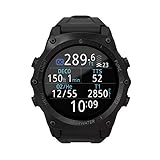
Best Overall: Apple Watch Ultra 4

The Apple Watch Ultra 4 is the only consumer smartwatch that Apple has rated for recreational scuba diving.
That rating matters.
It is not marketing language.
Apple built the Ultra 4 specifically to handle diving, and it is the only Apple Watch in the lineup with that certification.
The case is 49mm, made from aerospace-grade recycled titanium.
Water resistance is rated to 100 meters under ISO 22810:2010.
For recreational scuba diving, Apple says the Ultra 4 is suitable for 40 meters with a compatible third-party dive app.
The watch should not be used below 40 meters.
That 40-meter limit is actually the recreational dive limit recognised by most international diving agencies.
For most divers, this covers everything they will ever do.
The Oceanic Plus App
The Apple Watch Ultra 4 becomes a dive computer through an app called Oceanic Plus, made by Huish Outdoors in partnership with Apple.
This is what transforms the watch from a fitness tracker into something genuinely useful underwater.
The app shows current depth, dive time, water temperature, ascent speed, no-decompression time, and time to surface.
Colour-coded warnings tell you when you are approaching decompression limits or ascending too fast.
Haptic feedback on the wrist alerts you when something needs attention even when you cannot see the screen clearly.
After the dive, the iPhone app shows your entry and exit GPS locations, a full dive profile, and tide forecasts for the next three days.
The basic version of Oceanic Plus is free and covers depth, time, and a basic dive log.
Battery Life
Normal use gives up to 50 hours.
Low Power Mode extends that to 84 hours.
For a weekend dive trip, this is more than enough.
Even two full days of diving will not drain this battery.
Outside the Water
This is where the Ultra 4 separates itself from dedicated dive computers.
Outside the water, it is a full Apple Watch. All the fitness tracking, GPS, cellular calls, heart rate, ECG, crash detection, emergency SOS. Everything.
If you want one watch that handles both daily life and recreational diving, nothing else on this list comes close.
What to Know Before Buying
You need an iPhone.
The Oceanic Plus app requires an iPhone paired to the watch.
Android users cannot use this setup.
If you are on Android, the Suunto further down this list is a better option.
The 49mm case is large.
On slimmer wrists, it can feel oversized.
Specs:
| Feature | Detail |
|---|---|
| Case Size | 49mm |
| Case Material | Aerospace-grade Recycled Titanium |
| Water Resistance | 100 Meters (ISO 22810:2010) |
| Dive Depth Limit | 40 Meters with Oceanic Plus app |
| Battery Life | Up to 50 hours / 84 hours Low Power |
| Chip | S11 |
| Display | Always-On Retina, up to 3,000 nits |
| Dive App | Oceanic Plus (free + $9.99/mo premium) |
Who Should Buy This:
iPhone users who dive recreationally and want one watch for everything. If you dive within the 40-meter recreational limit and do not want to carry a separate dive computer, this does the job.
Best Dedicated Dive Computer: Garmin Descent Mk3i

There is a difference between a smartwatch that can dive and a smartwatch built to dive.
The Apple Watch Ultra 4 is the first type.
The Garmin Descent Mk3i is the second.
This watch was designed from the ground up as a dive computer that also works as a smartwatch, not the other way around.
If you are serious about diving, that distinction matters more than almost anything else on the spec sheet.
Built for the Water
Water resistance is rated to 200 meters.
That is double the Apple Watch Ultra 4 and well beyond recreational diving limits.
Where the Ultra 4 supports recreational diving to 40 meters, the Mk3i goes deeper and handles technical diving scenarios that most smartwatches cannot touch.
The dive modes are extensive.
Single gas, multiple gas, nitrox, trimix, gauge mode, apnea, apnea hunt, and closed-circuit rebreather (CCR).
For a recreational diver, single gas with nitrox support covers everything.
For a technical diver, trimix and CCR support means this watch goes wherever the dive goes.
Air Integration
One feature separates the Mk3i from almost every other watch on this list.
Air integration with the Garmin Descent T2 transmitter.
The T2 is a small transceiver that attaches to your tank valve.
It sends your tank pressure to the watch in real time.
You can see exactly how much air you have left without looking at a separate gauge.
The Mk3i can track up to eight divers simultaneously using T2 transceivers, showing each diver’s depth and tank pressure within a 10-meter range.
For dive instructors and groups, this is a genuinely useful safety feature.
Two Sizes
The Mk3i comes in two sizes.
The 51mm version weighs 105.6 grams with the silicone band and has a 1.4-inch AMOLED display at 454×454 pixels.
Battery life is 66 hours in dive mode and 40 hours with air integration active.
The 43mm version weighs 68.3 grams and has a 1.2-inch AMOLED display at 390×390 pixels.
Battery life is 30 hours in dive mode and 15 hours with air integration. For divers with smaller wrists, the 43mm is the one to get.
Both have DLC titanium bezels and sapphire crystal lenses.
This is not entry-level finishing.
These materials are on watches that cost significantly more.
Outside the Water
Smartwatch mode gives up to 25 days of battery life on the 51mm.
GPS tracking runs for up to 76 hours.
The watch handles all the standard Garmin features — GPS navigation, heart rate, sleep tracking, fitness modes, and notifications.
The Garmin Dive app on your phone stores your dive logs, tracks your gear maintenance schedules, and lets you review every dive in detail.
What to Know Before Buying
The Mk3i is expensive.
This is the most capable watch on this list, and the price reflects that.
If you dive twice a year on holiday, the Apple Watch Ultra 4 with Oceanic Plus will do everything you need for less.
The Mk3i is for divers who dive regularly, go deep, or dive technically.
The T2 transmitter is an additional cost if you want air integration.
Specs (51mm):
| Feature | Detail |
|---|---|
| Case Size | 51 x 51 x 16.4 mm |
| Weight | 105.6g with band / 77.8g case only |
| Case Material | Fiber-reinforced polymer, Titanium rear |
| Bezel | DLC Titanium |
| Crystal | Sapphire |
| Display | 1.4-inch AMOLED, 454x454px |
| Water Resistance | 200 Meters |
| Battery (Dive Mode) | 66 hours / 40 hours with air integration |
| Battery (Smartwatch) | Up to 25 days |
| Dive Modes | Single gas, Multi gas, Nitrox, Trimix, CCR, Gauge, Apnea |
| Air Integration | Yes, with Garmin T2 Transmitter |
Who Should Buy This:
Divers who dive regularly, go below 30 meters, or do technical dives with trimix or rebreathers. Dive instructors who want to monitor students underwater. Anyone who wants a true dive computer that doubles as a capable daily smartwatch.
Best Mid-Range Dive Computer: Garmin Descent G2

The Garmin Descent Mk3i is the best dive computer on this list.
The Apple Watch Ultra 4 is the best for iPhone users.
But there is a gap between them — a diver who wants a dedicated Garmin dive computer without going all the way to Mk3i territory.
The Descent G2 fills that gap.
Released in 2025, the G2 is the upgraded version of the original Descent G1.
The most important upgrade is the display.
Where the G1 had a standard screen, the G2 has a 1.2-inch AMOLED touchscreen at 390×390 pixels.
Underwater readability was the biggest complaint about the G1.
Garmin fixed it.
Built for Real Diving
Water resistance is rated to 100 meters.
The case is 45.5mm wide and 15.2mm thick, weighing just 61 grams.
That is significantly lighter than the Mk3i, and it shows on the wrist.
The G2 wears like a regular sports watch, not a piece of dive equipment.
Dive modes cover everything a recreational and even technical diver needs.
Single gas, multi-gas, closed-circuit rebreather, and gauge modes are all built in.
Freediving is covered too, with dynamic apnea mode, apnea alerts, a variometer, and a velocity chart for freedivers who want detailed performance data.
Underwater, a three-axis compass helps with navigation.
A “big numbers” mode strips the display down to the most critical information—depth, time, and no-decompression limit—which is exactly what you want when you are forty meters down and don’t want to read a cluttered screen.
Battery Life
Up to 10 days in smartwatch mode.
With the always-on display, that drops to four days.
In dive mode, the battery lasts up to 27 hours.
For a weekend dive trip, this is comfortable.
What It Does Not Have
The G2 does not support air integration.
If you want live tank pressure on your wrist, you need the Mk3i.
The G2 is for divers who are comfortable with their own gauge and want a capable dive computer on the wrist without the cost and complexity of air integration.
The case is made from fibre-reinforced ocean-bound plastic — Garmin’s sustainability material.
This keeps weight low, but it is not titanium.
The display is protected by chemically strengthened glass, with a sapphire crystal on the lens.
Works with both iPhone and Android, unlike the Apple Watch Ultra 4.
For divers who also want the best GPS tracking on land, read our full guide to the best watches for hiking.
Specs:
| Feature | Detail |
|---|---|
| Case Size | 45.5 x 45.5 x 15.2 mm |
| Weight | 61 grams |
| Case Material | Fiber-reinforced Ocean-bound Plastic |
| Crystal | Sapphire lens |
| Display | 1.2-inch AMOLED, 390x390px |
| Water Resistance | 100 Meters |
| Battery (Dive Mode) | Up to 27 hours |
| Battery (Smartwatch) | Up to 10 days |
| Dive Modes | Single gas, Multi gas, CCR, Gauge, Apnea |
| Air Integration | No |
| Compatibility | iPhone and Android |
Who Should Buy This:
Recreational divers who want a dedicated Garmin dive computer without paying for Mk3i-level features.
Freedivers who want detailed apnea tracking. Android users who cannot use the Apple Watch Ultra 4.
Who Should NOT Buy This:
Divers who need air integration or plan to dive beyond 100 meters. For those, the Garmin Descent Mk3i is the right choice.
Best Dedicated Wrist Dive Computer: Suunto D5

Some divers do not want a smartwatch that also dives.
They want a dive computer that also tells the time.
The Suunto D5 is built for that diver.
This is not a fitness tracker with dive features bolted on.
The D5 is a dedicated wrist-worn dive computer from Suunto, a Finnish company that has been making dive computers for over three decades.
That history shows in how this watch is built.
Built Around Diving
Water resistance is rated to 100 meters under both ISO 6425 and EN 13319 — the two international standards that actually matter for dive equipment.
The maximum operating depth is 100 meters.
The depth display goes up to 300 meters, giving the gauge mode a full range for technical reference.
Dive modes cover the core needs of most divers.
Air, nitrox (up to 100% oxygen concentration), freedive, and gauge modes are all included.
CNS and OTU oxygen toxicity tracking is built in, along with ascent-rate monitoring, safety-stop alerts, and no-fly time calculations.
The decompression algorithm is Suunto Fused RGBM 2, running across 15 tissue compartments.
RGBM — Reduced Gradient Bubble Model — accounts for bubble formation in tissue, not just dissolved gas, which gives a more conservative and realistic decompression model than simpler algorithms.
Air Integration
The D5 supports optional wireless tank pressure monitoring through the Suunto Tank POD.
Up to three tanks can be tracked simultaneously.
This covers divers who do sidemount diving or use multiple tanks on a single dive.
The Tank POD attaches to the regulator’s first stage and sends pressure data to the watch wirelessly.
The Display
The colour mineral crystal display runs at 320×300 pixels.
It is easy to read underwater — Suunto designed the screen specifically for dive readability, with large text and high contrast.
The case is 53mm wide and 16.3mm thick, weighing 90 grams.
This is a large watch. On the wrist, it has the presence of a proper dive computer, not a slim sports watch.
Battery Life
On a full charge, the D5 lasts 6 to 12 hours of diving, or up to 6 days in time mode.
For multi-day dive trips, the rechargeable battery means you charge it at the hotel each evening.
For a single-day dive, this is more than enough.
Works with both iPhone and Android through the Suunto app.
For divers who also want a watch that handles everything above water, read our full guide to the best smartwatches for swimming.
Specs:
| Feature | Detail |
|---|---|
| Case Size | 53 x 53 x 16.3 mm |
| Weight | 90 grams |
| Case Material | Reinforced Composite |
| Bezel | Stainless Steel |
| Crystal | Mineral Crystal Color Display |
| Display Resolution | 320 x 300 pixels |
| Water Resistance | 100 Meters (ISO 6425, EN 13319) |
| Max Operating Depth | 100 Meters |
| Battery (Dive) | 6 to 12 hours |
| Battery (Time Mode) | Up to 6 days |
| Decompression | Suunto Fused RGBM 2, 15 tissue compartments |
| Dive Modes | Air, Nitrox, Freedive, Gauge |
| Air Integration | Optional, Suunto Tank POD (up to 3 tanks) |
| Compatibility | iPhone and Android |
Who Should Buy This:
Divers who want a pure dive computer on the wrist without smartwatch distractions. Anyone who wants serious decompression algorithm support with optional air integration. Works equally well for recreational and technical divers.
Best for Technical Divers: Shearwater Teric

One name comes up every time serious divers talk about wrist dive computers.
The Teric is their flagship wrist model, and in the diving community it has a reputation that no smartwatch has managed to match.
This isn’t a fitness watch with added dive modes.
This is a dive computer built by a company that makes only dive computers.
That difference shows in every part of this watch.
The Algorithm
The Shearwater Teric runs the Bühlmann ZHL-16C decompression algorithm with fully adjustable gradient factors.
Default settings are 30/70 for technical and CCR diving and 40/85 for recreational open-circuit diving.
Experienced divers can adjust these to match their personal conservatism preferences.
Bühlmann ZHL-16C is widely regarded as the gold standard decompression algorithm in technical diving.
Having it on the wrist, with adjustable gradient factors, separates a dive computer built for serious divers from one built for the consumer market.
Dive Modes
The Teric covers every type of diving.
Recreational nitrox up to 99% oxygen. Technical trimix diving in OC Tec mode.
Closed-circuit rebreather with fixed PPO2.
Gauge mode as a bottom timer.
And freediving with configurable sampling rates, depth alarms, and preset profiles for deep, pool, and repetitive sessions.
One watch, every type of diver.
The Display
The 1.39-inch AMOLED display runs at 400×400 pixels with a sapphire crystal window.
The screen is bright and readable in direct sunlight — one of the most common complaints about dive computers is poor readability above water, and the Teric solves it.
A tilt-compensated digital compass is built in.
The case is 54.5mm wide and 17.5mm thick, weighing 120.4 grams.
This is a large, substantial watch.
It has the presence of serious dive equipment on the wrist.
If you want something slim and light, this is not it.
Air Integration
Wireless air integration works with optional transmitters.
It can monitor up to two tanks simultaneously, covering sidemount and double tank setups.
The transmitters are sold separately.
Battery
Up to 30 hours in dive mode and over 50 hours in watch mode.
Charges wirelessly and supports standard Qi wireless chargers—any wireless charging pad that works with your phone will charge the Teric.
Customization
Fifteen colour combinations, multiple watch faces, and swappable 22mm straps give the Teric more personality than most dive computers.
It is wearable as a daily watch without looking like dive equipment.
The firmware updates regularly, adding new features and dive modes over time.
Outside the Water
The Teric keeps things simple outside the water.
It offers time, date, compass, and basic watch functions.
It is not a fitness tracker or a smartwatch in the consumer sense.
Bluetooth sync downloads dive logs to the Shearwater Cloud app automatically after each dive.
For divers who also want to track surface intervals and fitness, read our full guide to the best smartwatches for swimming and running.
Specs:
| Feature | Detail |
|---|---|
| Case Size | 54.5 x 53.5 x 17.5 mm |
| Weight | 120.4 grams |
| Case Material | Ballistic Nylon Polymer |
| Bezel | 316 Stainless Steel |
| Crystal | Sapphire |
| Display | 1.39-inch AMOLED, 400x400px |
| Water Resistance | 200 Meters |
| Decompression Algorithm | Bühlmann ZHL-16C with Gradient Factors |
| Dive Modes | OC Rec, OC Tec (Trimix), CC/BO (CCR), Gauge, Freedive |
| Air Integration | Optional wireless, up to 2 transmitters |
| Battery (Dive Mode) | Up to 30 hours |
| Battery (Watch Mode) | Up to 50 hours |
| Charging | Wireless, Qi compatible |
Who Should Buy This:
Technical divers, CCR divers, freedivers, and anyone who wants the most capable wrist dive computer available. If diving is a serious part of your life and you want a computer built by people who only make dive computers, this is the one.
Apple Watch Ultra 3: (Best Smartwatch for Scuba Diving in 2027)
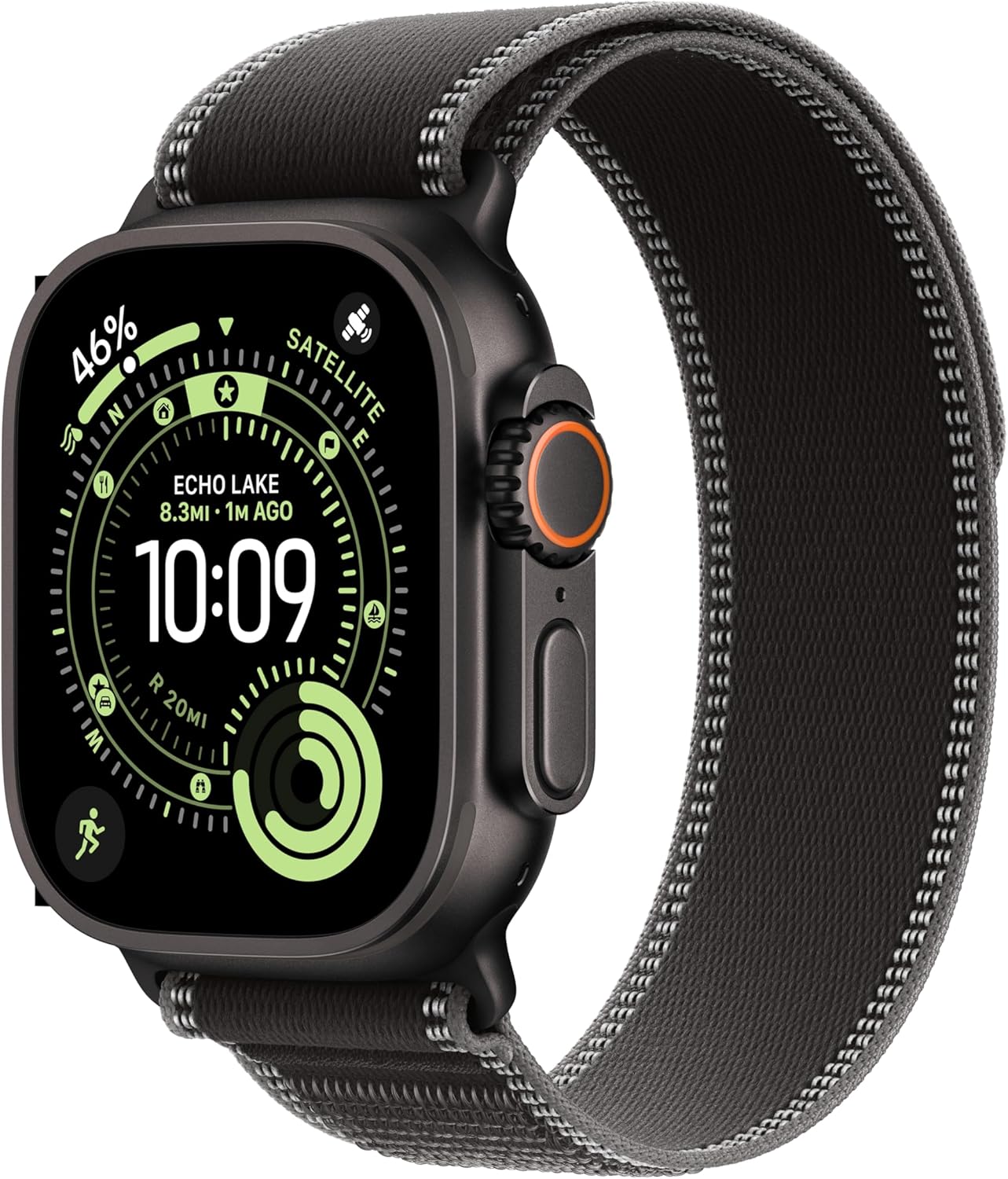
I took the Apple Watch Ultra 3 diving and used it as my main dive computer on two shallow reef dives and a pool practice session.
It stood out because the screen was easy to read underwater, the haptic buzz alerted me during my safety stop, and the depth/temperature readings matched my console.
If you dive for fun and want the convenience of a watch that works underwater, this one deserves your attention.
Why it works for divers:
Made for water and depth:
It’s rated for 100 meters of underwater use and follows the EN 13319 dive standard.
That means you can safely use it for regular scuba dives down to about 40 meters.
Bright, easy-to-read display:
The screen stays clear even in bright or shaded water—important when you’re glancing at your wrist for time or depth.
Useful for safety stops:
With the right dive app (like Oceanic+), the watch will buzz and alert you to ascent speed, depth, and how long to stay at the stop—not just the time, but also smart reminders.
All-day power:
Its battery lasts through a full day of diving and surface breaks without the panic of a low battery.
When you’re swapping gear or on a liveaboard, that peace matters.
What you get:
-
Dive-ready build: The watch meets serious durability standards for water, dust, and rough conditions.
-
Underwater tracking: With the right app installed, you see depth, dive time, and water temperature on your wrist.
-
Smart safety features: Alerts for ascent rate, low pressure, or when it’s time to stop and decompress (for recreational dives).
-
Normal watch features included: You still get your calls, fitness tracking, wrist-based HR, maps, and apps.
-
Simple reset after dive: Rinse with fresh water, dry off, and you’re ready for the next round. No bulky computer needed if you’re doing fun diving.
Conclusion:
If you dive for recreation and want a watch that can track your dive, alert you to safety stops, and still serve as a daily smartwatch, the Apple Watch Ultra 3 is one of the best options available.
Just be aware of its depth limit and app-based approach—when you know how it works, it becomes a reliable dive tool.
Buying Guide: How to Choose the Right Dive Watch
Every diver has different needs. The right watch for a beginner doing their first open-water dives isn’t the same as the right one for a technical diver doing trimix at 60 meters. These are the things that actually matter when choosing.
Depth Rating vs Dive Depth
This is the most misunderstood spec in diving. A watch rated to 100 meters is not safe to use at 100 meters on a dive. Water resistance ratings are tested in still water under laboratory conditions. The actual safe dive depth for a 100-meter rated watch is roughly 40 to 60 meters, depending on the certification standard.
Watches with EN 13319 certification — like the Suunto D5 and Suunto Ocean on this list — are tested to dive equipment standards, not just watch standards. That certification means the depth rating is more reliable for actual diving. Always check which standard the watch is certified to, not just the number.
Decompression Algorithm
For recreational divers staying within no-decompression limits, any of the algorithms on this list will keep you safe. For technical divers, the algorithm matters more. The Bühlmann ZHL-16C with adjustable gradient factors — used by the Shearwater Teric and Suunto Ocean — gives experienced divers full control over their decompression profile. The Suunto Fused RGBM 2 in the D5 takes a different approach, modeling bubble formation in tissue rather than just dissolved gas.
If you are a recreational diver, do not let algorithm differences drive your decision. If you are a technical diver, algorithm choice is one of the first things to research.
Air Integration
Air integration lets the watch receive live tank pressure from a wireless transmitter on your regulator. You can see exactly how much air you have left without checking a separate gauge. For newer divers, air integration removes one less thing to think about underwater. For experienced divers, it adds useful information without changing the dive.
None of the watches on this list includes air integration out of the box — it always requires a separate transmitter. Factor that cost into your decision if air integration matters to you.
Dive Computer vs Smartwatch
A smartwatch with a dive app is not a replacement for a certified dive computer. This matters most for technical diving and anything beyond recreational depths. For recreational diving within 40 meters, watches like the Apple Watch Ultra 4 with Oceanic Plus are genuinely capable. For anything deeper or more complex, a dedicated dive computer — the Garmin Descent Mk3i, Suunto D5, or Shearwater Teric — is what you need.
Battery Life on Multi-Day Trips
One dive day is usually 2 to 4 hours in the water. Most watches on this list handle that easily. Battery matters on live-aboard trips where you are diving three or four times a day for a week. The Suunto Ocean and Shearwater Teric both have enough battery for these trips. The Suunto D5, with 6 to 12 hours of dive time, will need charging every evening on a heavy dive trip.
For a broader look at how smartwatches handle water activities beyond diving, read our full guide to the best waterproof smartwatches.
For detailed guidance on how dive watch depth ratings actually work, PADI’s dive watch guide is a reliable external reference written by dive industry professionals.
Frequently Asked Questions
Can I use a regular smartwatch for scuba diving?
No. A regular smartwatch is not safe for scuba diving even if it has a high water resistance rating. Standard water resistance ratings are tested in still water under laboratory conditions, not under the dynamic pressure of an actual dive. For scuba diving, you need a watch rated to dive-equipment standards like EN 13319, or specifically certified for recreational diving, like the Apple Watch Ultra 4 with Oceanic Plus to 40 meters.
What is the difference between a dive watch and a dive computer?
A dive watch tells time underwater and is water resistant to dive depths. A dive computer tracks your depth, bottom time, no-decompression limits, ascent speed, and decompression stops in real time — the data that keeps you safe underwater. The watches on this list are dive computers in watch form, not just water-resistant watches.
Do I need air integration on my dive watch?
Not necessarily. Air integration shows your tank pressure live on the wrist, but experienced divers manage tank pressure through regular gauge checks just as well. For newer divers, air integration removes one task from an already busy mental checklist underwater. If you plan to dive frequently or do technical diving with multiple gas sources, air integration becomes more useful. If you dive occasionally, it is a convenience, not a necessity.
Related Articles:
Apple Watch Series 12 vs Samsung Galaxy Watch 9
How to Pair Your Apple Watch with a New iPhone
Luis Cooper

Hi, I'm Luis, the guy behind this site. I love wearing watches, especially ones that look great on small wrists (mine are about 6.3" around). The Watches Geek is dedicated to helping you learn about and buy watches that you will love wearing. I want this website to be the last destination for people to pick the best watches to fit their needs. You can find our unbiased reviews here on Thewatchesgeek.