
Last Updated on September 11, 2026 by Luis Cooper
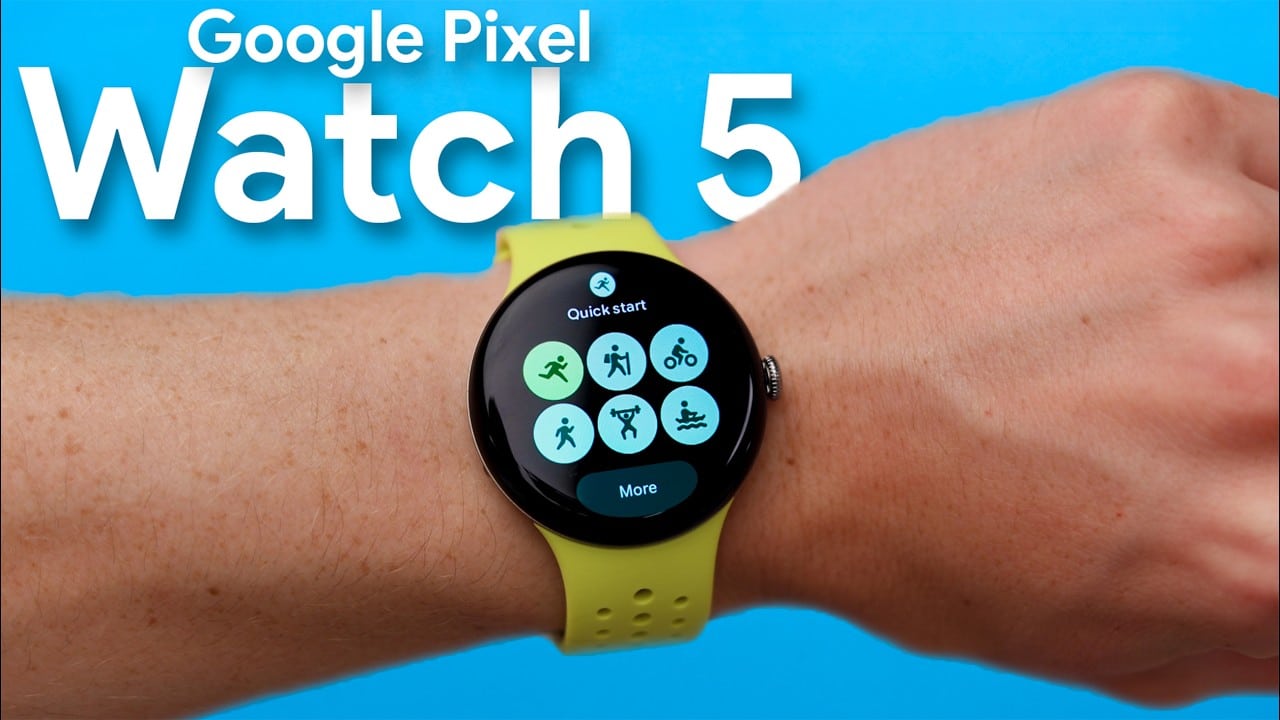
Google product manager Pramod Rudrapatna described the Pixel Watch 5’s new Health Guardian safety suite in three words that have stuck with everyone who heard them.
An airbag for the wrist.
That description lands differently depending on who you are. For someone who has never thought about a smartwatch as anything other than a fitness tracker, it sounds like marketing. For someone who has received a fall detection alert, or whose family member has benefited from an automatic emergency call, it sounds like exactly what it is.
The Pixel Watch 5 launched on August 20, 2026, as Google’s answer to a question it has been building toward for three years. What can a smartwatch do for your fitness? What can a smartwatch do when something goes wrong, and you cannot help yourself?
Google Pixel Watch 5 Review

The Honest Verdict Before Anything Else
After over a week of real-world daily wearing, the Pixel Watch 5 is easily the best Google smartwatch ever made, though a fairly minor upgrade over its predecessor.
Both statements are true simultaneously and understanding both is the most useful thing this review can tell you before the details.
If you own a Pixel Watch 4, the reasons to upgrade exist but they are specific.
The GPS system is genuinely and significantly better. The safety platform is deeper. The storage doubled. The processor is faster. If those improvements matter to your specific use of the watch, they are meaningful. If they do not, the Pixel Watch 4 you own is still an excellent device.
If you own a Pixel Watch 3, a Pixel Watch 2, or any Samsung or Apple watch and are considering switching platforms, the Pixel Watch 5 makes the strongest case Google has ever made for choosing Wear OS as your smartwatch platform.
If you use an iPhone, nothing in this review is relevant to your situation. The Pixel Watch 5 requires Android.
Health Guardian: Google’s Safety Platform Explained
The most important thing to understand about Health Guardian before anything else is that it is not one feature. It is a suite of five interconnected capabilities, and they represent Google’s most direct claim to leading the smartwatch safety category.
After a week of real-world wearing, the assessment is clear: in 2026, Google leads the pack in terms of on-wrist safety, besting Apple, Samsung, and Garmin.
Here is what Health Guardian actually contains.
Loss of Pulse Detection: Still the Feature Nobody Else Has
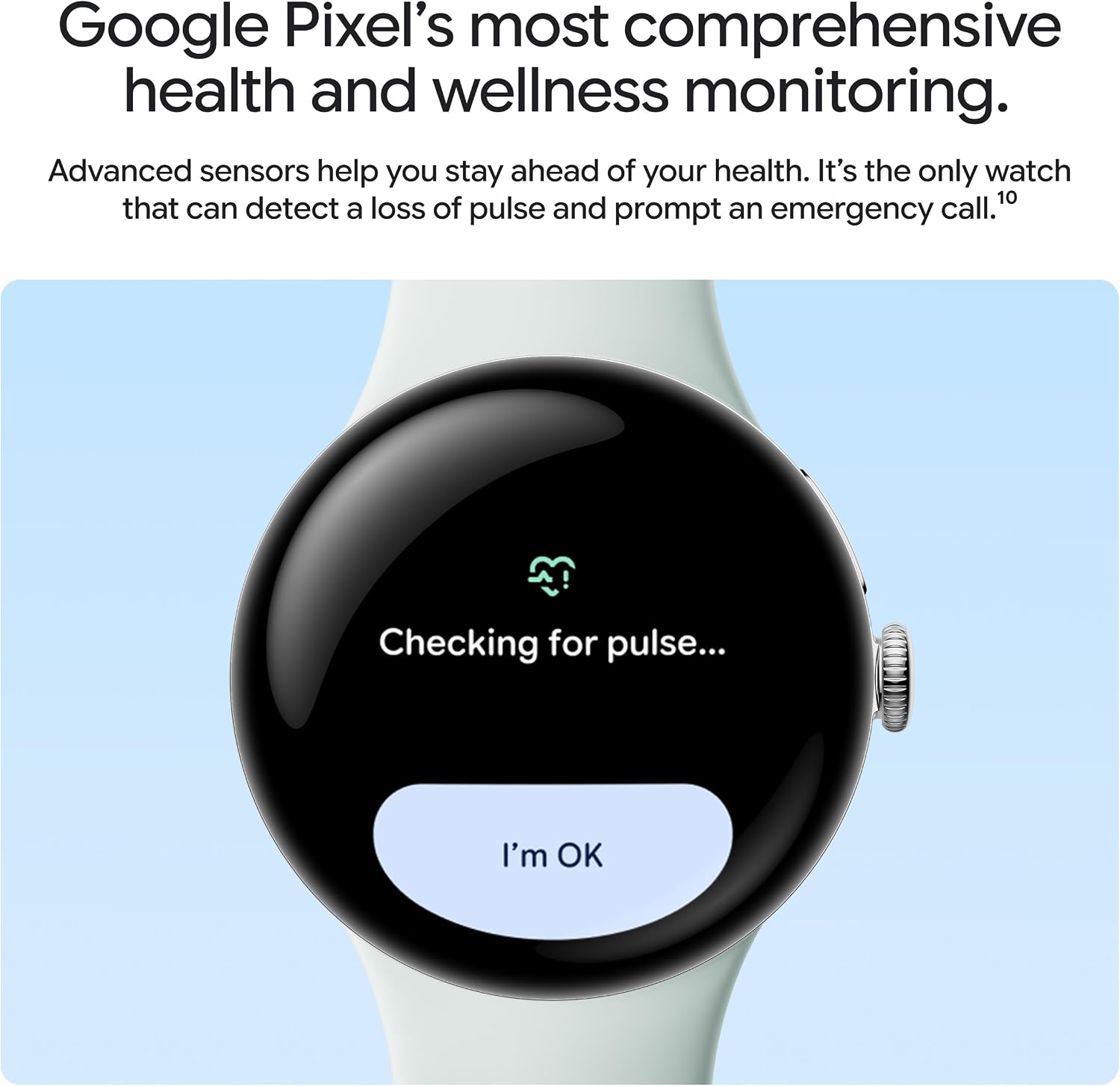
Loss of Pulse Detection came to the Pixel Watch 3 in 2024 and it remains, in 2026, something that no other mainstream smartwatch manufacturer has replicated.
The watch monitors continuously for the absence of pulse. Not an irregular rhythm. Not elevated heart rate. The disappearance of pulse entirely. If the pulse stops and the wearer does not respond to the alert within a set period, the watch contacts emergency services and shares the GPS location.
Most fall detection systems send a notification and wait for a response. Loss of Pulse Detection is for situations where a response is physically impossible. It is the safety feature that addresses the scenario other features cannot.
Breathing Emergency Detection: The New Feature and the Honest Limitation
Breathing Emergency Detection is the headline new feature in Health Guardian and it deserves both proper explanation and an honest limitation that most coverage has underreported.
The feature uses the heart rate sensor, accelerometer, and barometer simultaneously.
Together, they monitor for a persistent drop in blood oxygen saturation.
Not a brief dip during a deep sleep cycle. A sustained decline consistent with conditions including choking, severe pneumonia, and drug toxicity.
If such a decline is detected and the wearer does not respond to an alert, the watch calls emergency services directly.
Hands-on testing confirmed that the feature works as an on-device AI algorithm rather than relying on cloud connectivity to function.
This matters because a persistent drop in oxygen saturation is exactly the kind of emergency scenario where cellular connectivity cannot be assumed to be available.
The limitation that needs to be stated directly: Breathing Emergency Detection is not available in the United States at launch.
It launched in a number of European countries on August 20, 2026 and Google is working with the FDA and other regulators to expand availability.
This was specifically called out during real-world testing, and it’s a similar scenario to 2024, when Loss of Pulse Detection launched outside the US first, and US users waited several months for FDA clearance.
For UK and European buyers reading this, Breathing Emergency Detection is available and active.
For US buyers, it is a feature coming rather than currently available.
Blood Pressure Trends and Insulin Resistance Trends
Both of these features were announced at launch and neither is available at launch.
Blood Pressure Trends will arrive through a software update in September 2026.
It uses the watch’s sensors and machine learning to track blood pressure patterns over a month and flag changes before they place strain on the cardiovascular system.
Insulin Resistance Trends will follow. The feature uses sensor data and algorithms to identify metabolic health patterns associated with insulin resistance over time.
Both represent genuinely interesting extensions of what a wrist sensor can infer from continuous monitoring.
Neither is currently active at the time of this review. They are features to watch for in the coming months, not reasons to buy the watch today.
Fall and Crash Detection, Emergency Sharing, Satellite SOS
These features carry forward from the Pixel Watch 4 and remain among the most practically useful safety capabilities on any smartwatch.
Fall detection activates automatically during the kind of sudden impact events associated with falls. Crash detection activates during vehicle travel. Both contact emergency services automatically if the wearer does not respond to the alert.
Emergency Sharing allows the wearer to notify trusted contacts during an emergency, sharing live location in the process.
Satellite SOS, available on LTE models in supported regions, enables emergency communication in areas without cellular coverage.
This is the specific capability that makes the Pixel Watch 5 relevant for outdoor use beyond the range of mobile networks.
Cloud GPS: The Feature That Actually Beats Garmin
The GPS story on the Pixel Watch 5 is the one that will matter most to active users, and it deserves more explanation than most reviews have given it.
Traditional watch GPS works by receiving signals from satellites and calculating position from the timing of those signals. Single-frequency GPS uses one signal band. Dual-frequency GPS uses two, which reduces errors in environments where satellite signals reflect from surfaces before reaching the watch. Most modern GPS watches, including the Pixel Watch 4, use dual-frequency GPS.
The Pixel Watch 5 adds something different on top of dual-frequency hardware. Google processes the raw GPS data through cloud servers that apply 3D environmental modelling, atmospheric data integration, and ground-based reference station corrections after the activity is complete. The route you recorded is refined after the fact using data sources that a wrist sensor cannot access in real time.
Independent GPS testing, using the most rigorous methodology in the consumer GPS wearable category, confirmed that the GPS post-processing accuracy improvements are genuine. Google’s claim that the Pixel Watch 5 outperforms the Apple Watch Ultra 3 and Garmin Fenix 8 Pro in route accuracy is supported by independent GPS testing data.
The practical application for most users: your runs, rides, and hikes will show routes that more closely match the paths you actually took, particularly in urban environments where buildings interfere with satellite signals, and in areas with dense tree cover where single-frequency GPS typically drifts. The route appears correctly on the map rather than cutting through buildings or adding phantom diversions.
For a closer look at how GPS accuracy compares across Garmin’s dedicated running watches including the Fenix 8, the full guide at thewatchesgeek.com/best-garmin-watches-for-interval-training covers the Garmin GPS platform across their training watch lineup.
Sleep Tracking: 15% More Accurate and a New Metric That Matters

Google claims the Pixel Watch 5 delivers 15% more accurate sleep stage tracking compared to the Pixel Watch 4. This improvement comes from algorithm refinements rather than new sensor hardware.
The more significant sleep addition is the overnight sleep breathing quality metric. The watch measures blood oxygen saturation minute-by-minute throughout sleep and tracks breathing quality as a continuous timeline rather than a summary score.
For someone who has been told they might have sleep apnea, or who wakes regularly feeling unrestored despite adequate sleep duration, this minute-by-minute oxygen tracking provides the kind of specific data that is useful to share with a healthcare provider. It does not diagnose sleep apnea. It provides the kind of objective overnight data that helps a clinician decide whether a formal sleep study is warranted.
The smart wake alarm uses sleep stage data to find an optimal wake window within a set period before your alarm time. Waking from light sleep feels different from waking from deep sleep, and the smart alarm attempts to find the lighter moment rather than waking you at whatever stage of sleep your fixed alarm time interrupts.
Fitness Features: The Meaningful Additions
Three additions to the fitness platform stand out from the longer list of improvements.
Weight and Rep Tracking automatically detects strength training exercises and counts repetitions and sets. This is Pixel Watch 5’s answer to the automatic strength detection that Samsung Galaxy Watch 9 carries. For gym users who currently stop between sets to log manually, this automation removes the most disruptive element of gym tracking.
Workout Builder is a new app that allows custom structured workout creation directly on the watch. You set the intervals, rest periods, and exercise selections. The watch runs the session with audio cues and rest timers without requiring any phone interaction during the workout. For interval trainers and CrossFit-style training, this brings programming depth to the Pixel Watch platform that previously required third-party apps.
Raise to Gemini works without an internet connection. Lifting the wrist and speaking activates Gemini on-device rather than requiring a server connection. For runners in areas without cellular coverage, or for anyone who wants instant AI query responses without connection latency, this is a practical improvement over how most AI wearable features require connectivity to function.
Gemini Intelligence: What Changed
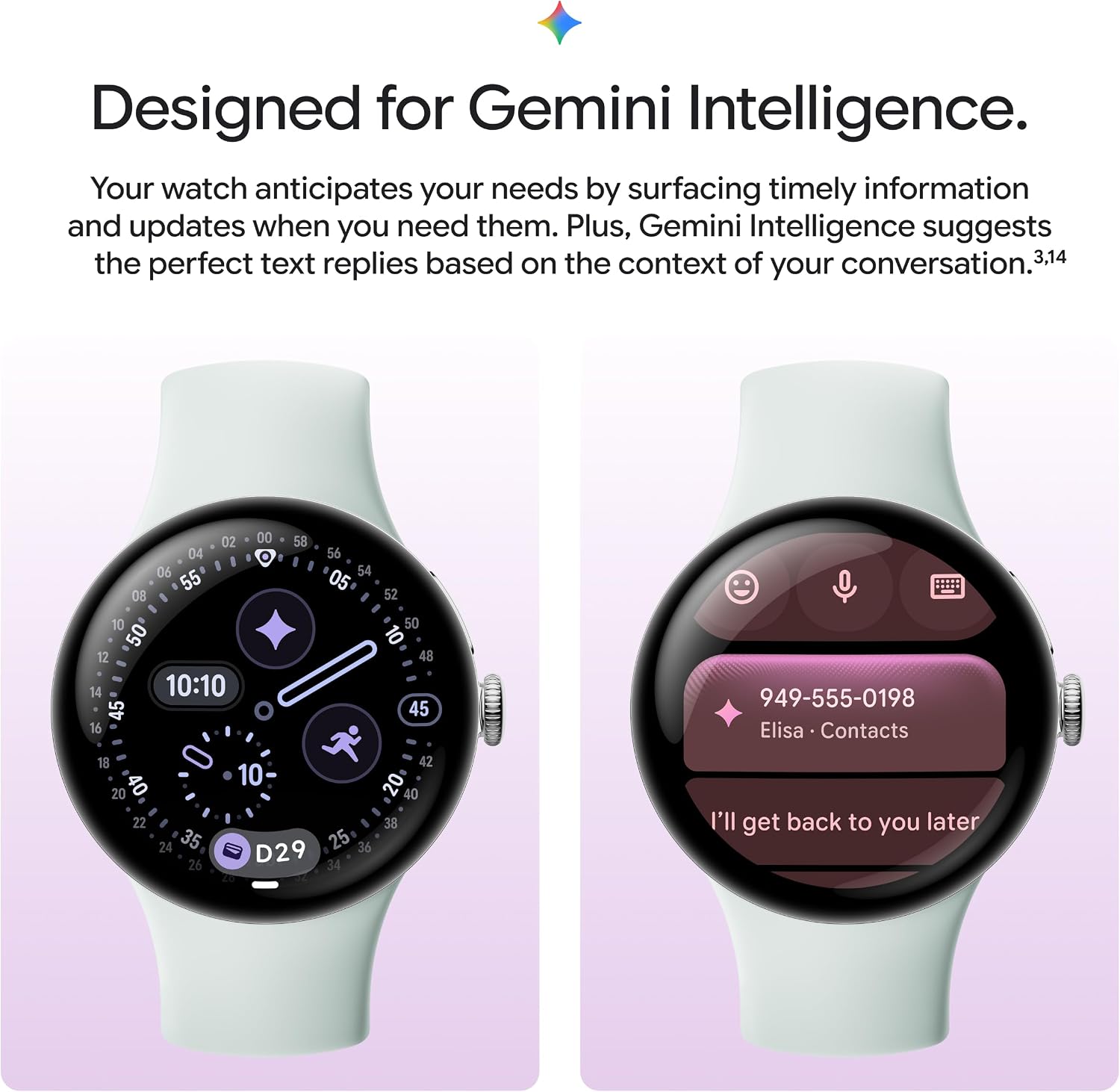
The Pixel Watch 4 introduced Gemini on the wrist. The Pixel Watch 5 refines how it works in two specific ways.
Raise to Gemini, mentioned above, eliminates the connectivity requirement for many queries. Check your sleep score, ask about your training load, get weather information — these happen on-device when cellular or WiFi is unavailable.
Gemini proactive text responses generate automatic message suggestions based on context, reducing the effort required to respond to wrist notifications. This feature requires a Pixel 11 phone to work at full capability, which matters if your Android phone is from another manufacturer.
The generative watch faces use Gemini to create unique watch face designs from text prompts or photo inputs. This is genuinely new territory for smartwatch personalisation and produces results that no pre-designed watch face library can offer.
Design, Repairability and Build
The Pixel Watch 5 keeps the same circular design as the Pixel Watch 4. The same two sizes, 41mm and 45mm, with the same polished circular case and smooth integrated strap system. Buyers who found the Pixel Watch 4 design elegant will find the Watch 5 identical in character. Buyers who wanted a redesign will not find one.
One design element the Pixel Watch 5 carries that almost no competitor matches is repairability. Hands-on testing confirmed that both the battery and the screen on the Pixel Watch 5 are user-replaceable. In an era of sealed devices where battery degradation eventually renders an expensive smartwatch unusable, a watch with a replaceable battery has a meaningfully longer potential lifespan. This environmental and value consideration deserves more attention than it typically gets in watch reviews.
The display is brighter than the Pixel Watch 4 in the same circular AMOLED format. Water resistance and durability specifications carry forward without change.
Four case finishes are available: dark anthracite and pyrite in matte, silver and gold in glossy. The Stephen Curry Special Edition adds a distinctive orange and grey colourway for buyers who want the most distinctive version of the watch.
Battery Life: The Honest Picture
The Pixel Watch 5 battery life is where the “minor upgrade” description hits most directly.
After a week of real-world wearing: 30 to 40 hours confirmed, the same range as the Pixel Watch 4. For a watch that asks you to wear it during sleep for the overnight health monitoring that produces Vitals, sleep breathing quality data, and smart alarm function, daily charging is the practical reality.
Extended daily testing noted the difference in charging convenience when returning to a watch that requires a more deliberate charging routine. The Pixel Watch 5 keeps the Pixel Watch 4’s fast-charging capability rather than adding meaningful battery-life extension.
For buyers who specifically want multi-day battery life above all other considerations, the Garmin Vivoactive 6 at eleven days and the Amazfit Active 2 at ten days remain the more appropriate choices. For buyers who want the Pixel Watch 5’s GPS precision, Health Guardian safety platform, and Wear OS ecosystem depth, daily charging is the trade-off they accept for those capabilities.
Pixel Watch 5 vs Pixel Watch 4: The Upgrade Question Answered
| Feature | Pixel Watch 4 | Pixel Watch 5 |
|---|---|---|
| Processor | Snapdragon W5 Gen 2 | Snapdragon W5 Gen 2 Accelerated |
| Storage | 32GB | 64GB |
| GPS | Dual-frequency | Dual-frequency plus cloud post-processing |
| Breathing Emergency Detection | No | Yes (EU, US FDA pending) |
| Blood Pressure Trends | No | Yes (September 2026) |
| Insulin Resistance Trends | No | Yes (coming) |
| Sleep Breathing Quality | No | Yes, minute-by-minute |
| Sleep Stage Accuracy | Baseline | 15% improvement |
| Weight and Rep Tracking | No | Yes |
| Workout Builder | No | Yes |
| Raise to Gemini offline | No | Yes |
| Generative Watch Faces | No | Yes |
| Battery | 30-40 hours | 30-40 hours |
| Design | Circular | Same circular |
| Repairability | Yes | Yes |
| Loss of Pulse Detection | Yes | Yes |
The Pixel Watch 4 owner who uses GPS frequently for running or cycling will notice the route accuracy improvement immediately. The storage doubling from 32GB to 64GB matters for buyers who store music and maps on the watch. The processor improvement makes daily interactions noticeably more responsive.
For Pixel Watch 4 owners who primarily use the watch for notifications and basic health tracking and are satisfied with the GPS performance they already have, the upgrade case is less pressing.
Who Should Buy the Pixel Watch 5
You are an Android user who wants the most advanced safety features available on any mainstream smartwatch. You use GPS regularly for running, cycling, or outdoor activities and specifically want the best available route accuracy. You are upgrading from a Pixel Watch 3 or older watch. You are switching from Samsung and want the full Wear OS experience with Google’s health platform. You want a watch that will physically last longer because its battery and screen can be replaced rather than sealed permanently.
Who Should Not Buy the Pixel Watch 5
You own a Pixel Watch 4 and your primary use case is notifications and standard health tracking — the upgrade value is limited for you. You want Breathing Emergency Detection available right now in the US — it is not, pending FDA approval. You want Blood Pressure Trends at launch — they arrive in September. You want multi-day battery life — Garmin and Amazfit serve that need better. You use an iPhone — the Pixel Watch 5 cannot pair meaningfully with iOS.
For a broader look at how the Pixel Watch 5 compares against the Samsung Galaxy Watch 9 and the Apple Watch SE 3 across the Android and iOS smartwatch landscape, the full guide at thewatchesgeek.com/best-smartwatches-under-300 covers the full category in detail.
Specifications
| Feature | Pixel Watch 5 (41mm) | Pixel Watch 5 (45mm) |
|---|---|---|
| Released | August 20, 2026 | August 20, 2026 |
| Processor | Snapdragon W5 Gen 2 Accelerated | Same |
| Storage | 64GB | 64GB |
| Display | Circular AMOLED, brighter | Larger circular AMOLED |
| GPS | Dual-frequency plus cloud post-processing | Same |
| Battery | 30-40 hours | 30-40 hours |
| Health Guardian | Loss of Pulse, Breathing Emergency, BP Trends, Insulin Trends, Fall/Crash Detection | Same |
| Sleep | Minute-by-minute SpO2, 15% more accurate staging | Same |
| Fitness | Weight/rep tracking, Workout Builder, audio cues | Same |
| AI | Gemini on-device, generative watch faces | Same |
| Satellite SOS | LTE models, supported regions | Same |
| Repairability | Replaceable battery and screen | Same |
| Compatibility | Android only | Same |
FAQs
Is Breathing Emergency Detection available in the US on the Pixel Watch 5?
No, not at launch. Breathing Emergency Detection launched on August 20, 2026 specifically in many European countries and is awaiting FDA regulatory approval for US availability. Real-world testing specifically flagged this, drawing a comparison to 2024 when Loss of Pulse Detection launched outside the US first and US users waited several months before FDA clearance was granted. Google has not confirmed a specific timeline for US availability of Breathing Emergency Detection. US buyers purchasing the Pixel Watch 5 today should treat it as a feature that is coming rather than one that is currently accessible. The full Health Guardian suite including Loss of Pulse Detection, fall detection, crash detection, Emergency Sharing, and Satellite SOS on LTE models all function in the US at launch.
How does the Pixel Watch 5 Cloud GPS work and why does it matter?
Traditional GPS watches calculate your position using signals received from satellites during your activity. The Pixel Watch 5 records the same raw GPS data during your run or ride but then sends it to Google’s servers after the activity completes. The servers apply corrections using 3D building and terrain modelling from Google Maps, atmospheric data, and ground-based reference stations that provide highly accurate position data across large geographic areas. The result is that your recorded route is refined after the activity to more accurately reflect the path you actually took. In urban environments where tall buildings cause satellite signals to reflect before reaching the watch, and in wooded areas where tree canopy interferes with signal reception, this post-processing correction is most visible. Independent GPS testing confirmed that the accuracy improvement is genuine and supports Google’s claim that the Pixel Watch 5 outperforms the Apple Watch Ultra 3 and Garmin Fenix 8 Pro in route mapping accuracy.
Should you upgrade from a Pixel Watch 4 to a Pixel Watch 5?
The honest answer depends on how you use the watch. If you use GPS regularly for running, cycling, or outdoor navigation, the cloud post-processing accuracy improvement is the most tangible upgrade and it will affect every activity you record. If you want the expanded Health Guardian safety features and are in a country where Breathing Emergency Detection is available at launch, the safety platform expansion is meaningful. The doubled storage from 32GB to 64GB matters for buyers who store music and offline maps on the watch. If your primary use of the Pixel Watch 4 is notifications, standard fitness tracking, and daily health monitoring and you are satisfied with your current GPS performance, the upgrade case is limited. Real-world testing described the Pixel Watch 5 as a fairly minor upgrade for existing Pixel Watch 4 owners while simultaneously calling it the best Google smartwatch ever made. Both assessments are accurate and the right interpretation for your situation depends on which specific improvements align with how you actually use the device.
Related Articles:
Fitbit Air vs Whoop 5.0: Which Screenless Fitness Tracker Should You Buy in 2026?
Best Smartwatches in 2026 | Battery, Health & Value Compared
Luis Cooper

Hi, I'm Luis, the guy behind this site. I love wearing watches, especially ones that look great on small wrists (mine are about 6.3" around). The Watches Geek is dedicated to helping you learn about and buy watches that you will love wearing. I want this website to be the last destination for people to pick the best watches to fit their needs. You can find our unbiased reviews here on Thewatchesgeek.