
Last Updated on October 13, 2026 by Luis Cooper
You wake up tired even after eight hours.
Your partner says you snore.
You have heard that smartwatches can now detect sleep apnea.
Is that true? If so, which watches actually do it, and should you trust what they tell you?
This is a question more people are asking than ever, and the answer is more specific than most guides will tell you.
Two smartwatch brands have been cleared by the FDA to screen for sleep apnea. Most have not. And the ones that have been cleared don’t diagnose you with sleep apnea.
They do something more limited, and more useful, than you might expect.
Here is exactly what is happening.
Can a Smartwatch Detect Sleep Apnea
What Is Sleep Apnea and Why Does It Matter
Sleep apnea is a condition where your breathing repeatedly stops and starts during sleep.
The most common type is obstructive sleep apnea, or OSA, where the muscles at the back of your throat relax and block your airway.
The problem is not just snoring or tiredness.
Untreated sleep apnea puts sustained stress on your heart and cardiovascular system every night.
It is linked to high blood pressure, increased risk of stroke, and type 2 diabetes. Getting it diagnosed and treated is genuinely important for long-term health.
Here is the troubling part: approximately 85 to 90 percent of people who have sleep apnea have never been diagnosed.
Around 1 billion people worldwide are estimated to have the condition.
Most of them have no idea.
The reason so many cases go undiagnosed is that the symptoms happen while you are unconscious.
You cannot observe your own breathing during sleep.
Your doctor cannot either, unless you spend a night in a sleep lab or do a home sleep apnea test.
Both options require a referral, cost money, and take time. Most people never bother until symptoms become impossible to ignore.
Wearables are trying to fill this gap.
The Honest Answer: Most Smartwatches Cannot Screen for Sleep Apnea
Before we go any further, this needs to be said plainly: most smartwatches on the market today have no FDA clearance for sleep apnea.
That includes Garmin, Fitbit, Whoop, and even the Oura Ring 5.
These devices track useful sleep-related data.
Overnight blood oxygen, breathing rate, heart rate variability, restlessness, and sleep stages are all valuable signals. Some of them may even flag patterns associated with disrupted breathing.
But they haven’t been cleared to screen specifically for sleep apnea, and they don’t alert you with a sleep apnea notification.
Only two brands have cleared that specific bar with the FDA.
The Two Watches With FDA Clearance for Sleep Apnea Screening
Apple Watch (Series 9, Series 10, Series 11, Series 12, Ultra 2, SE 3)
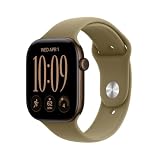
- STAY CLOSER TO YOUR HEART HEALTH—The most accurate heart rate sensing in a wearable,* Series 12 now measures HRV as often as every five minutes for insights on stress and recovery, and takes background heart rate readings every five seconds.
- A FULL-FEATURED HEALTH TRACKER—Better understand your body with invaluable health insights. View your overnight health metrics with the Vitals app and get a daily sleep score,* track your menstrual cycle,5 and take readings of your blood oxygen.*
- CHECK YOUR READINESS FOR THE DAY—Know when to rest or put yourself to the test. The readiness experience can help you determine your capacity to take on the day by analyzing your recent activity, vitals, and sleep.
- A POWERFUL FITNESS TRACKER—With advanced metrics and motivating features like Pacer, Heart Rate Zones, and Workout Buddy powered by Apple Intelligence from your nearby iPhone8—Series 12 helps you stay active, from running to hiking to strength training.
- KEEP HELP CLOSE AT HAND—A smartwatch that puts your safety first. Series 12 can detect a hard fall or severe car crash, automatically help connect you with emergency services, and notify your emergency contacts.*

Apple’s sleep apnea notification feature was FDA-cleared and is available on Apple Watch Series 9 and later.
It uses the watch’s accelerometer to detect movement patterns associated with breathing disruptions during sleep.
It does not measure airflow directly.
The feature requires you to log at least 10 nights of sleep over a 30-day period before it will produce a result.
At the end of that window, you receive one of two notifications: “Elevated” or “Not Elevated.”
You only receive a notification if Elevated readings appear consistently.
The FDA accuracy data for Apple’s feature: 66.3 percent sensitivity and 98.5 percent specificity against moderate-to-severe sleep apnea. What those numbers mean in plain English: if the watch says “Elevated,” it is almost certainly right.
If it says nothing, that doesn’t guarantee you don’t have sleep apnea, especially a mild form.
Apple’s own documentation confirms this: the absence of a notification does not indicate the absence of sleep apnea. The feature is intended for users 18 and older.
Samsung Galaxy Watch (Watch 7 and newer) and Galaxy Ring
![Samsung Galaxy Watch9, Graphite, 40mm Bluetooth Smartwatch | AI Assistant, Fitness Tracker, Sleep Coaching and Running Coaching with Heart Rate Tracking [US Version, 2 Yr Warranty]](https://m.media-amazon.com/images/I/31Q6G58gP9L._SL160_._SL160_.jpg)
- TRACK HEALTH PATTERNS¹ IN YOUR SLEEP WITH VITALS²: Stay aware of the subtle changes in your body with Vitals¹–it tracks health metrics while you sleep, catches shifts from your usual patterns, and provides tailored guidance based on the insights.²
- A PERSONALIZED COACH FOR YOUR FITNESS GOALS: Whether you're building endurance for a long trek or training to build muscle, Fitness Index³ delivers tailored guidance based on your fitness level goals. Finally, train smarter with your fitness watch.
- EVERYDAY AI ASSISTANCE, SIMPLIFIED: With the Galaxy Watch9, you can just raise your wrist, start talking naturally and get instant AI assistance⁴—no wake phrase needed. This smart watch won’t slow you down.
- ONE PERSONALIZED SCORE TO KNOW YOUR HEART BETTER: Instead of checking multiple metrics separately, track the single Heart Health Score⁵ based on sleep time, BMI, activity and vascular load to stay aware of your wellness.
- TRACK YOUR NIGHTS. OWN YOUR DAYS: Galaxy Watch9 gives you personalized recommendations and habit-building guidance with Advanced Sleep Coaching.⁶ Plus, Bedtime Guidance⁷ helps you find your optimal bedtime so you can wake up feeling refreshed.
Samsung’s sleep apnea feature uses the optical blood oxygen sensor and accelerometer together.
It screens for signs of moderate-to-severe obstructive sleep apnea over two nights within a 10-day period, requiring at least four hours of sleep each night.
The feature is for users aged 22 and older.
Samsung released an updated version of the feature in July 2026, with improved accuracy.
V2.0 data: 90.8 percent sensitivity and 90.3 percent specificity on the Galaxy Watch, and 77.9 percent sensitivity and 95.9 percent specificity on the Galaxy Ring.
One important limitation: Samsung’s sleep apnea feature requires a Samsung Galaxy phone. It does not work with iPhones or other Android phones.
What Other Wearables Actually Measure
Oura Ring 5

- THE WORLD’S SMALLEST SMART RING - 40% smaller than the previous generation, Oura Ring 5 is thinner, lighter and smaller than ever. The updated all-titanium design is more scratch-resistant and comfortable than ever
- SIZING IS ESSENTIAL - Oura Ring 5 uses unique sizing different from standard jewelry rings and other Oura Ring generations; use the Oura Ring 5 Sizing Kit to find your perfect fit before purchasing
- EVERYDAY HEALTH SENSING - Oura tracks over 50 health metrics, including sleep, activity, stress, heart health, metabolic health and women’s health metrics. Oura seamlessly integrates with over 40 apps including Natural Cycles, Strava, & more
- OURA MEMBERSHIP - First month of membership is included with purchase, for new members only. Subscription is 5.99/mo afterwards. Membership is tied to your account via the Oura App, not your physical ring
- REBUILT FOR GREATER ACCURACY - Oura Ring 5 has been re-engineered and reconfigured, providing more precise personal health data. Larger, smarter sensors bring research-grade accuracy—all in Oura’s smallest form factor yet
The Oura Ring 5 tracks overnight blood oxygen saturation, breathing rate, restlessness, and heart rate variability throughout the night.
It provides detailed sleep scores and flags irregular breathing patterns in the nighttime breathing feature.
This data is valuable and gives you a real picture of your sleep quality night over night.
What it does not do is send you a sleep apnea alert. There is no FDA clearance for sleep apnea screening.
The Oura Ring shows trends and flags concerning patterns, but it will not tell you whether you have sleep apnea.
If you want the deepest sleep tracking available in a ring, read our full Oura Ring 5 review.
Garmin Watches
Garmin tracks overnight breathing rate and blood oxygen, and some models flag drops in SpO2 during sleep.
The Garmin Venu 4 and Forerunner 170 both monitor these metrics continuously overnight.
What Garmin measures is useful context for recovery and sleep quality, but it is not sleep apnea screening.
Garmin has no FDA-cleared feature for this purpose.
Google Fitbit Air

- Lighter gets mightier with the Google Fitbit Air Special Edition Stephen Curry[1]; including a water resistant coating, it's sweatproof and moisture-wicking for your toughest workouts[2,3]
- Unlock more with Google Health Premium: With a premium membership, get personalized coaching that’s built with Gemini and adapts to your life[2]; get a 3-month trial at no cost to you[5] (Google Health Premium subscription sold separately)
- Comfortable fit - One Size Tracker (130-210 mm): The lightweight, micro-adjustable fit sits comfortably and quietly, so you can wear Google Fitbit Air through work, play, and sleep; advanced sensors and new algorithms power more accurate, precise health tracking, 24/7[1]
- Designed for every occasion: With no screen to distract you or disrupt your style, your tracker moves seamlessly from bracelet to workout band to sleep band, and you can change looks in seconds – just press the pebble in, click, and go
- Long battery life: Google Fitbit Air’s battery lasts up to a week, and fast charging gets you one day of battery life in just five minutes[6,7]
The Fitbit Air tracks respiratory rate during sleep and flags changes in breathing patterns as part of its Gemini Health Coach features.
This device has FDA clearance for AFib detection, but not for sleep apnea screening.
It is an excellent lightweight tracker for sleep data, but not specifically for apnea.
Whoop 5.0

Whoop tracks HRV, respiratory rate, and blood oxygen throughout the night and delivers recovery scores based on this data.
It does not have an FDA-cleared sleep apnea screening feature.
Whoop’s value is in its long-term recovery and strain picture, not in clinical health alerts.
What These Devices Cannot Do
No smartwatch or smart ring can:
- Diagnose you with sleep apnea
- Replace a clinical sleep study (polysomnography)
- Detect central sleep apnea, which has a different mechanism from obstructive sleep apnea
- Reliably screen for mild sleep apnea
- Measure airflow directly
A formal diagnosis requires a clinician to order either an in-lab sleep study or a home sleep apnea test.
These tests measure your actual airflow, blood oxygen, breathing effort, and more.
They produce an Apnea-Hypopnea Index, or AHI, which tells you exactly how many breathing disruptions you are having per hour.
A smartwatch cannot produce this number.
So What Is the Right Way to Use a Smartwatch for Sleep Health?
Think of a smartwatch as an early warning system, not a diagnosis machine.
If your Apple Watch or Samsung Galaxy Watch sends you an Elevated notification, take it seriously.
Book an appointment with your doctor and describe what you received.
Bring a screenshot of the notification if you can.
That is exactly what the feature is designed to prompt you to do.
If your watch doesn’t have an FDA-cleared apnea feature but you consistently see low overnight blood oxygen readings, disrupted sleep patterns, or breathing anomalies flagged in your sleep data, those are also worth discussing with your doctor.
Wearable data is not diagnostic, but it is evidence you can bring to a clinical conversation.
According to the American Sleep Apnea Association, the most common symptoms of undiagnosed sleep apnea include loud snoring, witnessed breathing pauses during sleep, waking with a dry mouth or headache, and excessive daytime sleepiness.
If any of these apply to you regardless of what your watch says, it is worth asking your doctor about a sleep study.
Quick Comparison: Which Watches Screen for Sleep Apnea
| Wearable | FDA Cleared for Sleep Apnea | What It Actually Measures |
|---|---|---|
| Apple Watch Series 12 | Yes | Breathing movement patterns via accelerometer |
| Samsung Galaxy Watch | Yes | Blood oxygen + accelerometer combined |
| Samsung Galaxy Ring | Yes (v2.0, July 2026) | Blood oxygen + accelerometer combined |
| Oura Ring 5 | No | Breathing rate, SpO2, HRV trends |
| Garmin Venu 4 | No | Breathing rate, SpO2 trends |
| Google Fitbit Air | No | Respiratory rate, breathing patterns |
| Whoop 5.0 | No | HRV, respiratory rate, recovery data |
The Bottom Line
Two smartwatch brands, Apple and Samsung, have received FDA clearance to screen for moderate-to-severe obstructive sleep apnea.
The accuracy data on Samsung’s updated feature is genuinely strong.
Apple’s feature is more conservative in its sensitivity, which means it is better at confirming a positive than ruling out a negative.
Every other major wearable, including the Oura Ring 5, Garmin, Fitbit, and Whoop, tracks valuable sleep and breathing data but cannot screen for sleep apnea.
If you are buying a watch specifically because you want apnea screening, Apple or Samsung are your only options right now.
If you are buying a watch for comprehensive health and sleep tracking more broadly, excellent options are available across all the brands covered here.
And if your watch, any watch, shows you something concerning about your sleep, use that as a reason to talk to a doctor.
A proper sleep study is the only way to know for certain.
Frequently Asked Question:
Can any smartwatch diagnose sleep apnea? No. No smartwatch can diagnose sleep apnea. Only a clinician-ordered sleep study or home sleep apnea test can produce a diagnosis. Apple and Samsung have FDA clearance to screen for, or flag risk of, moderate-to-severe obstructive sleep apnea. Screening and diagnosis are different things.
How accurate is Apple Watch sleep apnea detection? Apple’s feature has 66.3 percent sensitivity and 98.5 percent specificity against moderate-to-severe sleep apnea. This means a positive notification is almost always meaningful, but the watch misses roughly one in three actual cases. Mild sleep apnea is generally outside its intended scope.
Does the Oura Ring 5 detect sleep apnea? No. The Oura Ring 5 does not have FDA clearance for sleep apnea screening. It tracks breathing rate, blood oxygen, and HRV overnight and provides detailed sleep scores, but it does not send sleep apnea alerts.
What smartwatch has the best sleep apnea detection? Based on the accuracy numbers currently available, Samsung Galaxy Watch with the v2.0 feature has the highest published sensitivity at 90.8 percent. However, it requires a Samsung Galaxy phone to work.
My watch does not have sleep apnea screening. Should I still track my sleep? Yes. Consistent sleep tracking with any quality wearable gives you useful data about your sleep duration, efficiency, and breathing patterns. If your data consistently looks concerning, that is a reason to speak to your doctor regardless of whether your watch has FDA-cleared apnea features.
What are the symptoms of undiagnosed sleep apnea? The most common symptoms are loud snoring, breathing pauses witnessed by a partner, waking with a dry mouth or headache, and excessive daytime tiredness despite adequate sleep hours. If these apply to you, it is worth speaking to your doctor about a sleep study.
This article is for informational purposes only. It is not medical advice. If you are concerned about sleep apnea or any other health condition, please consult a qualified healthcare professional.
External reference: American Sleep Apnea Association — Sleep Apnea Information
Luis Cooper

Hi, I'm Luis, the guy behind this site. I love wearing watches, especially ones that look great on small wrists (mine are about 6.3" around). The Watches Geek is dedicated to helping you learn about and buy watches that you will love wearing. I want this website to be the last destination for people to pick the best watches to fit their needs. You can find our unbiased reviews here on Thewatchesgeek.